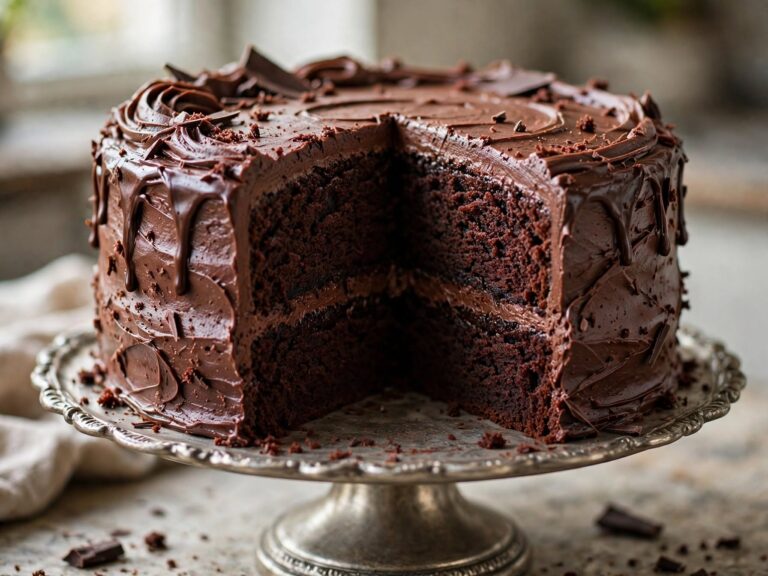
Buttercream Frosting — The Best Silky-Smooth & Easy Recipe
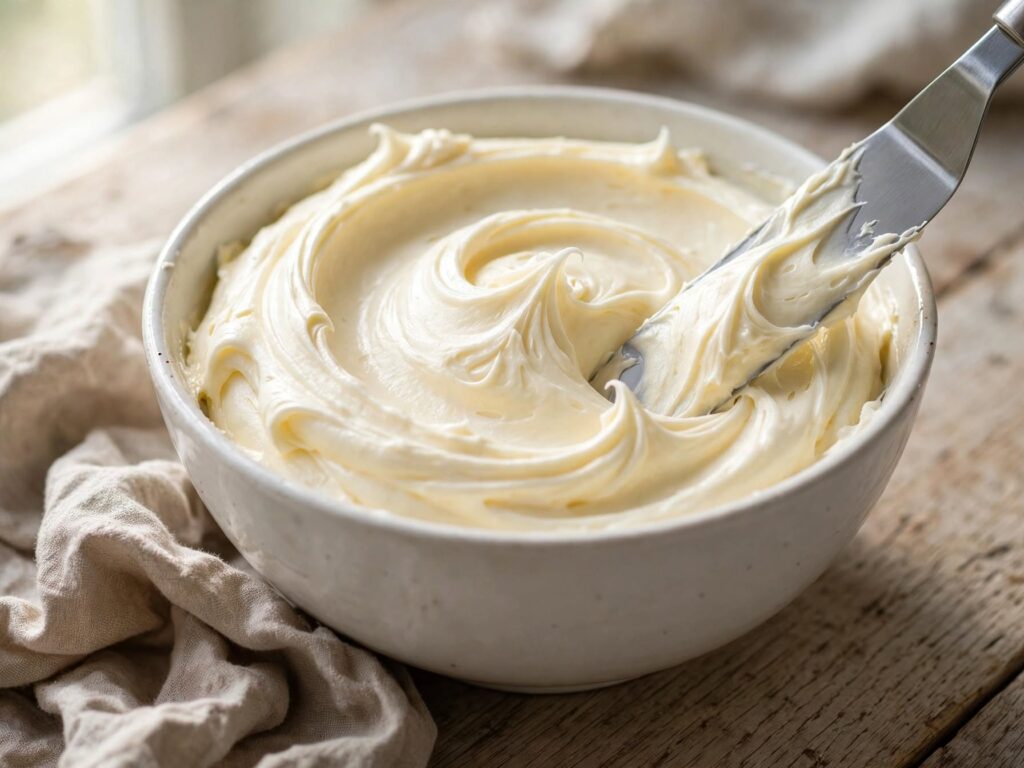
This buttercream frosting comes together in 10 minutes with 5 ingredients and whips up silky, light, and stable enough to pipe. You get a not-too-sweet frosting that spreads like a dream on cakes and holds a crisp swirl on cupcakes — no special equipment or fussy technique required.
| Prep time | 10 minutes |
| Cook time | 0 minutes (no cooking) |
| Total time | 10 minutes |
| Yield | ~3 cups (frosts 24 cupcakes lightly, 12 generously, or one 8–9″ two-layer cake) |
| Difficulty | Easy |
| Cuisine | American |
| Key method | Whip softened butter, then beat in powdered sugar and cream until fluffy |
If you have a mixer and softened butter, you’re 10 minutes from finished frosting. This is classic American buttercream — the powdered-sugar version, not a cooked meringue.
In This Post
- Why You’ll Love It
- What Makes It Different
- Ingredients & Substitutions
- Equipment You’ll Need
- How to Make It
- Getting the Right Consistency
- Expert Tips
- Secret to Silky-Smooth Frosting
- Beginner, Vanilla & American Styles
- Variations & Add-Ins
- What to Use It On
- Storage & Make-Ahead
- Troubleshooting
- Nutrition Information
- FAQ
- Recipe Card
Why You’ll Love This Buttercream
- Fast. Start to finish in about 10 minutes.
- Just 5 ingredients, all of which you likely already have.
- Silky, not gritty — the whipping method dissolves the sugar so there’s no sandy texture.
- Pipes and spreads: stiff enough to hold rosettes, soft enough to smooth on a cake.
- Adjustable sweetness — a pinch of salt and the right cream ratio keep it from tasting like straight sugar.
- Make-ahead friendly: it refrigerates for weeks and freezes for months.
What Makes This Buttercream Different
The difference is the whip time and the liquid. Most quick recipes beat everything together for one minute and stop, which leaves the frosting dense and overly sweet. Here you cream the butter first, add sugar gradually, then whip the finished frosting for a full 3–5 minutes with a splash of cream. That extra air lightens the texture and cuts the perceived sweetness — the same batch tastes less sugary simply because it’s fluffier and paler.
Ingredients You’ll Need
- 1 cup (226 g / 2 sticks) unsalted butter, softened to room temperature
- 4 cups (480 g) powdered sugar (confectioners’ sugar), sifted
- 2–3 tablespoons (30–45 ml) heavy cream or whole milk
- 2 teaspoons (10 ml) pure vanilla extract
- 1/4 teaspoon fine salt
Ingredient Notes
- Butter is the backbone, so its temperature matters more than any other factor. It should be soft enough to dent easily with a finger but not greasy, melty, or shiny — around 65°F (18°C). Too cold and it stays lumpy; too warm and the frosting turns soupy. Unsalted butter lets you control the salt yourself.
- Powdered sugar dissolves into the butter to build structure. Sift it if it’s clumpy — lumps are the number-one cause of grainy frosting. Buy pure confectioners’ sugar (it contains a little cornstarch, which helps the frosting set).
- Heavy cream loosens the frosting to a spreadable, pipeable consistency and adds richness. Whole milk works, but cream gives a plusher, more stable result.
- Vanilla and salt are the flavor. Salt is not optional — that 1/4 teaspoon is what stops the frosting from tasting like pure sugar. Use pure vanilla extract, or clear imitation vanilla if you need the frosting to stay bright white. Note that most pure vanilla extract is alcohol-based; use an alcohol-free or imitation vanilla to keep this halal.
Substitutions & Swaps
- No heavy cream? Use whole milk (slightly less rich) or half-and-half. Add it a teaspoon at a time.
- Salted butter? Fine — just skip the added salt and taste before adjusting.
- Dairy-free? Swap in a firm plant-based butter (stick form, not tub) and non-dairy cream. See the vegan variation below.
- No vanilla? Almond extract works at half the amount (it’s stronger), or use lemon or coffee (see Variations).
- Want it whiter? Use clear vanilla and a tiny drop of violet gel color to counteract butter’s yellow.
Equipment You’ll Need
- Stand mixer with paddle attachment, or a hand mixer and a large bowl
- Fine-mesh sieve (for sifting the sugar)
- Rubber spatula
- Piping bag and tip (only if you’re piping rather than spreading)
How to Make Buttercream Frosting
Step 1 — Beat the Butter
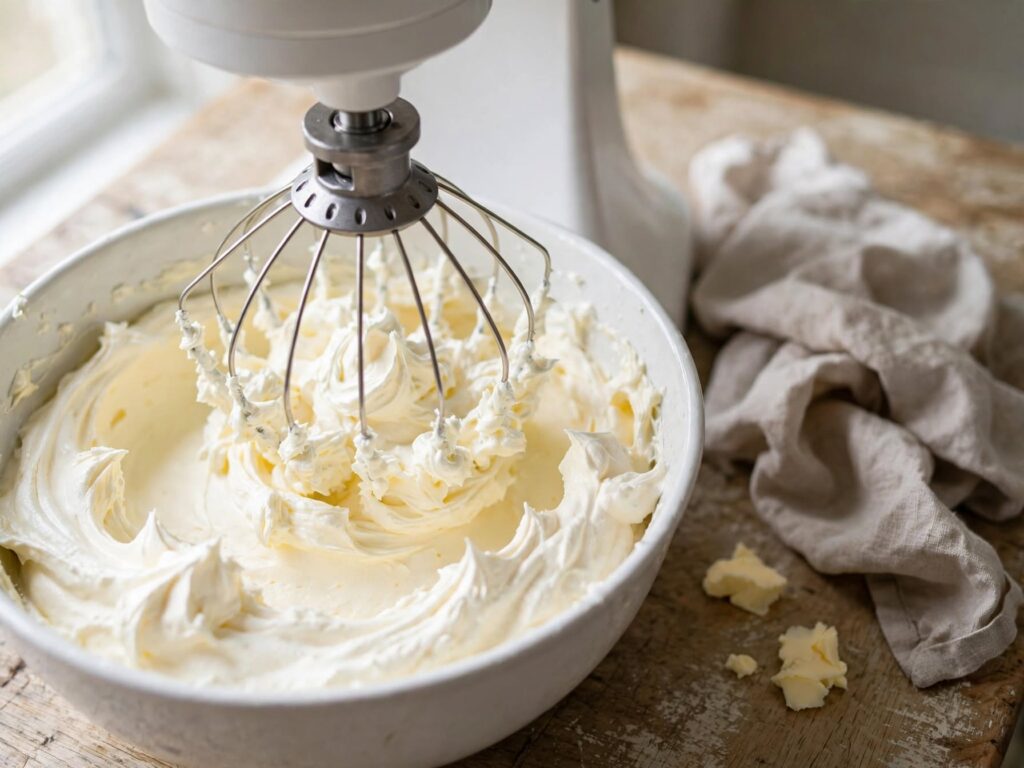
Beat the softened butter alone on medium-high for 2–3 minutes, until it’s pale, smooth, and noticeably lighter in color. This step builds the base and starts working in air. You’re looking for a creamy, almost whipped texture with no lumps before any sugar goes in.
Step 2 — Add the Powdered Sugar
With the mixer on low, add the sifted powdered sugar about one cup at a time, letting each addition disappear before the next. Adding it slowly on low speed keeps the kitchen sugar-free and prevents a dense, over-packed frosting. The mixture will look thick and slightly dry at this stage — that’s expected.

Step 3 — Add Vanilla, Salt, and Cream
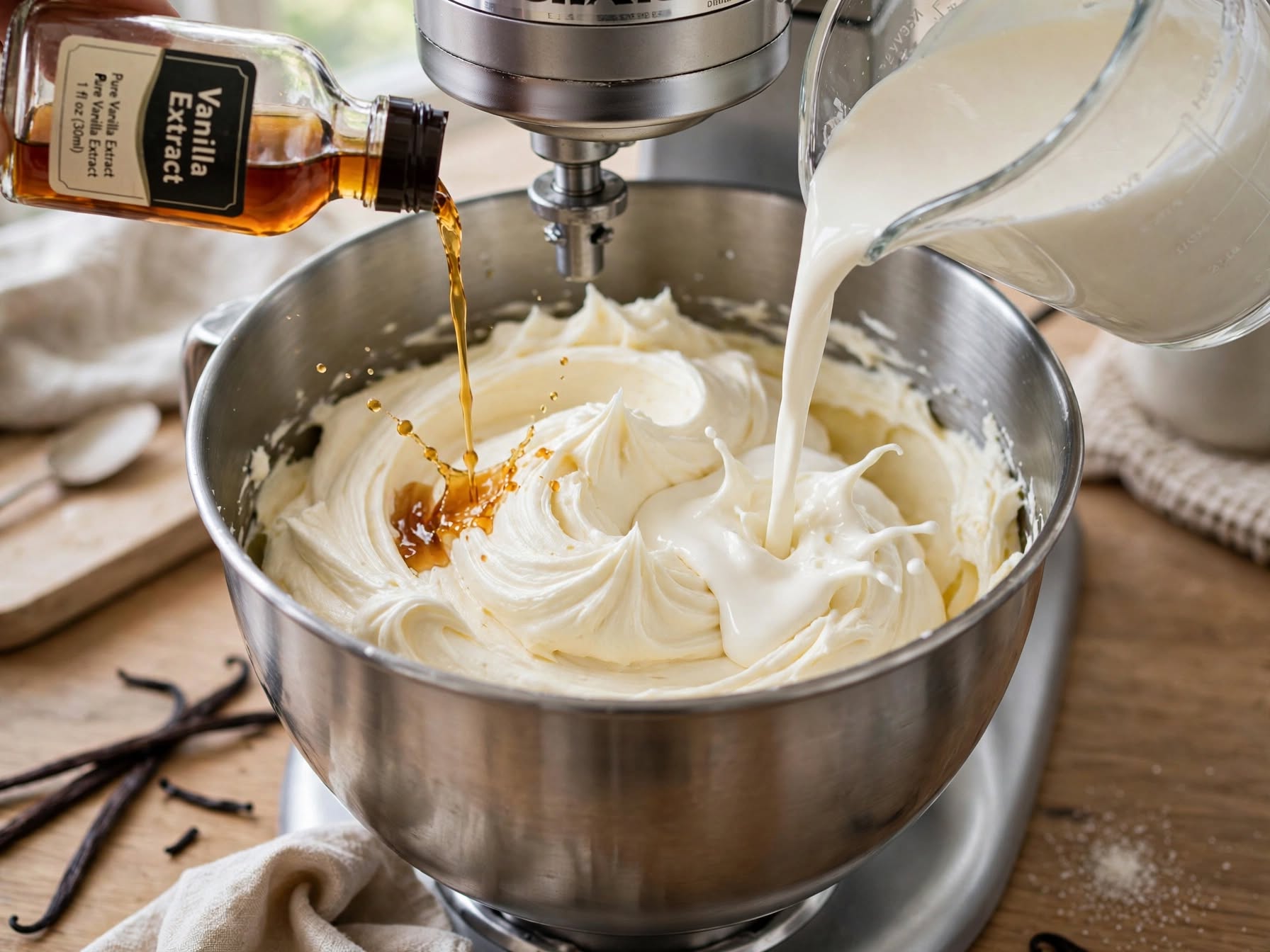
Add the vanilla, salt, and 2 tablespoons of cream. Mix on low just until combined. The frosting will loosen and come together into a spreadable mass. Hold back the third tablespoon of cream for now — you’ll use it to fine-tune the consistency at the end.
Step 4 — Whip Until Light and Fluffy
Turn the mixer to medium-high and whip for 3–5 full minutes. This is the step most people cut short. The frosting should visibly lighten in color and grow fluffy and smooth. Stop once it looks like soft, spreadable clouds and holds a soft peak.

Step 5 — Adjust the Consistency
Check the texture against your job. For spreading on a cake, it should be soft and smooth. For piping tall swirls, it should be a touch stiffer. Add the reserved cream a teaspoon at a time to loosen it, or a few tablespoons of extra powdered sugar to firm it up.
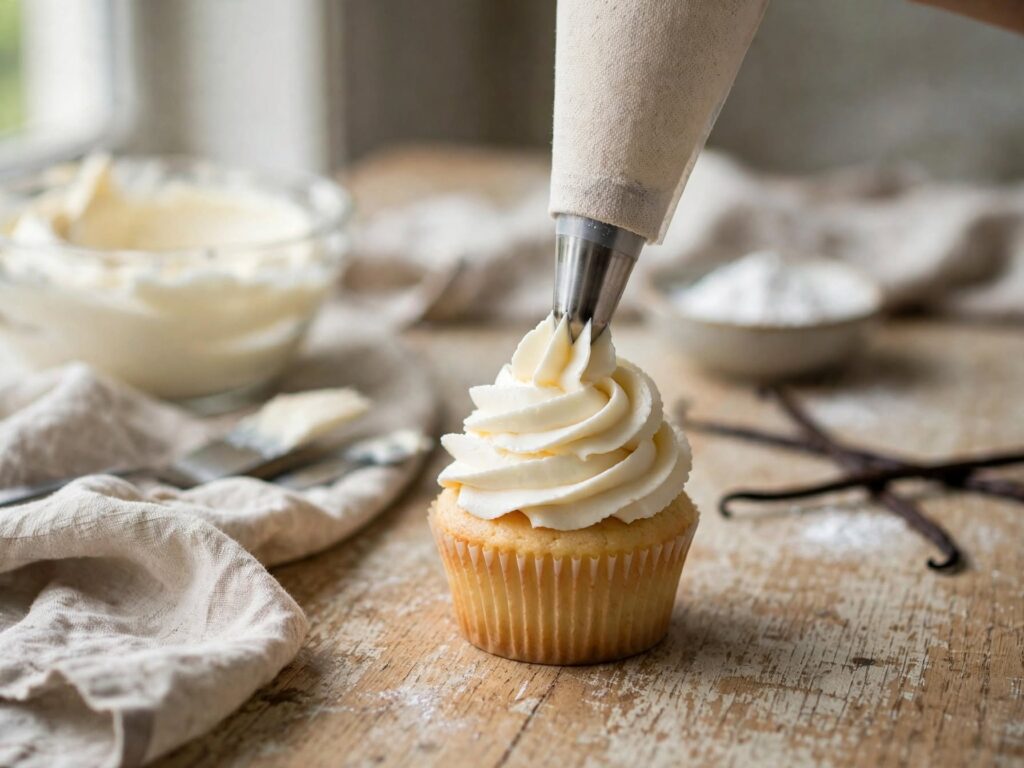
How Do You Get the Right Consistency for Buttercream?
The right consistency depends on what you’re doing: spreadable buttercream should be soft enough to glide off a spatula, while piping buttercream should hold a peak that doesn’t slump. Both come from the same base — you just control it with the cream-to-sugar ratio.
To loosen frosting that’s too stiff, beat in cream one teaspoon at a time. To firm up frosting that’s too soft, beat in powdered sugar a few tablespoons at a time. Temperature also matters: if the frosting warms up and goes slack while you work, chill it for 10–15 minutes and re-whip. A quick test — lift the spatula and watch the frosting. A soft peak that curls over is right for spreading; a stiff peak that stands straight is right for detailed piping.
Expert Tips for the Best Buttercream
- Truly soften the butter. Pull it out 1–2 hours ahead — this single step fixes most texture problems before they start.
- Always sift the powdered sugar. Thirty seconds now prevents grit you can’t fix later.
- Beat the butter alone first. Skipping this leaves the frosting dense; it’s the foundation of a fluffy result.
- Whip the full 3–5 minutes at the end. More air means a lighter, paler, less-sweet-tasting frosting.
- Taste and salt to balance. If it reads too sweet, another pinch of salt does more than reducing sugar would.
- Press out air pockets before piping. Smear the finished frosting against the bowl with a spatula for a minute to knock out bubbles that ruin smooth piping.
💡 Tip: Whip the finished frosting for the full 3–5 minutes at the end, even once it looks done. That extra air is what makes the difference between a dense, overly sweet frosting and one that tastes light and balanced.
The Secret to Silky-Smooth Buttercream
The secret to silky buttercream is dissolving the sugar into fully softened butter through long, patient whipping — graininess is undissolved sugar, nothing more. When the butter is soft and you beat long enough, the fine sugar crystals disperse into the fat instead of sitting in it as grit.
Three things guarantee it. First, sift the powdered sugar so there are no lumps to begin with. Second, make sure the butter is properly at room temperature — cold butter can’t coat and carry the sugar. Third, give it time: the final 3–5 minute whip is what turns a stiff, sandy paste into a smooth, aerated frosting. If a batch still feels slightly gritty, keep whipping for another two minutes before adding anything else — patience fixes it more often than extra liquid does.
Buttercream Three Ways: Beginner Tutorial, Vanilla for Cakes & Cupcakes, and American Style
This one recipe covers a lot of what people look for: a beginner-friendly method, a classic vanilla frosting for cakes and cupcakes, and the American buttercream style most home bakers grew up with. Here’s how it fits each.
Easy Buttercream Frosting Tutorial for Beginners
If you’ve never made frosting before, this is the one to start with. It needs five ingredients, one bowl, and a mixer, and the whole method is: beat the butter, add the sugar slowly, add the vanilla, salt, and cream, then whip until fluffy. There’s no cooking, no candy thermometer, and no tricky timing.
Most beginner problems come down to three things, and each has an easy fix:
- Butter that’s too cold or too warm. Pull it out 1–2 hours ahead, until it dents easily but isn’t greasy.
- Gritty frosting. Sift the powdered sugar and whip the finished frosting for the full 3–5 minutes.
- Wrong texture. Add cream a teaspoon at a time to loosen it, or a few tablespoons of powdered sugar to firm it up.
Homemade Vanilla Buttercream for Cakes & Cupcakes
This is a classic homemade vanilla buttercream, and the same batch works for both cakes and cupcakes. It makes about 3 cups, which frosts one 8- or 9-inch two-layer cake, 12 cupcakes generously, or 24 cupcakes with a light spread.
Adjust the texture to suit the job. For a layer cake, keep it soft enough to glide on a spatula so it smooths cleanly between and over the layers. For cupcakes, stiffen it with a few extra tablespoons of powdered sugar so piped swirls hold their shape. For the most flavorful vanilla, use pure vanilla extract, or clear imitation vanilla if you want the frosting to stay bright white. Pure vanilla is usually alcohol-based, so use an alcohol-free vanilla if you’re keeping the recipe halal.
American Buttercream Icing Recipe – Simple & Sweet
American buttercream is the simplest style: butter and powdered sugar beaten together with a little cream and vanilla. It’s called “simple” because there’s no cooking, unlike meringue-based buttercreams that use whipped, heated egg whites. It’s also sweet by nature, since it’s mostly sugar and fat. A pinch of salt and a long final whip are what keep it tasting balanced and light instead of sugary.
Many people call this “icing,” but technically buttercream is a thicker, whipped frosting for spreading and piping, while icing is thinner and more pourable. If you want a looser, glaze-like finish for cinnamon rolls or cookies, thin the frosting with cream or milk, a teaspoon at a time, until it drips off a spoon. For a less sweet version, use 3 cups of powdered sugar and a scant ½ teaspoon of salt, as described in the variations below.
💡 Tip: If you taste the finished frosting and it seems too sweet, add a small pinch of salt and whip another minute before adding anything else. It’s usually the fastest fix.
Delicious Variations & Add-Ins
Chocolate Buttercream
Sift in 1/2 to 3/4 cup (50–75 g) unsweetened cocoa powder with the powdered sugar, and add an extra tablespoon of cream to compensate for the dry cocoa. For a deeper, glossier version, beat in 4 oz (115 g) cooled melted dark chocolate at the end.
Flavored Buttercream (Lemon, Coffee, Strawberry)
Swap the vanilla for the flavor you want. For lemon, use 1 tablespoon lemon juice plus the zest of one lemon. For coffee, dissolve 1 tablespoon instant espresso in the cream before adding. For strawberry, beat in 3 tablespoons freeze-dried strawberries ground to a powder (fresh berries add too much water).
Less-Sweet Buttercream
Reduce the powdered sugar to 3 cups (360 g) and increase the salt to a scant 1/2 teaspoon. For a noticeably less sugary frosting, this is also where a cooked meringue buttercream shines — but this quick fix takes the edge off the American version without changing the method.
Dairy-Free & Vegan Buttercream
Use a firm, stick-style vegan butter (not soft tub spread) and swap the cream for full-fat coconut cream or oat cream. Chill the finished frosting briefly if it feels soft — plant butters can run warmer than dairy.
Cream Cheese Buttercream
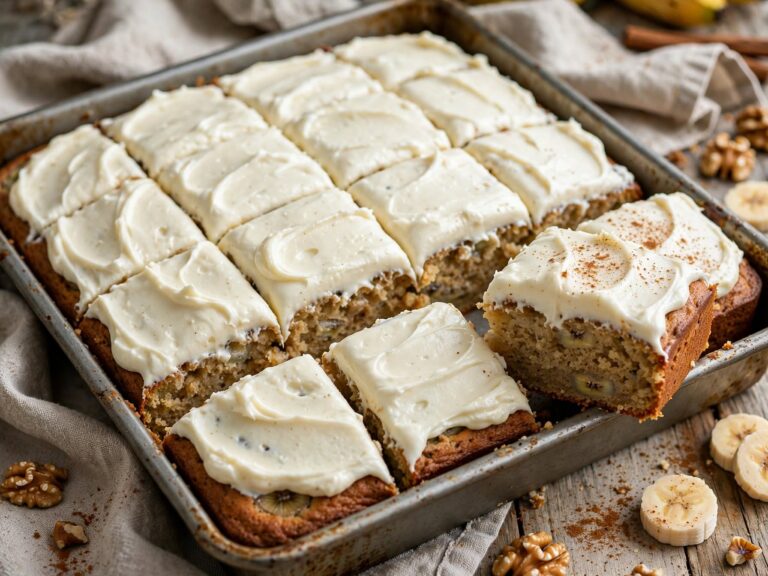
Beat 4 oz (115 g) full-fat block cream cheese into the finished frosting at the end, and cut the cream so it doesn’t go runny. This gives a tangier frosting that pairs beautifully with carrot, red velvet, and spice cakes. Keep cream-cheese frosting refrigerated.
What to Use Buttercream Frosting On
- Layer cakes — spreadable consistency smooths cleanly between and over layers.
- Cupcakes — stiffen slightly and pipe tall swirls that hold their shape.
- Sugar cookies — a thin layer sets soft and holds sprinkles.
- Brownies and blondies — a swipe of chocolate buttercream turns them into a bakery treat.
- Cinnamon rolls — swap the usual glaze for a thin vanilla buttercream while the rolls are just warm.
How to Store Buttercream Frosting
At Room Temperature
Buttercream keeps at room temperature, covered, for up to 2 days in a cool kitchen. Because it’s mostly butter and sugar, it’s shelf-stable short-term — but keep it out of direct heat and sun. A frosted cake sitting out is fine for a day; longer than that, refrigerate.
In the Refrigerator
Stored in an airtight container, buttercream lasts up to 2 weeks in the fridge. It will firm up hard when cold, so bring it back to room temperature and re-whip for a minute to restore the smooth, spreadable texture before using.
Freezing & Thawing
Yes, you can freeze buttercream — it keeps for up to 3 months. Pack it airtight, leaving no exposed surface, and thaw it overnight in the fridge. Let it come to room temperature, then whip it briefly to bring back the fluffy consistency. It freezes and revives better than almost any other frosting.
Make-Ahead Instructions
Buttercream is one of the best make-ahead frostings. Make it up to 2 weeks ahead and refrigerate, or up to 3 months ahead and freeze. In both cases, warm it to room temperature and re-whip for 1–2 minutes right before you frost — this re-aerates it and erases any separation from storage. You can also frost a cake fully, then freeze the whole thing; the buttercream protects the crumb.
Troubleshooting Common Problems
Why Is My Buttercream Grainy?
Grainy buttercream means the sugar didn’t dissolve — usually from unsifted sugar or under-whipping. Sift the powdered sugar next time, and keep whipping the current batch for 2–3 more minutes; the grit almost always smooths out with time. Butter that was too cold to carry the sugar is the other common cause.
Why Is My Buttercream Too Runny?
Runny buttercream is almost always too warm or has too much liquid. If the butter melted or your kitchen is hot, chill the frosting for 15 minutes and re-whip. If you added too much cream, beat in more powdered sugar a few tablespoons at a time until it firms up.
Why Did My Buttercream Curdle?
Curdled or split buttercream usually comes from a big temperature difference — cold cream hitting warm butter, or vice versa. Keep whipping; it often comes back together as everything reaches one temperature. If it doesn’t, warm the bowl briefly (a few seconds against a warm towel) and whip again.
Why Does My Buttercream Have Air Bubbles?
Air bubbles and holes appear when the frosting is over-whipped at high speed or wasn’t smoothed before piping. Before piping, press the finished frosting firmly against the side of the bowl with a spatula for about a minute to push the air out, or beat it on the lowest speed for 1–2 minutes to work bubbles loose.
Nutrition Information
Estimated per serving (about 2 tablespoons; ~24 servings per batch). Values are approximate and vary with brands and exact quantities.
- Calories: 150
- Total fat: 8 g (saturated fat 5 g)
- Carbohydrates: 18 g
- Sugar: 18 g
- Sodium: ~30 mg
- Protein: 0 g
Frequently Asked Questions
Is buttercream frosting the same as icing?
No. Buttercream is a thick, whipped, butter-based frosting you spread or pipe; icing is thinner and more pourable, like a glaze or royal icing. They’re used differently.
Do you need to refrigerate buttercream frosting?
Not for short periods — it’s stable at room temperature for up to 2 days. Refrigerate it for longer storage, and always refrigerate cream-cheese buttercream.
How far in advance can you make buttercream?
Up to 2 weeks in the fridge or 3 months in the freezer. Re-whip it to room temperature before using.
Can you freeze buttercream frosting?
Yes, up to 3 months in an airtight container. Thaw in the fridge overnight, bring to room temperature, and re-whip.
How many cupcakes does this recipe frost?
About 24 cupcakes with a light spread, or 12 with generous piped swirls. It also covers one 8- or 9-inch two-layer cake.
Why is my buttercream so sweet, and how do I make it less sweet?
American buttercream is sugar-heavy by nature. Add a pinch more salt, whip it longer to lighten it, or reduce the sugar to 3 cups. A cooked meringue buttercream is the least-sweet option overall.
Can I use salted butter?
Yes — just leave out the added salt and taste before adjusting.
Milk or heavy cream — which is better?
Heavy cream gives a richer, more stable frosting. Whole milk works but produces a slightly softer result; add it more sparingly.
How do I color buttercream?
Use gel food coloring, not liquid — liquid thins the frosting. Add a little at a time and mix fully; colors deepen as they sit.
Can I make buttercream without a mixer?
You can, but it’s hard work. Use a sturdy spoon and very soft butter, and beat vigorously. A hand or stand mixer gives a far lighter, smoother result.
Related Recipes
Recipe Card
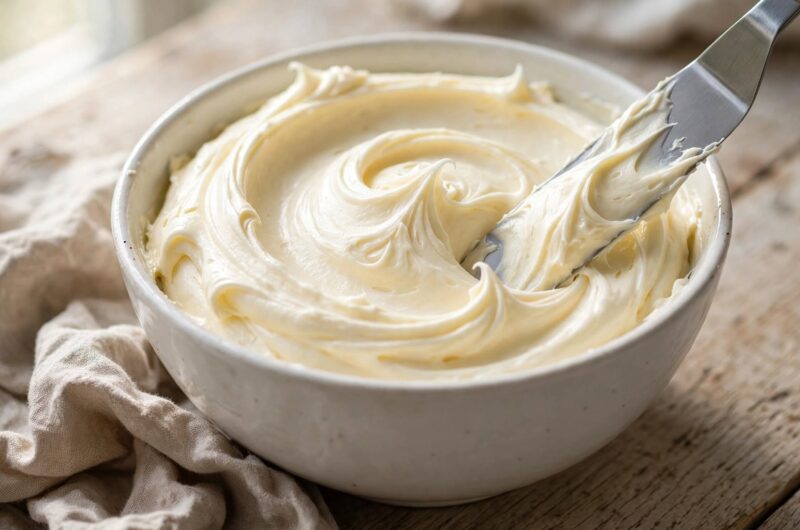
Buttercream Frosting
Silky, fluffy, 5-ingredient American buttercream frosting that pipes and spreads perfectly. Ready in 10 minutes.
24
servings10
minutes10
minutesIngredients
1 cup (226 g / 2 sticks) unsalted butter, softened
4 cups (480 g) powdered sugar, sifted
2–3 tablespoons (30–45 ml) heavy cream or whole milk
2 teaspoons (10 ml) pure vanilla extract
1/4 teaspoon fine salt
Directions
- Beat the softened butter on medium-high for 2–3 minutes until pale and creamy.
- With the mixer on low, add the sifted powdered sugar one cup at a time, mixing until each addition disappears.
- Add the vanilla, salt, and 2 tablespoons of cream. Mix on low until combined.
- Whip on medium-high for 3–5 minutes until light, fluffy, and smooth.
- Adjust the consistency: add the reserved cream a teaspoon at a time to loosen, or extra powdered sugar to firm up.
Notes
- Butter must be properly softened (about 65°F/18°C) for a smooth result.nSift the powdered sugar to prevent graininess.nStore at room temperature up to 2 days, refrigerated up to 2 weeks, or frozen up to 3 months; re-whip before using.