Chocolate Cake — The Best Moist, Fudgy One-Bowl Recipe
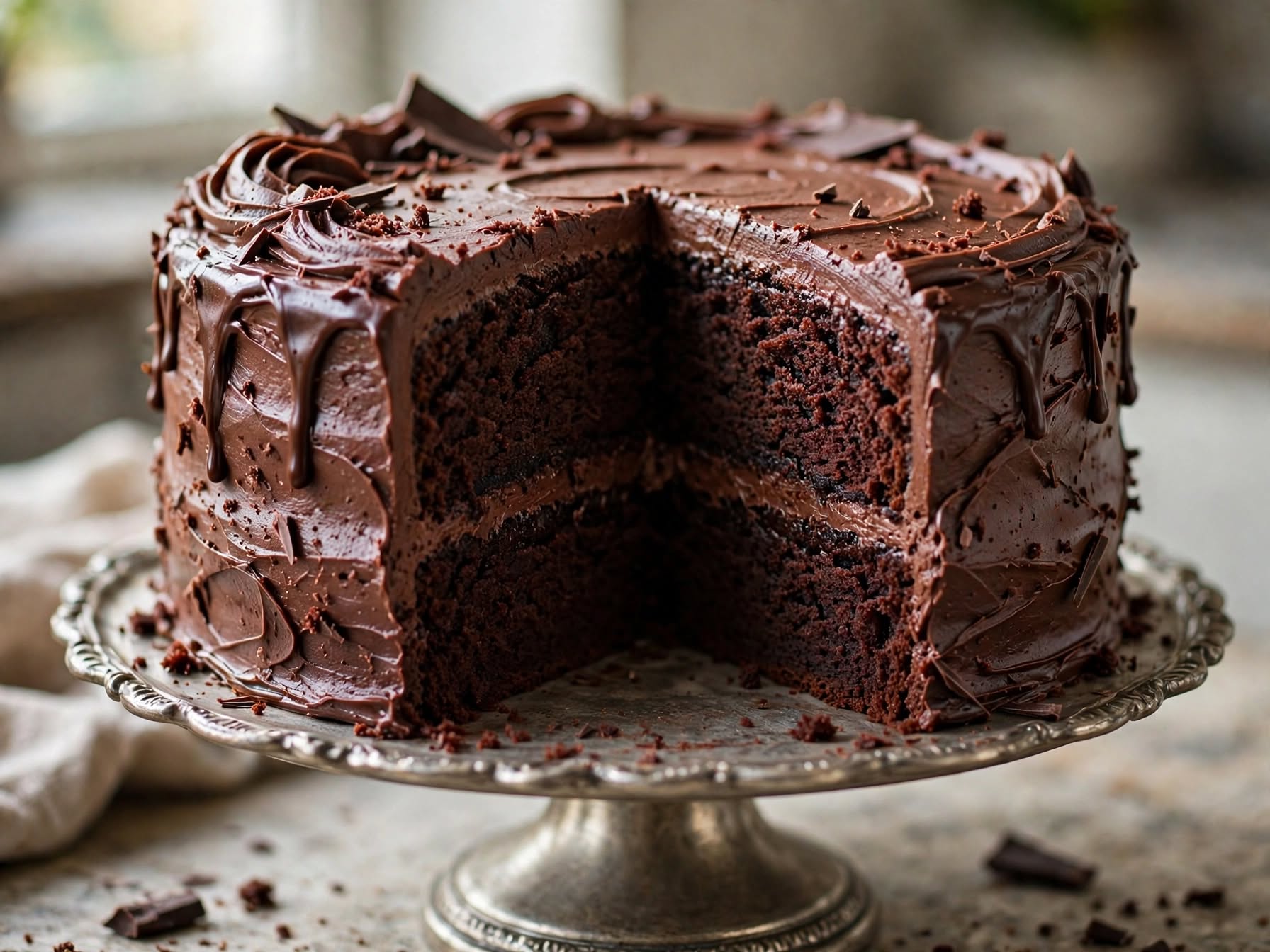
This chocolate cake is deeply chocolatey, ultra-moist, and made in one bowl with no mixer required. A cup of hot coffee or boiling water blooms the cocoa, oil keeps the crumb soft for days, and a simple chocolate buttercream finishes it. You get two tender 9-inch layers that stay moist instead of turning dry or sinking in the middle.
| Prep time | 20 minutes |
| Cook time | 30-35 minutes |
| Total time | About 2 hours (including cooling and frosting) |
| Servings | 12 slices |
| Difficulty | Easy |
| Cuisine | American |
| Key method | One-bowl oil cake with hot liquid, baked at 350°F in two 9-inch pans |
Whisk the dry ingredients, beat in the eggs, milk, oil, and vanilla, stir in the hot coffee or water, and bake at 350°F until a toothpick shows a few moist crumbs. Cool the layers completely before you frost, so the buttercream does not melt.
In This Post
- Why You’ll Love It
- What Makes It Different
- Ingredients & Substitutions
- Equipment You’ll Need
- How to Make It
- Why Hot Coffee or Water?
- Expert Tips
- Secret to Moist, Fudgy Cake
- Three Ways to Make It
- Variations & Add-Ins
- What to Serve With It
- How to Store
- Make-Ahead Instructions
- Troubleshooting
- Nutrition Information
- FAQ
- Recipe Card
Why You’ll Love This Chocolate Cake
- Deep chocolate flavor — hot liquid blooms the cocoa so it tastes rich, not flat.
- Stays moist for days — oil keeps the crumb soft even after the cake cools.
- One bowl, no mixer needed — a whisk and a spatula are enough.
- Pantry ingredients — no buttermilk, no melted chocolate, no special pans.
- Flexible — one batter makes layers, a sheet cake, or cupcakes.
What Makes This Chocolate Cake Different
The difference is hot liquid and oil, paired with careful measuring. Chocolate cakes usually fail by tasting flat or baking dry, and the fix is in the method. Hot coffee or boiling water dissolves the cocoa and intensifies its flavor, oil keeps the crumb tender at room temperature, and the doneness cues in the steps help you pull the cake before it overbakes. The very thin batter looks wrong at first, but it is exactly what makes the cake moist.
Ingredients You’ll Need
For the cake (two 9-inch layers):
- 1¾ cups (220g) all-purpose flour, spooned and leveled
- 2 cups (400g) granulated sugar
- ¾ cup (65g) unsweetened natural cocoa powder
- 1½ teaspoons baking powder
- 1½ teaspoons baking soda
- 1 teaspoon fine salt
- 2 large eggs, at room temperature
- 1 cup (240ml) whole milk, at room temperature
- ½ cup (120ml) neutral oil, such as vegetable or canola
- 2 teaspoons vanilla extract
- 1 cup (240ml) boiling water or hot brewed coffee
For the chocolate buttercream:
- ½ cup (113g) unsalted butter, softened
- ⅔ cup (55g) unsweetened natural cocoa powder
- 3 cups (360g) powdered sugar
- ⅓ cup (80ml) whole milk
- 1 teaspoon vanilla extract
- Pinch of salt
Ingredient Notes
- Natural cocoa powder: This recipe is built for natural (not Dutch-process) cocoa, which is slightly acidic and reacts with the baking soda to help the cake rise. Dutch-process cocoa is smoother but is neutral, so it needs a different balance of leavening.
- Oil: Oil stays liquid at room temperature, so the crumb stays soft and moist even after the cake cools. Butter adds flavor but firms up as it cools.
- Hot coffee or boiling water: It blooms the cocoa and thins the batter. Coffee deepens the chocolate flavor without making the cake taste like coffee.
- Baking powder and baking soda: Together they give lift. Check the dates; old leavening gives a flat, dense cake.
- Room-temperature eggs and milk: They blend smoothly into the batter and keep the oil from separating.
- Vanilla extract: Standard pure vanilla is alcohol-based (most of it bakes off, but it is not alcohol-free as poured). Use an alcohol-free vanilla if that matters in your kitchen.
- Sprinkles and chocolate chips: If you decorate, check the labels; some contain gelatin or alcohol-based flavorings.
Substitutions & Swaps
- No coffee: Use boiling water; the cake is still rich and chocolatey.
- Dairy-free: Use unsweetened oat or soy milk in the cake, and plant-based butter and milk in the frosting.
- Gluten-free: Use a 1:1 gluten-free baking blend. The layers may be a little more delicate, so cool them fully before turning them out.
- Buttermilk instead of milk: Works in the same amount for a slightly tangier, softer crumb.
Equipment You’ll Need
- Two 9-inch round cake pans
- Parchment paper
- Large mixing bowl and whisk
- Rubber spatula
- Wire cooling rack
- Offset spatula (optional, for frosting)
- Kitchen scale (optional, for dividing the batter evenly)
How to Make Chocolate Cake
Step 1 — Prep the Pans and Oven
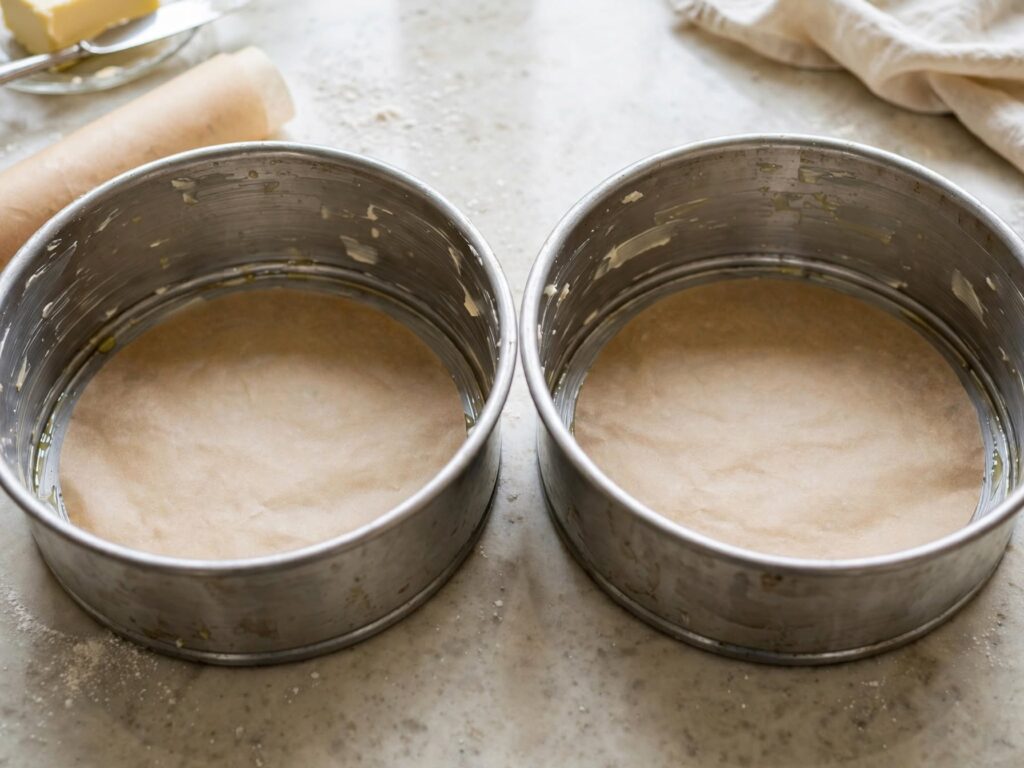
Heat the oven to 350°F (175°C) with the rack in the center, and let it preheat fully. Grease two 9-inch round cake pans and line the bottoms with parchment paper circles so the layers release cleanly.
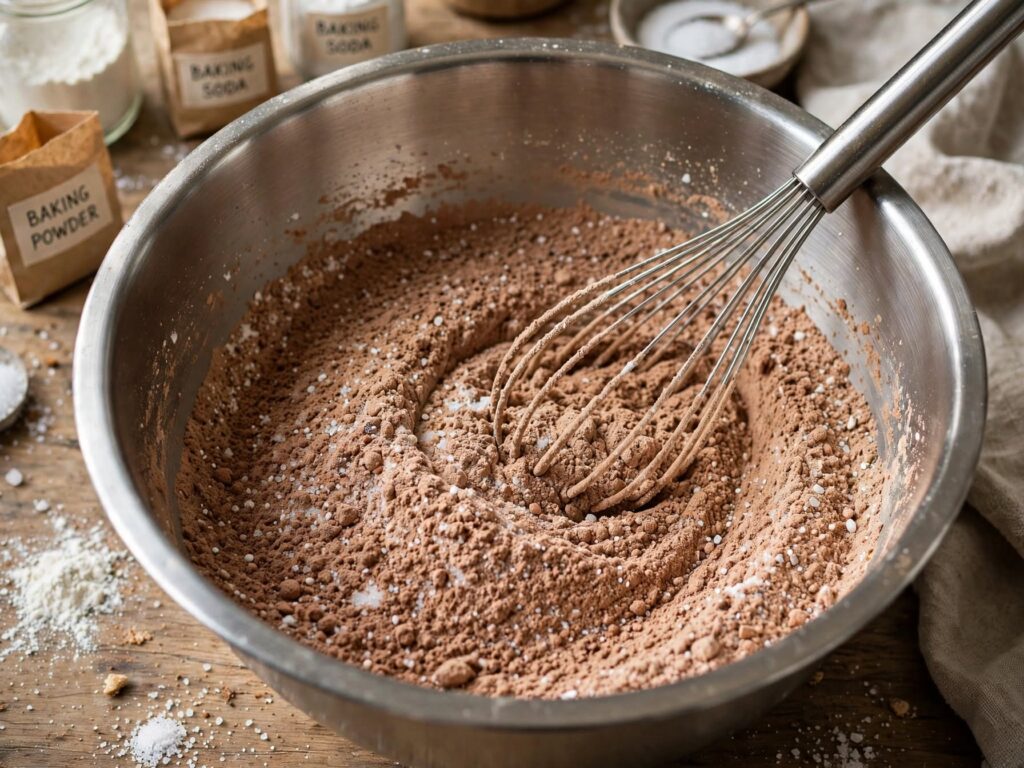
Step 2 — Whisk the Dry Ingredients
In a large bowl, whisk the flour, sugar, cocoa, baking powder, baking soda, and salt until evenly combined. If the cocoa is lumpy, sift it in so the batter bakes up smooth.
Step 3 — Add the Wet Ingredients
Add the eggs, milk, oil, and vanilla. Whisk or beat on medium speed for about 2 minutes, until the batter is smooth and thick, with no dry pockets.
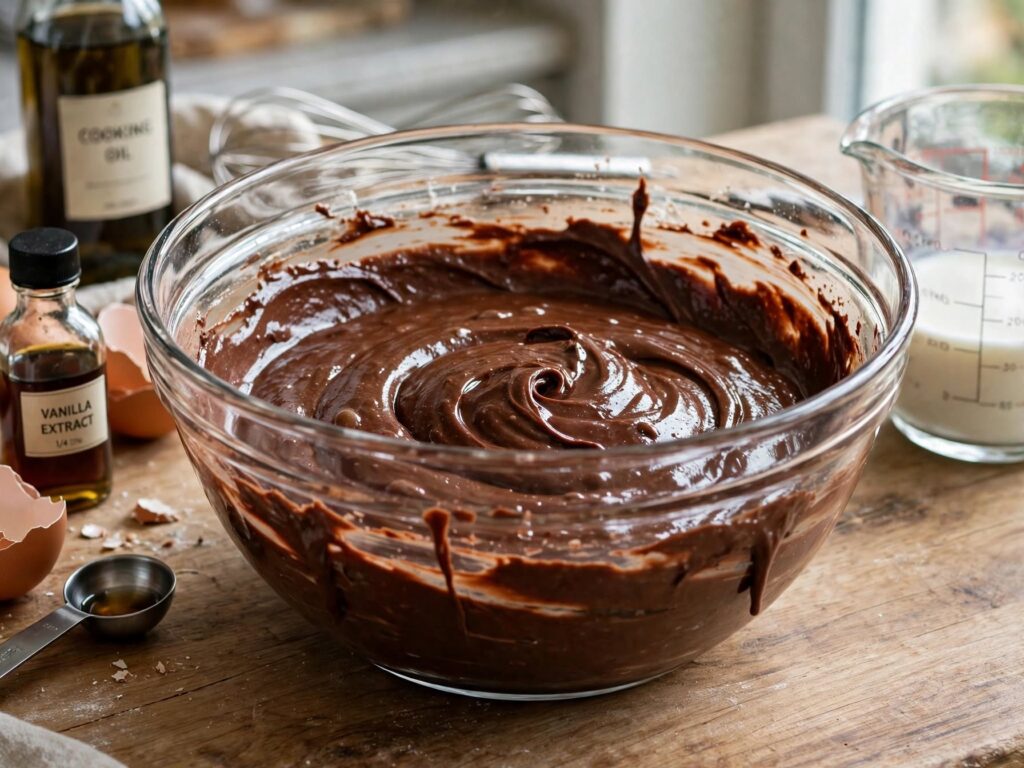
Step 4 — Stir in the Hot Liquid
Carefully stir in the boiling water or hot coffee until combined. The batter will be very thin and pourable; that is correct, and it is what keeps the cake moist.


Step 5 — Fill and Bake
Divide the batter evenly between the two pans (weigh them for even layers). Bake for 30-35 minutes. The cakes are done when the tops spring back lightly, the edges pull away from the pans, and a toothpick in the center comes out clean or with a few moist crumbs.

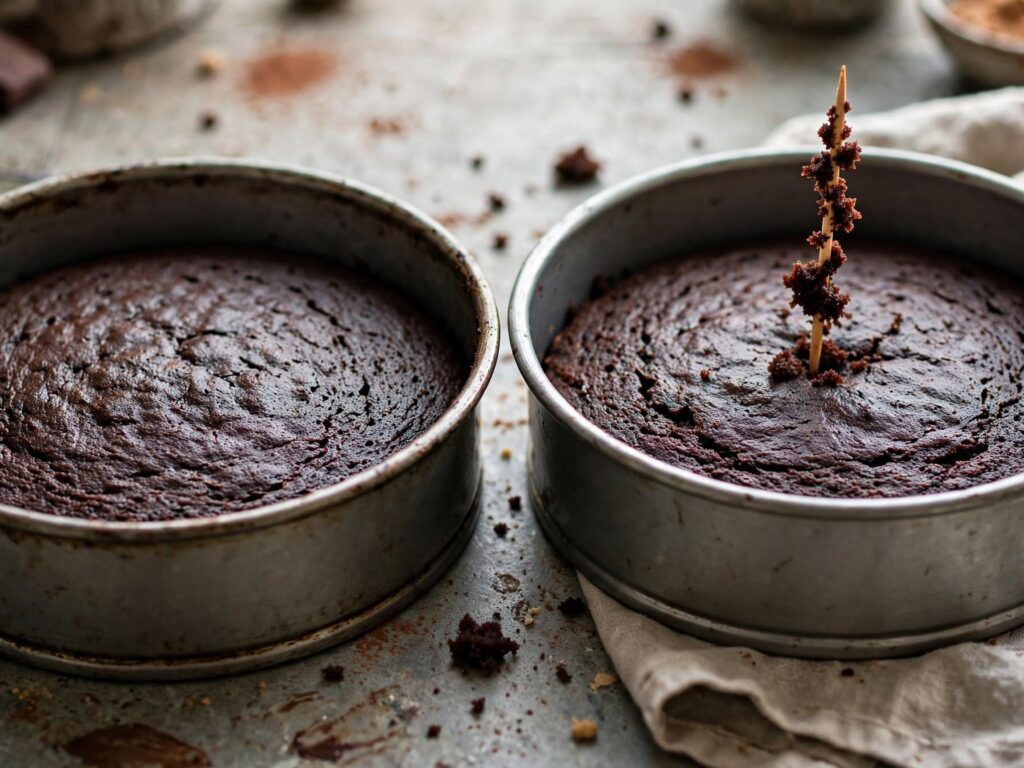
Step 6 — Cool the Layers
Cool the cakes in their pans for 10 minutes, then run a knife around the edges and turn them out onto a wire rack. Peel off the parchment and cool completely, about 1 hour. Frosting a warm cake melts the buttercream.
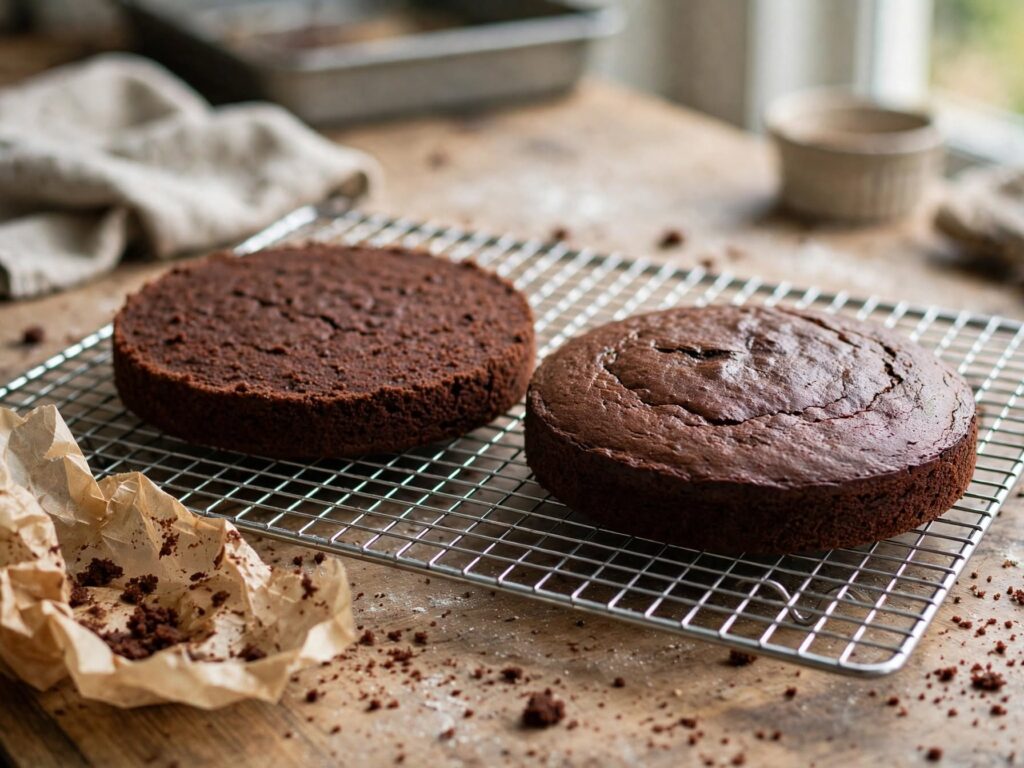
Step 7 — Make the Buttercream
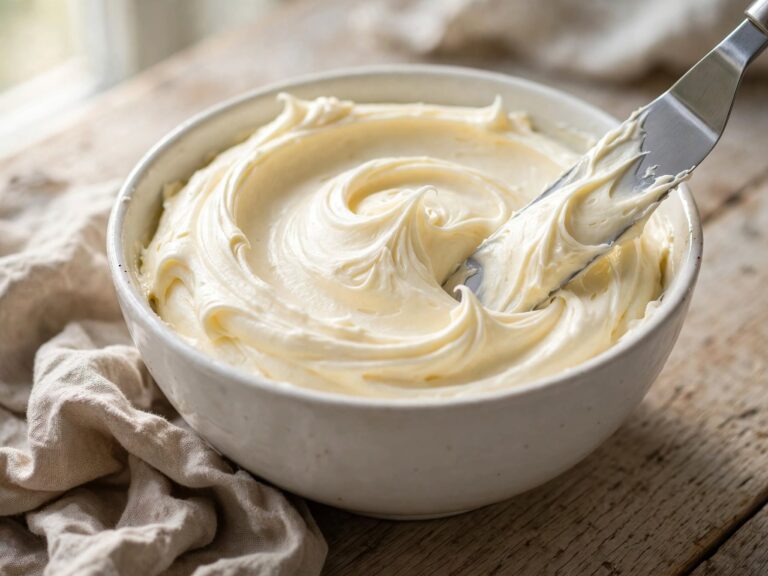
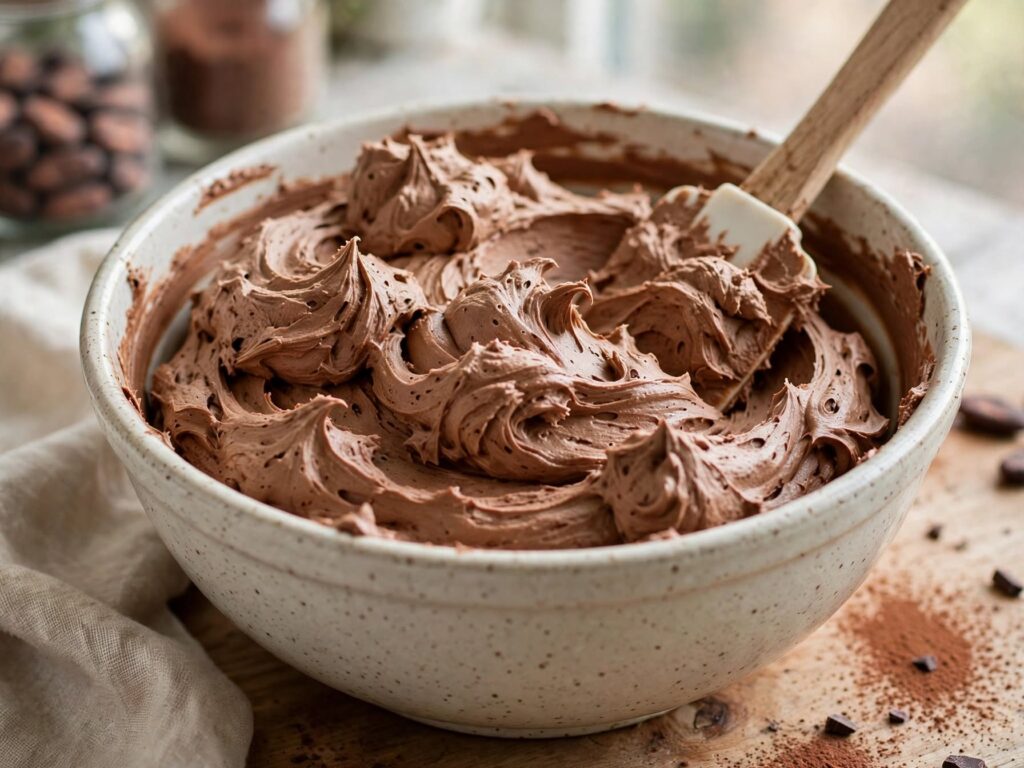
Beat the softened butter and cocoa until smooth. Add the powdered sugar in two or three additions, alternating with the milk, and beat on medium for 2-3 minutes. Beat in the vanilla and salt. The frosting should be fluffy and spreadable; add a teaspoon of milk if it is stiff.
Step 8 — Assemble and Frost
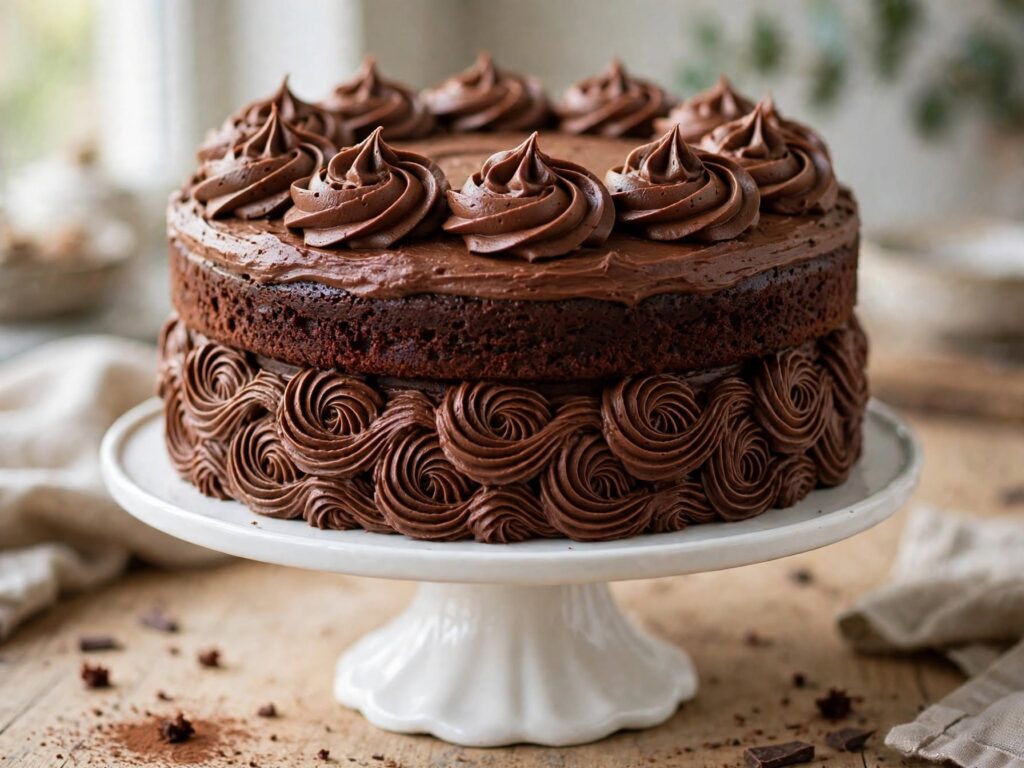
Place one layer on a plate, flat side up, and spread about ¾ cup of frosting over it. Top with the second layer, then frost the top and sides with the remaining buttercream. For a taller swirl, double the frosting or use our buttercream frosting.


Why Do You Add Hot Coffee or Boiling Water to Chocolate Cake Batter?
You add hot coffee or boiling water to chocolate cake batter to bloom the cocoa, which deepens the chocolate flavor and makes the cake moister. Hot liquid dissolves cocoa particles and releases more of their flavor than cold liquid can. It also thins the batter, so the flour hydrates fully and the finished crumb is soft.
- Coffee boosts chocolate: It sharpens the chocolate taste without leaving a coffee flavor.
- Water works too: Boiling water gives the same blooming effect if you do not want coffee.
- Thin batter is normal: It looks like chocolate milk. Do not add more flour to thicken it.
Expert Tips for the Best Chocolate Cake
- Spoon and level the flour. Scooping packs in extra flour and makes the cake dry; weigh it if you can.
- Preheat fully. An oven that is still heating can cause an uneven rise and a sunken center.
- Do not open the oven door early. Wait until at least 25 minutes to check, because a blast of cool air can make the cake fall.
- Pull the cake when a few moist crumbs cling. Cocoa-heavy cakes dry out quickly; carryover heat finishes the center.
- Cool completely before frosting. Warm layers melt the buttercream and slide apart.
- Divide the batter evenly. A scale or a measuring cup keeps the layers the same height so the cake stacks level.
💡 Tip: Tap each pan on the counter once or twice before baking to pop large air bubbles, and bake both pans on the same rack so the layers cook evenly.
The Secret to Moist, Fudgy Chocolate Cake
The secret is oil for lasting moisture, hot liquid for flavor, and pulling the cake before it overbakes. Oil is 100% fat and stays liquid at room temperature, so the crumb feels tender and moist even after the cake cools, while a butter-based cake can feel firmer. Hot liquid hydrates the flour and blooms the cocoa, and it gives you a thin batter that bakes into a soft, fine crumb.
Chocolate cakes also dry out fast because cocoa absorbs moisture. Baking just until a toothpick shows a few moist crumbs keeps that moisture in the crumb. Oil, hot liquid, and a short, careful bake are what make this cake fudgy and tender instead of dry and crumbly.
Chocolate Cake Recipe: Three Ways to Make It Yours
The Best Chocolate Cake Recipe – Moist & Rich
This is the cake in the recipe card: two tender 9-inch layers with deep cocoa flavor that stays moist for days. Oil, hot liquid, and a short bake keep the crumb soft, and the chocolate buttercream makes every slice rich. For an even richer finish, cover it with the ganache in the variations below.
Classic Scratch Chocolate Cake You’ll Love
Everything comes from the pantry: flour, sugar, cocoa, eggs, milk, oil, baking powder, and baking soda. There is no cake mix, no pudding mix, and no special equipment, just a bowl, a whisk, and two pans. That makes it a scratch chocolate cake you can bake for a birthday, a potluck, or an ordinary Tuesday.
Moist Chocolate Cake Made with Coffee
Hot coffee is the easiest way to deepen the chocolate flavor. Use 1 cup of hot brewed coffee in place of the boiling water, or dissolve 1-2 teaspoons of instant espresso powder in 1 cup of boiling water. The cake will not taste like coffee; it tastes more like chocolate, and the hot liquid keeps the crumb moist. Decaf works too.
Delicious Variations & Add-Ins
Chocolate Cupcakes
Fill paper-lined muffin cups about two-thirds full and bake at 350°F for roughly 18-22 minutes, checking early. This batter makes around 24 cupcakes. Cool completely before frosting.
9×13-Inch Sheet Cake
Pour the batter into a greased 9×13-inch pan and bake for 35-40 minutes, until a toothpick comes out with a few moist crumbs. Frost it right in the pan for an easy potluck cake.
Chocolate Ganache Frosting
Heat 1 cup of heavy cream until steaming, then pour it over 8 ounces of chopped semi-sweet chocolate. Let it sit 2 minutes, stir until glossy, and cool 15-20 minutes until spreadable. Check the chocolate label for alcohol-based flavorings if that matters to you.
Lighter Chocolate Cake
Bake the batter in a 9×13-inch pan and skip the buttercream, dusting the top with powdered sugar or serving with fresh berries. You keep the moist crumb with far less frosting.
Dairy-Free Chocolate Cake
Replace the milk with unsweetened oat or soy milk, and make the frosting with plant-based butter and plant milk. The cake itself is already oil-based, so the texture stays the same.
Gluten-Free Chocolate Cake
Swap in a 1:1 gluten-free baking blend for the flour. Let the layers cool fully in the pans before turning them out, since gluten-free cakes are more fragile when warm.
What to Serve With Chocolate Cake
- Vanilla ice cream — cold and creamy against the rich chocolate.
- Fresh raspberries or strawberries — their tartness cuts through the sweetness.
- Whipped cream — a light contrast to the dense frosting.
- Hot coffee or cold milk — the classic pairings for chocolate.
- A dessert table — serve beside our banana cake or red velvet cookies.
How to Store Chocolate Cake
At Room Temperature
Cover the frosted cake with a cake dome or loosely with foil and keep it at room temperature for up to 2-3 days. Room temperature keeps the crumb softest.
In the Refrigerator
Refrigerate the cake in an airtight container for up to 5 days, especially in a warm kitchen or if you used cream or ganache. Let slices sit at room temperature for 20-30 minutes before serving so the crumb softens.
Freezing & Thawing
Yes, you can freeze chocolate cake. Wrap cooled, unfrosted layers tightly in plastic wrap and foil and freeze for up to 3 months. Thaw them wrapped at room temperature for 2-3 hours, then frost. Frosted slices can be frozen too and thawed in the refrigerator overnight.
Make-Ahead Instructions
Bake the layers up to a day ahead, cool them completely, and wrap them tightly at room temperature, or freeze them for up to 3 months. Make the buttercream up to 2 days ahead, refrigerate it airtight, and let it soften and re-whip before spreading. Assemble the cake the day you plan to serve it for the best texture.
Troubleshooting Common Problems
Why Did My Chocolate Cake Sink in the Middle?
It was likely underbaked, the oven door was opened too early, or there was too much leavening. Fully preheat the oven, avoid opening it for the first 25 minutes, measure the baking powder and soda level, and bake until a toothpick shows only a few moist crumbs.
Why Is My Chocolate Cake Dry?
It was overbaked or the flour was packed into the cup. Spoon and level the flour or weigh it, start checking at 30 minutes, and pull the cake as soon as a few moist crumbs cling to the toothpick.
Why Is My Chocolate Cake Batter So Thin?
That is correct. The hot coffee or boiling water makes the batter pourable like chocolate milk. Do not add flour; it bakes into a moist, tender crumb.
Why Did My Chocolate Cake Dome or Crack on Top?
The oven may be too hot, which sets the edges before the center finishes rising. Check the temperature with an oven thermometer, bake on the center rack, and level any dome with a serrated knife before frosting.
Nutrition Information
Per slice with buttercream (based on 12 slices), estimated:
- Calories: ~510
- Fat: ~19 g
- Carbohydrates: ~84 g
- Sugar: ~65 g
- Fiber: ~3 g
- Protein: ~5 g
Values are an estimate and will vary with your ingredients and how thickly you frost.
Frequently Asked Questions
Will chocolate cake taste like coffee?
No. Coffee deepens and sharpens the chocolate flavor without leaving a coffee taste. If you prefer, use boiling water instead.
Should I use natural or Dutch-process cocoa for chocolate cake?
Use natural unsweetened cocoa for this recipe. It is acidic and reacts with the baking soda to help the cake rise. Dutch-process cocoa is neutral and needs a different balance of leavening.
Why is my chocolate cake batter so thin?
The hot coffee or boiling water makes the batter pourable like chocolate milk. This is normal and gives a moist cake, so do not add extra flour.
Why use oil instead of butter in chocolate cake?
Oil stays liquid at room temperature, so the cake stays moist and tender even after it cools. Butter adds flavor but firms up as it cools, so the crumb can feel drier.
How do you know when chocolate cake is done?
The top springs back lightly, the edges pull away from the pan, and a toothpick in the center comes out clean or with a few moist crumbs. This takes 30-35 minutes for 9-inch layers at 350°F.
Can I bake chocolate cake in a 9×13-inch pan?
Yes. Bake the same batter in a greased 9×13-inch pan for 35-40 minutes, until a toothpick comes out with a few moist crumbs.
Can I make chocolate cupcakes with this batter?
Yes. It makes around 24 cupcakes. Fill the liners two-thirds full and bake at 350°F for about 18-22 minutes, checking early.
How long does chocolate cake last?
Up to 2-3 days at room temperature, up to 5 days in the refrigerator, or up to 3 months frozen as unfrosted layers.
Can you freeze chocolate cake?
Yes. Wrap cooled layers tightly in plastic and foil and freeze for up to 3 months. Thaw at room temperature for 2-3 hours before frosting.
Do I need buttermilk for chocolate cake?
No. This recipe uses regular whole milk. Buttermilk works in the same amount if you want a slightly tangier, softer crumb.
More Recipes You’ll Love
Chocolate Cake — Recipe Card
Chocolate Cake
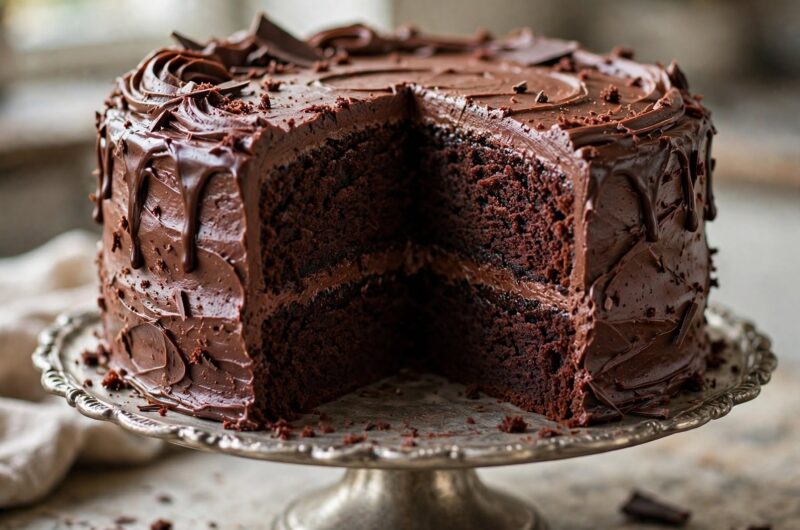
Moist, fudgy one-bowl chocolate cake made with oil and hot coffee, baked in two 9-inch layers and finished with a simple chocolate buttercream.
12
slices20
minutes35
minutes55
minutesIngredients
CAKE: 1¾ cups (220g) all-purpose flour, spooned and leveled
2 cups (400g) granulated sugar
¾ cup (65g) unsweetened natural cocoa powder
1½ teaspoons baking powder
1½ teaspoons baking soda
1 teaspoon fine salt
2 large eggs, at room temperature
1 cup (240ml) whole milk, at room temperature
½ cup (120ml) neutral oil
2 teaspoons vanilla extract (alcohol-free if preferred)
1 cup (240ml) boiling water or hot brewed coffee
FROSTING: ½ cup (113g) unsalted butter, softened
⅔ cup (55g) unsweetened natural cocoa powder
3 cups (360g) powdered sugar
⅓ cup (80ml) whole milk
1 teaspoon vanilla extract
Pinch of salt
Directions
- Heat the oven to 350°F (175°C). Grease two 9-inch round cake pans and line the bottoms with parchment.
- Whisk the flour, sugar, cocoa, baking powder, baking soda, and salt in a large bowl, sifting the cocoa if lumpy.
- Add the eggs, milk, oil, and vanilla. Whisk or beat on medium for 2 minutes until smooth.
- Stir in the boiling water or hot coffee. The batter will be very thin; this is correct.
- Divide the batter evenly between the pans. Bake 30-35 minutes, until the tops spring back and a toothpick shows a few moist crumbs.
- Cool in the pans 10 minutes, turn out onto a rack, and cool completely, about 1 hour.
- Beat the butter and cocoa until smooth. Alternate the powdered sugar and milk, beat 2-3 minutes, then beat in the vanilla and salt.
- Spread about ¾ cup frosting between the layers, then frost the top and sides with the rest.
Notes
- Use natural cocoa powder, not Dutch-process. The thin batter is correct. Do not open the oven door before 25 minutes. Cool the layers completely before frosting. Store at room temperature 2-3 days or refrigerate up to 5 days. Freeze unfrosted layers up to 3 months.