Homemade Alfredo Sauce — Silky, Creamy, and Ready in 15 Minutes
This homemade alfredo sauce is rich, silky, and smooth — made from just butter, cream, garlic, and real parmesan in about 15 minutes. You get a restaurant-quality cream sauce that clings to every strand of pasta, with none of the gluey, grainy texture that ruins most versions.
Skip the jar; this one tastes fresher, costs less, and comes together in one pan while your pasta boils.
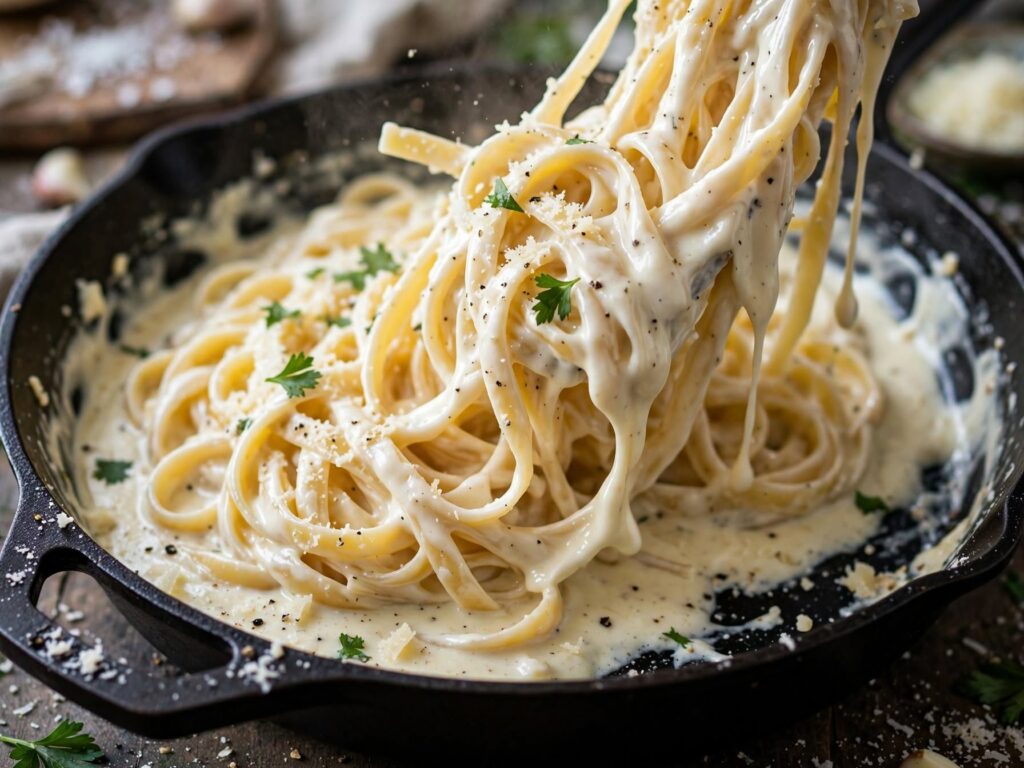
| Prep time | 5 minutes |
| Cook time | 10 minutes |
| Total time | 15 minutes |
| Servings | 4 (about 2 cups sauce, enough for 1 lb pasta) |
| Difficulty | Easy |
| Cuisine | Italian-American |
| Key method | Gently simmered cream with slowly melted parmesan |
Melt butter with garlic, simmer the cream, then whisk in freshly grated parmesan off high heat. Low heat and real cheese are what keep it smooth.
- Why You’ll Love It
- What Makes It Different
- Ingredients
- Equipment You’ll Need
- How to Make It
- Keeping It From Breaking
- Expert Tips
- The Secret to Silky Alfredo
- Rich & Creamy, Thick & From Scratch
- Variations & Add-Ins
- What to Serve With It
- How to Store
- Make-Ahead Instructions
- Troubleshooting
- Nutrition Information
- FAQ
- Related Recipes
Why You’ll Love This Alfredo Sauce
- Silky and smooth — the right technique keeps it from turning grainy or oily.
- Fast — done in 15 minutes, faster than a trip to the store.
- Five simple ingredients you likely already have.
- No flour or roux — it’s thickened by cream and cheese, so it tastes pure and rich.
- Better than jarred — fresher flavor, no preservatives, no gummy texture.
- Endlessly adaptable — add chicken, shrimp, or vegetables to make it a meal.
Ingredients You’ll Need
Ingredient Notes
- Unsalted butter: The base of the richness. Unsalted lets you control the seasoning, since parmesan is already salty.
- Garlic: Fresh minced garlic gives warmth and depth. Cook it just until fragrant — burnt garlic turns bitter.
- Heavy cream: The body of the sauce. It has enough fat to simmer and thicken without curdling; lighter dairy will break.
- Parmesan (freshly grated): The flavor and the thickener. Grate it yourself — pre-grated parmesan contains cellulose and anti-caking agents that stop it from melting smoothly and cause graininess. Parmigiano-Reggiano is worth it here.
- Nutmeg (optional): A tiny pinch adds the subtle warmth found in classic cream sauces.
- Salt and black pepper: Season at the end, after the parmesan, so you don’t oversalt.
- Pasta water: Reserve some — the starchy water is the best tool for loosening the sauce to the perfect consistency.
Substitutions & Swaps
- No heavy cream? Use half-and-half plus an extra tablespoon of butter, but keep the heat low, as it’s more prone to breaking.
- Lighter version: Use whole milk thickened with a small flour roux (see Variations).
- Dairy-free: Full-fat coconut milk or a cashew cream base with nutritional yeast (see Variations).
- Different cheese: A little pecorino romano adds a sharper, saltier edge; use it in part, not whole, or the sauce gets very salty.
- Cream cheese: A couple of ounces make the sauce thicker and more stable — a popular shortcut (see Variations).
- Garlic powder: In a pinch, ½ tsp works, but fresh garlic is far better.
What Makes This Alfredo Sauce Different
The difference is temperature control and real cheese. Alfredo is an emulsion of fat and dairy, and it breaks the moment you add cheese to a sauce that’s too hot or use pre-grated parmesan full of anti-caking agents. This recipe keeps the heat low when the cheese goes in and calls for freshly grated parmesan, so the sauce stays glossy and smooth instead of splitting into grease and clumps. That single discipline is what separates a great alfredo from a grainy one.
Equipment You’ll Need
- Large skillet or saucepan
- Whisk
- Box grater or microplane (for the parmesan)
- Garlic press or knife
- Measuring cups
How to Make Homemade Alfredo Sauce
Step 1 — Melt the Butter and Garlic
Melt the butter in a large skillet over medium-low heat. Add the minced garlic and cook 30–60 seconds, just until fragrant. Don’t let it brown — you want soft, sweet garlic, not bitter.
Butter and minced garlic melting in a skillet
Step 2 — Simmer the Cream
Pour in the heavy cream and bring it to a gentle simmer, whisking. Let it bubble softly for 3–5 minutes until it thickens slightly and coats the back of a spoon. Keep it at a low simmer, never a hard boil.
Heavy cream simmering and thickening in a pan for alfredo sauce
Step 3 — Add the Parmesan Off the Boil
Reduce the heat to low. Add the freshly grated parmesan a handful at a time, whisking constantly until each addition melts before adding more. Adding it slowly and off high heat is what keeps the sauce silky instead of clumpy.
Freshly grated parmesan being whisked into creamy alfredo sauce
Step 4 — Season and Adjust
Whisk in a pinch of nutmeg, then salt and pepper to taste. If the sauce is thicker than you like, whisk in a splash of hot pasta water until it’s glossy and pourable. It will thicken further as it cools.
Smooth homemade alfredo sauce coating the back of a spoon
Step 5 — Toss With Pasta Immediately
Add hot, drained pasta straight to the sauce and toss right away, loosening with more pasta water as needed. Serving it immediately is key — alfredo is at its best the moment it’s made.
Fettuccine tossed in creamy homemade alfredo sauce
How Do You Keep Alfredo Sauce From Breaking or Getting Grainy?
You keep alfredo sauce smooth by adding the cheese over low heat and using freshly grated parmesan, not pre-grated. A grainy or broken sauce happens when the emulsion of fat and dairy overheats and separates, or when anti-caking agents in bagged cheese refuse to melt cleanly. Control those two things and the sauce stays glossy.
The rules that prevent graininess every time:
- Lower the heat before the cheese goes in. High heat is the number one cause of a broken sauce.
- Grate your own parmesan. Pre-shredded cheese is coated to prevent clumping, which also prevents smooth melting.
- Add cheese gradually, whisking. Dumping it in all at once causes clumps; a handful at a time melts evenly.
- Rescue a broken sauce by whisking in a splash of hot pasta water or cream off the heat to bring it back together.
Expert Tips for the Best Alfredo Sauce
- Always grate parmesan fresh. This one change fixes most grainy-sauce problems.
- Reserve pasta water before draining. The starch loosens and binds the sauce better than plain water.
- Keep the heat low once dairy and cheese are in. A hard boil breaks the emulsion.
- Don’t over-reduce the cream. Too much reduction makes a heavy, pasty sauce; a light thickening is enough.
- Season last. Parmesan is salty, so taste before adding salt.
- Serve it right away. Alfredo thickens and can seize as it sits — have your pasta ready when the sauce is.
The Secret to a Silky, Smooth Alfredo Sauce
The secret is treating alfredo as an emulsion and protecting it from heat. Butter, cream, and parmesan are all mostly fat and dairy; whisking them together over gentle heat suspends the fat evenly for that glossy, velvety texture. Too much heat forces the fat to separate out, which is why an overheated sauce turns oily on top and grainy underneath.
Freshly grated cheese is the other half of the secret. Real parmesan melts into the cream and thickens it smoothly, while pre-grated cheese — coated in cellulose to keep it loose in the bag — resists melting and leaves a sandy texture. Keep the heat low and the cheese fresh, and a silky sauce is almost automatic.
Alfredo Sauce Three Ways: Rich & Creamy, Thick for Pasta Night & From Scratch
Alfredo is one of the simplest sauces to make, but people look for it in different ways: the richest version, a thicker sauce that clings to pasta, or a step-by-step method from scratch. Here’s how this recipe covers all three.
Easy Homemade Alfredo Sauce – Rich & Creamy
This easy homemade Alfredo sauce is rich and creamy because it’s made from the real thing: butter, heavy cream, garlic, and a generous amount of freshly grated parmesan. There’s no flour, no roux, and nothing from a packet. The fat in the cream and cheese is what gives it its silky body, and it’s ready in about 15 minutes in one skillet.
The recipe makes about 2 cups, enough for 1 lb of pasta and 4 servings. To keep the sauce rich and not greasy, keep the heat low once the cream and cheese are in, and serve it right away while it’s glossy.
Thick Alfredo Sauce Recipe for Pasta Night
For a thicker Alfredo that clings to every noodle, adjust these things, without needing to add flour:
- Simmer the cream a little longer. Let it bubble gently for the full 5 minutes, until it coats the back of a spoon.
- Add the parmesan slowly. The cheese is a thickener, so melting it in a handful at a time gives you a heavier sauce.
- Whisk in cream cheese. Two to three ounces make the sauce thicker and more stable, which also helps it hold up on the table.
- Let it rest for a couple of minutes off the heat. Alfredo thickens as it cools slightly, so wait a moment before judging.
Because the sauce tightens as it sits, keep a cup of pasta water nearby and loosen it with a splash as you toss it with the pasta. A thick sauce with a little starchy water coats the noodles evenly instead of clumping.
How to Make Alfredo Sauce from Scratch
Making Alfredo sauce from scratch takes just five steps and five main ingredients, with no jar, mix, or roux:
- Melt ½ cup of unsalted butter over medium-low heat and cook 2 minced garlic cloves for 30–60 seconds, without browning.
- Pour in 1½ cups of heavy cream and simmer gently for 3–5 minutes, until slightly thickened.
- Lower the heat and whisk in 1½ cups of freshly grated parmesan, a handful at a time.
- Season with a pinch of nutmeg, salt, and pepper, and loosen with hot pasta water if needed.
- Toss with hot, drained pasta right away and serve.
The full recipe card has all the details. If you’d like the traditional Italian approach, the “Authentic Italian Alfredo” variation below skips the cream and uses only butter, Parmigiano-Reggiano, and pasta water.
Delicious Variations & Add-Ins
Extra-Garlic Alfredo
Double the garlic and let it soften slowly in the butter for a bolder, garlicky sauce. Great as a base for garlic-parmesan pasta.
Cream Cheese Alfredo
Whisk in 2–3 ounces of cream cheese with the parmesan for a thicker, extra-stable sauce that’s more forgiving and reheats better. See the thick Alfredo section above for more ways to thicken it.
Lighter Alfredo
Skip the cream and make a milk-based version: cook 2 tablespoons flour into the butter, whisk in 1½ cups whole milk until thickened, then add the parmesan. Lighter, with the same creamy feel.
Dairy-Free / Vegan Alfredo
Blend soaked cashews with garlic, nutritional yeast, and a little plant milk into a smooth cream, then warm gently. Rich and creamy with no dairy.
Authentic Italian Alfredo (No Cream)
The traditional version uses only butter, Parmigiano-Reggiano, and starchy pasta water — no cream. Toss hot pasta with butter, then emulsify in the cheese and pasta water for a lighter, purer sauce.
What to Serve With Alfredo Sauce
- Fettuccine — the classic pairing; the wide ribbons hold the sauce best.
- Grilled chicken — turns it into chicken alfredo, a full meal.
- Shrimp — quick-cooking and elegant stirred through the sauce.
- Roasted broccoli or peas — a fresh, green contrast to the richness.
- Garlic bread — for scooping up every last bit of sauce.
How to Store Alfredo Sauce
Room Temperature
Don’t leave alfredo out longer than 2 hours — it’s a dairy sauce and spoils quickly. Cool leftovers and refrigerate promptly.
Fridge
Store in an airtight container for up to 4 days. Reheat gently over low heat, whisking in a splash of milk or cream to bring it back to a smooth, pourable consistency — never microwave it on high, which causes it to separate.
Freezer
Cream sauces can be frozen for up to 2 months, but they often separate when thawed. Freeze in an airtight container, thaw overnight in the fridge, and reheat slowly while whisking in a little fresh cream to re-emulsify. The cream cheese variation freezes and reheats more reliably.
Make-Ahead Instructions
You can make alfredo sauce a day ahead and keep it refrigerated, but it’s best fresh. Reheat it gently over low heat, whisking constantly and loosening with warm milk, cream, or pasta water until silky again. For the smoothest make-ahead result, use the cream cheese variation, which holds together better than the classic version.
Troubleshooting Common Problems
Why Is My Alfredo Sauce Too Thick?
It reduced too much or cooled and set. Whisk in hot pasta water, milk, or cream a splash at a time over low heat until it’s pourable again. Alfredo naturally thickens as it sits, so loosen it right before serving.
Why Is My Alfredo Sauce Too Thin?
The cream didn’t simmer long enough or there wasn’t enough cheese. Let it simmer a little longer to reduce, or whisk in more freshly grated parmesan, which both thickens and flavors the sauce.
Why Did My Alfredo Sauce Turn Oily or Greasy?
The sauce got too hot and the fat separated out of the emulsion. Pull it off the heat and whisk in a splash of hot pasta water or cream to bring it back together, and keep the heat low next time once the dairy is in.
Nutrition Information
Per serving (based on 4 servings, sauce only — estimate):
- Calories: ~470
- Fat: ~46 g
- Carbohydrates: ~4 g
- Protein: ~11 g
- Sodium: ~460 mg
Values are an estimate and will vary with your exact ingredients and brands. Numbers cover the sauce only, not pasta.
Frequently Asked Questions
What is alfredo sauce made of?
Classic American alfredo is made of butter, heavy cream, garlic, and freshly grated parmesan, seasoned with salt, pepper, and a little nutmeg.
Why did my alfredo sauce turn grainy?
The heat was too high when the cheese went in, or you used pre-grated parmesan. Add cheese over low heat and always grate it fresh.
Do you need cream to make alfredo sauce?
No — authentic Italian alfredo uses only butter, parmesan, and pasta water. Cream is the American style and makes a richer, more stable sauce.
Can I use pre-grated parmesan?
It’s not recommended. Pre-grated cheese contains anti-caking agents that prevent smooth melting and cause a grainy sauce.
How do I thicken alfredo sauce?
Simmer the cream a little longer or whisk in more freshly grated parmesan. For a thicker, stable sauce, add a couple ounces of cream cheese.
How do I thin alfredo sauce?
Whisk in hot pasta water, milk, or cream a splash at a time over low heat until it reaches the consistency you want.
Can I make alfredo sauce ahead of time?
Yes, up to a day ahead, though it’s best fresh. Reheat gently over low heat, whisking in warm milk or cream to smooth it out.
Can you freeze alfredo sauce?
You can, for up to 2 months, but cream sauces often separate on thawing. Reheat slowly and whisk in fresh cream to re-emulsify.
How long does homemade alfredo sauce last?
Up to 4 days in an airtight container in the fridge.
What pasta is best for alfredo?
Fettuccine is traditional because the wide, flat noodles hold the creamy sauce well, but any pasta works.
More Recipes You’ll Love
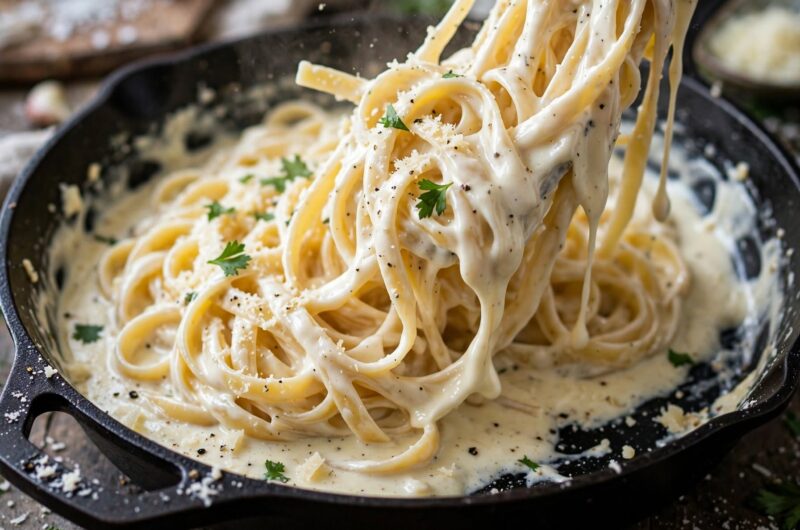
Homemade Alfredo Sauce
Silky, creamy homemade alfredo sauce made in 15 minutes with butter, heavy cream, garlic, and freshly grated parmesan. No roux and no graininess.
4
servings5
minutes10
minutes15
minutesIngredients
1/2 cup (113 g) unsalted butter
2 garlic cloves, minced
1 1/2 cups (360 ml) heavy cream
1 1/2 cups (about 4 oz / 115 g) freshly grated parmesan
1/8 tsp ground nutmeg (optional)
Salt, to taste
1/4 tsp black pepper
Reserved hot pasta water, as needed
Directions
- Melt the butter in a large skillet over medium-low heat. Add the garlic and cook 30–60 seconds until fragrant, without browning.
- Pour in the cream and bring to a gentle simmer. Cook 3–5 minutes, whisking, until slightly thickened.
- Reduce heat to low. Add the parmesan a handful at a time, whisking until each addition melts before adding more.
- Whisk in nutmeg, salt, and pepper. Loosen with hot pasta water if needed until glossy and pourable.
- Toss immediately with hot cooked pasta, adding more pasta water as needed. Serve right away.
Notes
- Always grate the parmesan yourself – pre-grated cheese makes the sauce grainy.
- Keep the heat low once the cream and cheese are in to prevent breaking.
- For a thicker, more stable sauce, whisk in 2–3 oz cream cheese with the parmesan.