Mashed Potatoes — The Best Creamy, Buttery & Easy Recipe
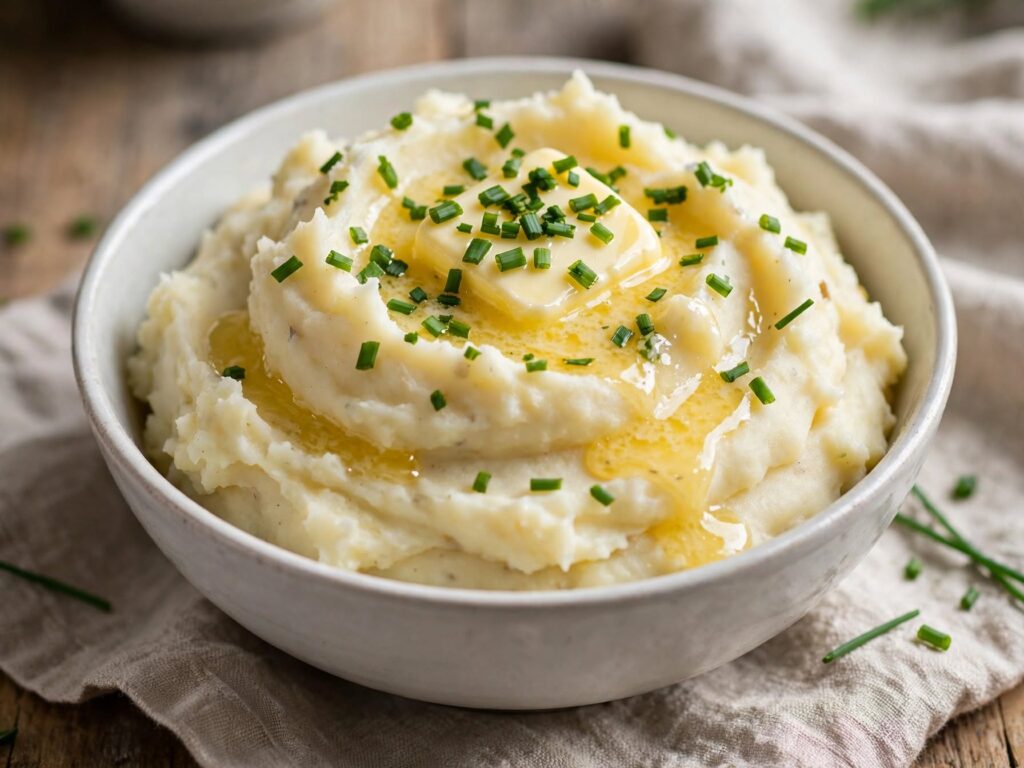
Mashed potatoes should be creamy, buttery, and cloud-soft — never gluey, gray, or watery. This recipe gives you that texture every time using one type of potato, warm dairy, and a two-minute trick most recipes skip. You get restaurant-smooth results with a masher and a pot, no fancy equipment and no guesswork.
| Prep time | 15 minutes |
| Cook time | 20 minutes |
| Total time | 35 minutes |
| Servings | 6 |
| Difficulty | Easy |
| Cuisine | American / European classic |
| Key method | Boil, steam-dry, then mash with warm butter and milk |
Rich, fluffy mashed potatoes from scratch in about 35 minutes.
In This Post
- Why You’ll Love It
- What Makes It Different
- Ingredients & Substitutions
- Equipment You’ll Need
- How to Make It
- Best Potatoes to Use
- Expert Tips
- Secret to Creamy Mashed Potatoes
- Roasted Garlic, Red Skin & Mashed Potato Fries
- Variations & Add-Ins
- What to Serve With It
- Storage & Make-Ahead
- Troubleshooting
- Nutrition Information
- FAQ
- Recipe Card
Why You’ll Love This Mashed Potatoes Recipe
- Genuinely creamy, never gluey — the steam-dry step and gentle mashing stop the starch from turning to paste.
- Deeply buttery — butter goes in before the milk so it coats the starch and every bite tastes rich, not watery.
- Foolproof texture — one potato variety means no guesswork on how long to cook or how they’ll mash.
- Make-ahead friendly — they reheat beautifully, so you can prep before a holiday or busy weeknight.
- Six ingredients — potatoes, butter, milk, cream, salt, pepper. That’s the whole list.
- Scales cleanly — the ratios hold whether you’re feeding 4 or 12.
What Makes This Mashed Potatoes Recipe Different
The difference is one step almost everyone skips: after draining, you return the potatoes to the hot, empty pot for a minute to steam off the surface water. Wet potatoes dilute the butter and force you to add more dairy, which is exactly how mash turns runny and bland. Dry, hot potatoes drink up butter and cream, so you get a richer result with less liquid. That single minute is the line between good and great.
Ingredients You’ll Need
- 3 lb (1.36 kg) Yukon Gold potatoes, peeled and cut into 1½-inch chunks
- 8 tbsp (113 g) unsalted butter, cut into pieces and softened
- ¾ cup (180 ml) whole milk, warmed
- ½ cup (120 ml) heavy cream, warmed (or use more whole milk)
- 1½ tsp fine sea salt, plus 1 tbsp for the cooking water
- ¼ tsp freshly ground black pepper
Ingredient Notes
- Yukon Gold potatoes are the sweet spot — medium starch, naturally buttery, and forgiving. They mash smooth without turning gummy the way waxy potatoes can. Pick firm potatoes with no green tint or sprouting.
- Unsalted butter lets you control the salt, and softening it first means it melts evenly into hot potatoes instead of sitting in cold lumps. Use it generously; it’s the backbone of the flavor.
- Whole milk and heavy cream both need to be warm. Cold dairy shocks the potatoes, cools the mash, and firms it up as you stir. Warming takes 30 seconds in the microwave.
- Fine sea salt dissolves fast and seasons evenly. Salting the cooking water — like pasta — seasons the potatoes from the inside, not just the surface.
Substitutions & Swaps
- No heavy cream? Use 1¼ cups warm whole milk total. Slightly lighter, still creamy.
- Russet potatoes work and mash extra fluffy, but they absorb more liquid — add dairy slowly and stop when it looks right.
- Sour cream or cream cheese (¼ to ½ cup) in place of the heavy cream adds tang and body — a popular restaurant move.
- Dairy-free: swap plant butter and warm unsweetened oat or soy milk; add a splash of olive oil for richness. See the full dairy-free version below.
- Buttermilk (½ cup) instead of cream gives a bright, slightly tangy mash.
Equipment You’ll Need
- Large pot
- Colander
- Potato ricer or handheld potato masher (see the technique section for why this matters)
- Small saucepan or microwave-safe cup to warm the dairy
- Wooden spoon or silicone spatula
How to Make Mashed Potatoes
Step 1 — Peel and Cut Evenly
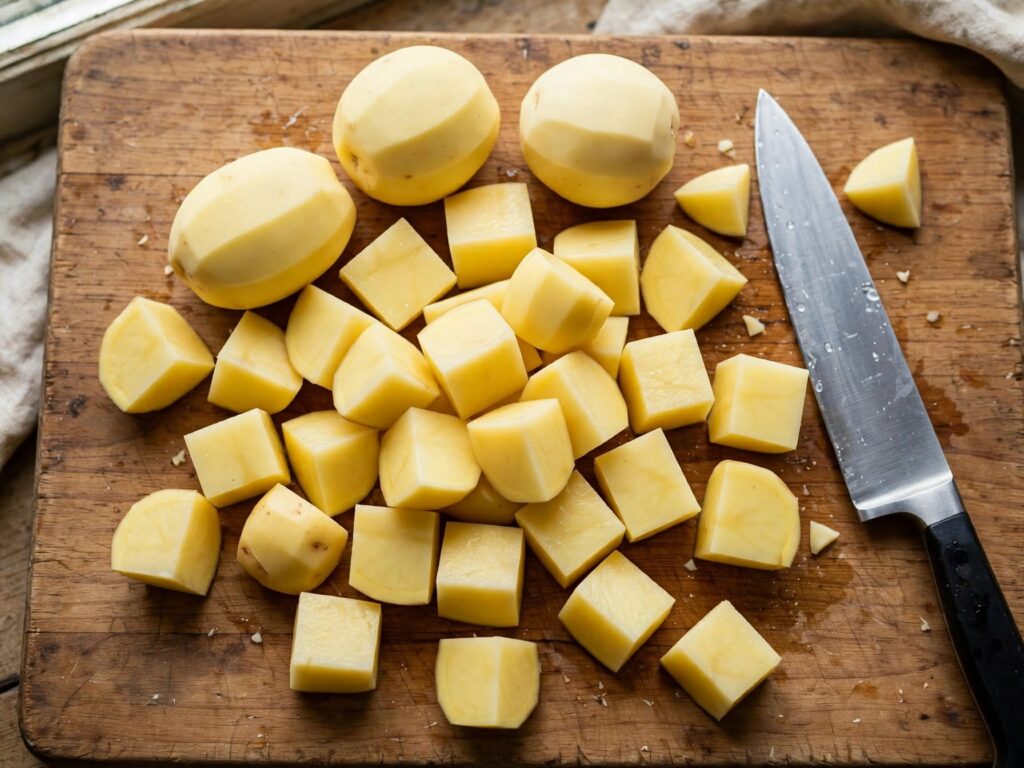
Peel the potatoes and cut them into 1½-inch chunks, keeping the pieces the same size. Even chunks cook at the same rate, so you don’t end up with some pieces raw and others falling apart.
Step 2 — Start in Cold, Salted Water
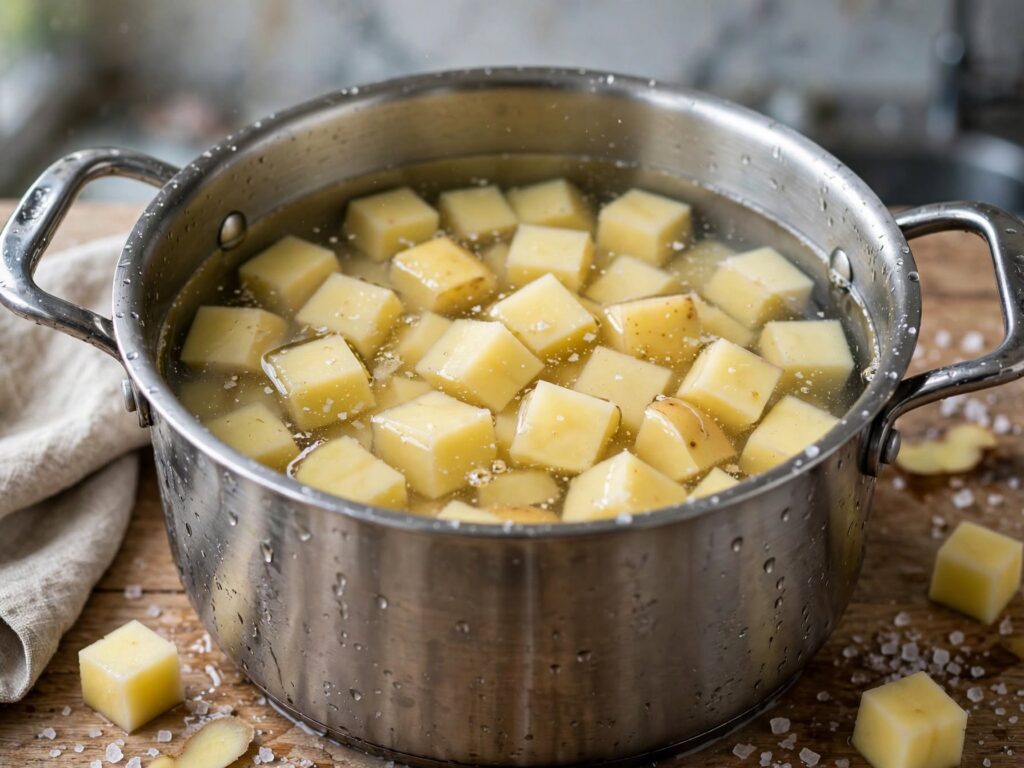
Put the potatoes in a large pot, cover with cold water by an inch, and add 1 tablespoon salt. Starting in cold water lets the potatoes heat through gradually so they cook evenly from edge to center instead of turning mushy outside and firm inside.
Step 3 — Boil Until Fork-Tender
Bring to a boil, then lower to a steady simmer for 15–20 minutes. They’re done when a knife slides into a chunk with zero resistance — under-cooked potatoes leave lumps you can’t mash out.
Step 4 — Drain and Steam-Dry
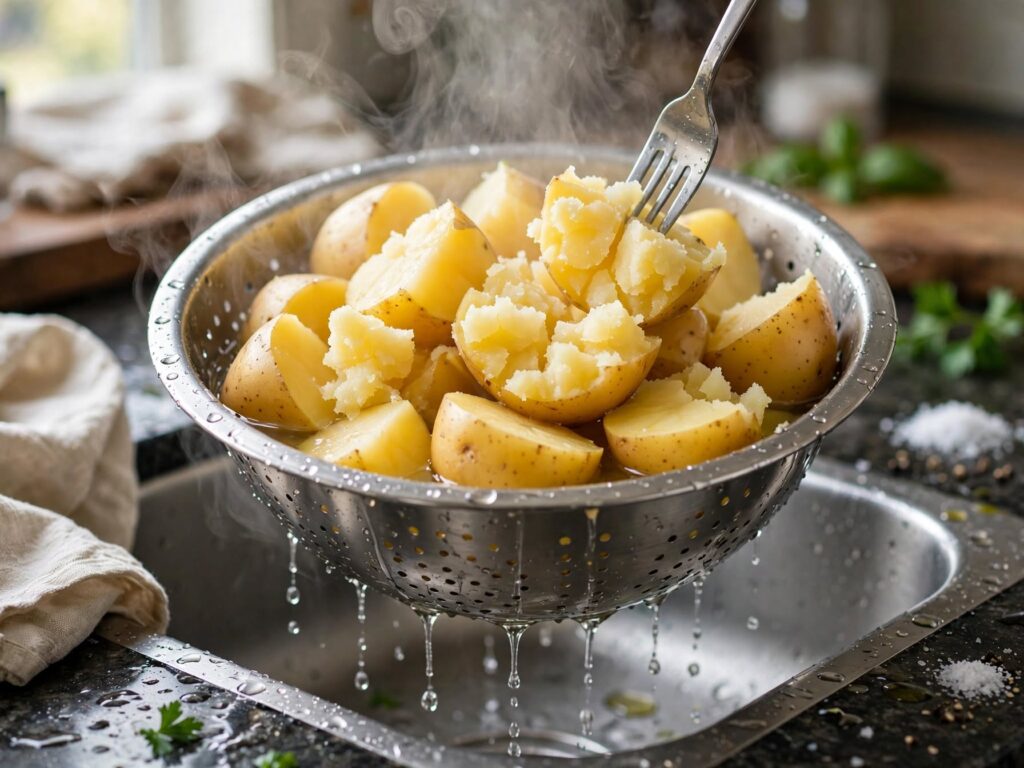
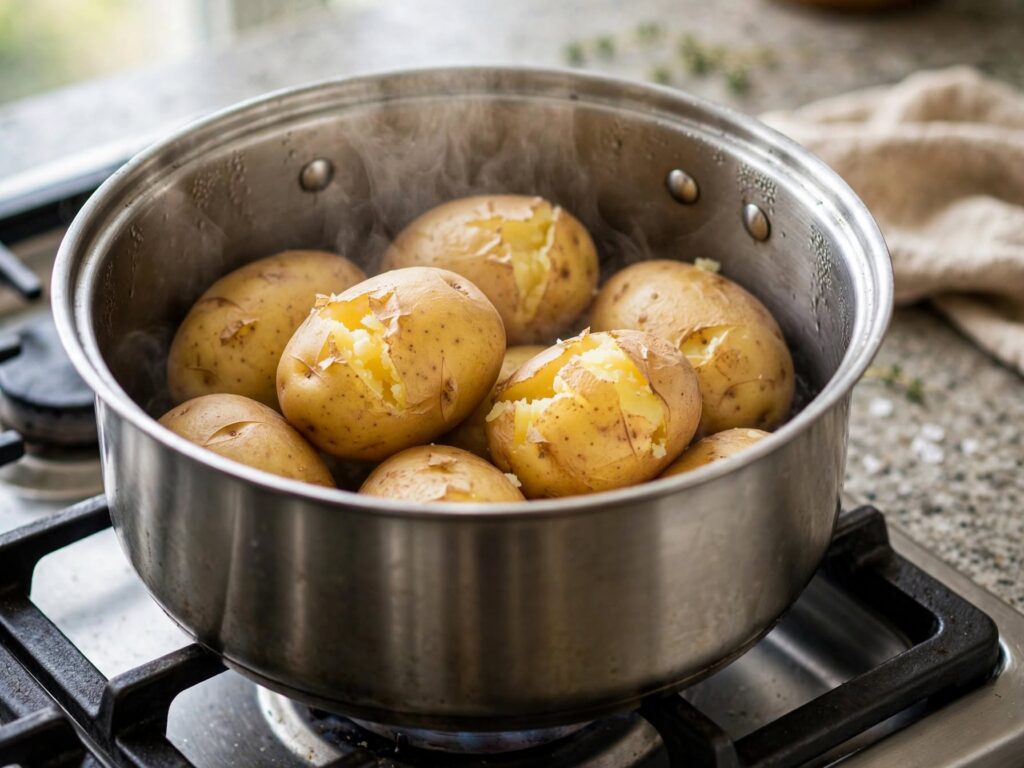
Drain in a colander, then return the potatoes to the hot, empty pot over low heat for 1 minute, shaking gently. You’ll see steam lift off — that’s surface water leaving, which is what keeps the final mash rich instead of watery.
Step 5 — Add Butter First, Then Warm Dairy
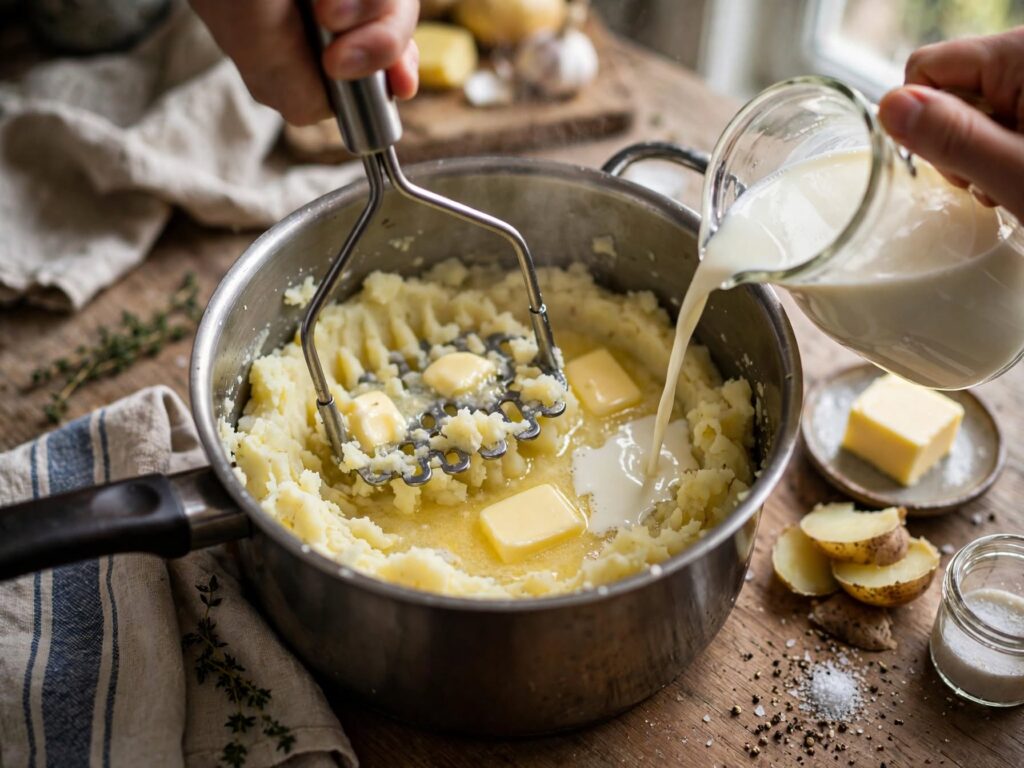
Take the pot off the heat. Add the softened butter and mash until it disappears, then pour in the warm milk and cream a little at a time, folding gently. Butter first coats the starch and locks in a silky texture before the liquid goes in.
Step 6 — Season and Serve
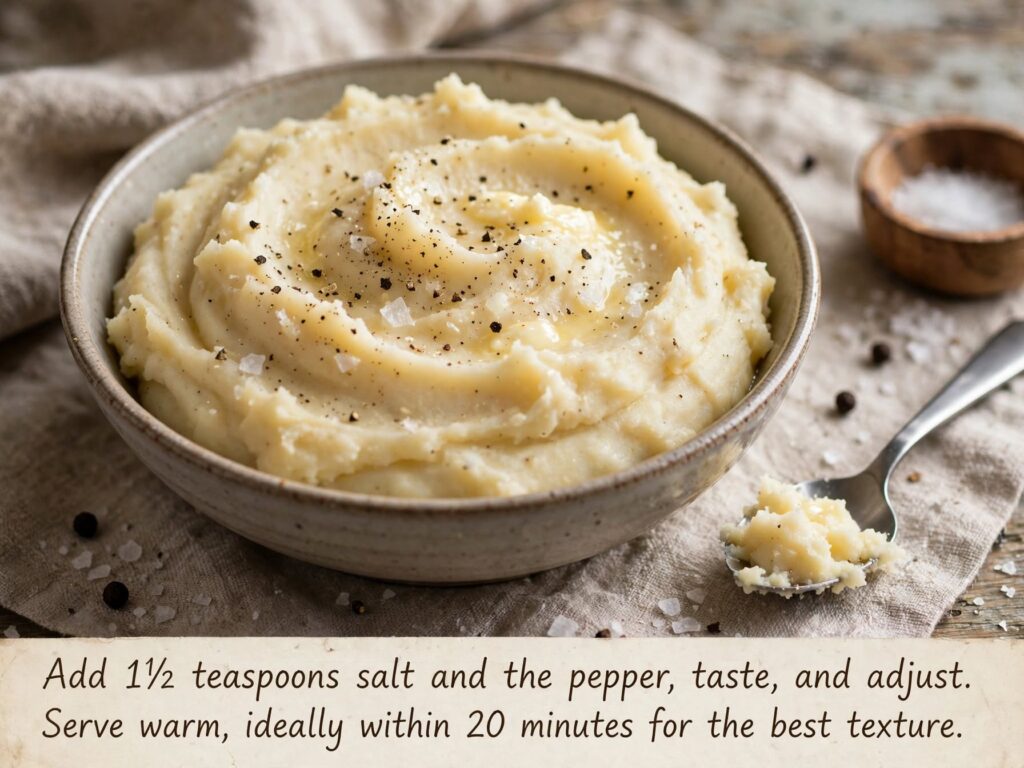
Add 1½ teaspoons salt and the pepper, taste, and adjust. Serve warm, ideally within 20 minutes for the best texture.
What Are the Best Potatoes for Mashed Potatoes?
The best potatoes for mashed potatoes are Yukon Gold — a medium-starch variety that mashes smooth and creamy without turning gluey. Starch content is the single most important variable, and potatoes fall into three groups. High-starch russets mash the fluffiest but absorb a lot of liquid and break down fast. Waxy potatoes (red, new, fingerling) hold their shape and resist smooth mashing, so they turn dense and gummy. Yukon Golds sit in the middle: creamy, naturally buttery, and forgiving if you slightly overcook or overmix. For the fluffiest possible mash, use russets; for the safest, most reliable creamy result, use Yukon Golds — or split the difference with a 50/50 blend.
Expert Tips for the Best Mashed Potatoes
- Cut chunks the same size. Uneven pieces guarantee lumps because some finish before others.
- Salt the water. Seasoning only at the end leaves the inside of every potato bland.
- Never skip the steam-dry. One minute in the hot pot is the difference between rich and watery.
- Warm your dairy. Cold milk cools the mash and makes it stiffen as you stir.
- Add liquid gradually. You can always add more; you can’t take it back out once it’s runny.
- Taste before serving. Potatoes need more salt than you’d expect — season, taste, repeat.
💡 Tip: Steam-dry the potatoes for one minute in the hot, empty pot before mashing. That short step removes surface water so the butter and cream enrich the mash instead of thinning it out.
The Secret to Creamy Mashed Potatoes
The secret to creamy mashed potatoes is to mash gently and never overwork them. Potato cells are packed with starch granules; when you rupture too many — especially with a food processor, blender, or electric mixer run too long — that starch releases and turns the mash into a gluey, elastic paste that no amount of butter can fix. A potato ricer or a handheld masher breaks the potatoes just enough for a smooth texture while leaving most cells intact. Add the butter and warm dairy the moment the potatoes are mashed and hot, then stop stirring as soon as everything is combined. Creaminess comes from fat and technique, not from beating the potatoes harder.
Three Mashed Potato Twists: Roasted Garlic, Red Skin & Mashed Potato Fries
Once you have the base method down, a few small changes turn classic mashed potatoes into something new. Here are three twists worth trying: a richer roasted garlic version, a rustic red skin version, and a fun way to use leftovers.
Roasted Garlic Mashed Potatoes – Creamy & Rich
Roasted garlic mashed potatoes are mellow, sweet, and deeply savory, with none of the sharp bite of raw garlic. Cut the top off a whole head of garlic to expose the cloves, drizzle it with a teaspoon of olive oil, wrap it in foil, and roast at 400°F (200°C) for 35–40 minutes, until the cloves are soft and golden. Start it before you peel the potatoes so it’s ready when they are.
Squeeze the soft cloves out of their skins and mash them into the potatoes along with the butter, then add the warm milk and cream as written in the recipe. The roasted garlic melts straight into the mash, so you get a creamy, rich result with a roasted flavor in every bite. Taste before adding the final salt, then adjust.
Garlic Red Skin Mashed Potatoes Recipe
Garlic red skin mashed potatoes are the rustic cousin of the classic: skins on, a little chunky, and full of garlic. Scrub 3 pounds of red potatoes well and cut them into 1½-inch chunks with the skins left on. Cook them in cold, salted water with 4–6 peeled garlic cloves until a knife slides in with no resistance, about 15–20 minutes. Drain and steam-dry as in the main recipe.
Mash with a hand masher, not a mixer, right in the pot with the butter, then add the warm milk and cream gradually. Red potatoes are waxy, so they won’t turn out as fluffy as Yukon Golds, and they turn gluey if overworked. Stop mashing while the potatoes are still a little chunky. The skins add color, texture, and extra fiber, and there’s no peeling to do.
Mashed Potato French Fries – A Fun Potato Twist
Mashed potato fries are a great way to use leftover mashed potatoes. They’re crisp on the outside and soft and creamy inside. Start with about 3 cups of cold mashed potatoes straight from the fridge, since cold mash is firm enough to shape.
- Heat the oven to 425°F (220°C) and grease or line a rimmed sheet pan.
- Stir 1 egg, ½ cup shredded cheddar, and ¼ cup flour into the cold mashed potatoes until just combined.
- With floured hands, shape the mixture into fries about ½ inch thick and 3 inches long.
- Roll each fry in breadcrumbs, place on the pan, and bake 20–25 minutes, flipping once, until golden and crisp.
Serve them hot with ketchup, ranch, or cheese sauce for dipping. If the mixture feels too soft to shape, chill it for 30 minutes or add a tablespoon more flour.
💡 Tip: For the mashed potato fries, use mash that was made with less liquid. Loose, very creamy leftovers need extra flour and chilling to hold their shape.
Delicious Variations & Add-Ins
Garlic Butter Mashed Potatoes
Simmer 6 peeled garlic cloves with the potatoes, then mash them right in. For a mellower, sweeter flavor, roast a whole head of garlic and squeeze the soft cloves into the mash with the butter. See the roasted garlic version above for timing.
Loaded Mashed Potatoes
Fold in ½ cup shredded sharp cheddar, ¼ cup sour cream, 4 slices crumbled cooked beef bacon, and 2 tablespoons sliced chives. Top with a little extra of each before serving.
Lighter Mashed Potatoes
Cut the butter to 4 tablespoons and replace the cream with warm low-fat milk or reserved potato cooking water. For a lower-carb version, swap up to half the potatoes for steamed cauliflower and mash together.
Dairy-Free & Vegan Mashed Potatoes
Use 6 tablespoons vegan butter and ¾ cup warm unsweetened oat or soy milk, plus 1 tablespoon olive oil for richness. Yukon Golds are naturally buttery enough to carry this well.
Big-Batch Slow Cooker Mashed Potatoes
Make the mash, transfer it to a slow cooker set to “warm,” dot the top with butter, and cover. It holds beautifully for up to 2 hours — ideal when the stove is full during a holiday meal. Stir in a splash of warm milk before serving if it thickens.
What to Serve With Mashed Potatoes
- Roast chicken or turkey — the classic pairing; the mash soaks up the pan juices.
- Meatloaf — a diner-style duo built for gravy.
- Pan-seared steak — creamy mash balances a rich, savory sear.
- Slow-braised beef or pot roast — spoon the braising liquid right over the top.
- Roasted vegetables and gravy — a satisfying vegetarian plate.
How to Store Mashed Potatoes
At Room Temperature
Don’t leave mashed potatoes out longer than 2 hours; cooked potatoes are a fast-spoiling food. If you’re serving over a long meal, hold them warm in a slow cooker instead of at room temperature.
In the Refrigerator
Cool completely, then store in an airtight container for 3–4 days. Reheat gently on the stove or microwave with a splash of warm milk, stirring until creamy again.
Freezing & Thawing
Yes, you can freeze mashed potatoes — and butter-and-cream-rich mash freezes better than low-fat versions, because the fat protects the texture. Freeze in an airtight container up to 2 months. Thaw overnight in the fridge, then reheat low and slow with extra butter or warm milk, stirring to bring back the smooth texture.
Make-Ahead Instructions
Make the potatoes up to 2 days ahead and refrigerate. To reheat, warm them in a covered pot over low heat or in a 350°F (175°C) oven, stirring in warm milk a little at a time until they’re creamy again. For a holiday, mash the day before and hold on “warm” in a slow cooker the day of — it frees up the stove and keeps them at serving temperature.
Troubleshooting Common Problems
Why Are My Mashed Potatoes Gluey?
Gluey mashed potatoes come from overworking the potatoes and releasing too much starch. Switch from an electric mixer or food processor to a ricer or hand masher, and stop mashing the moment they’re smooth. Unfortunately, gluey mash can’t be reversed once it happens — prevention is the only fix.
Why Are My Mashed Potatoes Watery?
Watery mash usually means the potatoes weren’t drained and dried enough, or too much liquid went in at once. Always steam-dry after draining, and add warm dairy gradually. To rescue a runny batch, warm it over low heat while stirring to cook off moisture, or fold in a little instant potato flakes.
Why Are My Mashed Potatoes Lumpy?
Lumps come from undercooked potatoes or uneven chunks. Cook until a knife meets no resistance, and cut all pieces the same size next time. A ricer or food mill will smooth out minor lumps; a masher won’t fix hard, undercooked bits.
Why Are My Mashed Potatoes Bland?
Bland potatoes are almost always under-salted. Salt the cooking water so the potatoes season from the inside, then taste and add more salt at the end. A knob of extra butter or a spoon of sour cream also lifts flat-tasting mash.
Nutrition Information
Per serving (recipe makes 6 servings), approximate:
- Calories: 335
- Fat: 22 g
- Saturated fat: 14 g
- Carbohydrates: 32 g
- Fiber: 3 g
- Sugar: 3 g
- Protein: 5 g
- Sodium: 640 mg
Values are estimates and vary with exact ingredients and portion size.
Frequently Asked Questions
What are the best potatoes for mashed potatoes?
Yukon Gold for creamy and reliable, or russet for extra fluffy. Both mash far better than waxy red or new potatoes.
Should I peel the potatoes?
For classic smooth mash, yes. Leave the skins on for a rustic, textured version — just scrub them well first.
Do I start potatoes in cold or hot water?
Cold water. It lets the chunks heat evenly so they cook through without the outsides going mushy.
Why are my mashed potatoes gluey?
You overworked them and released too much starch. Use a ricer or masher, not a mixer, and stop as soon as they’re smooth.
Can I make mashed potatoes ahead of time?
Yes — up to 2 days in the fridge, or hold them warm in a slow cooker on the day of a big meal.
Can you freeze mashed potatoes?
Yes, for up to 2 months. Butter-and-cream versions freeze best; reheat low and slow with extra milk.
What can I add to make them more flavorful?
Roasted garlic, sour cream, cream cheese, chives, or extra butter all deepen the flavor without changing the method.
Why are my mashed potatoes watery?
Too much liquid or not enough drying. Steam-dry the potatoes and add warm dairy slowly.
Can I use milk instead of cream?
Absolutely. Use 1¼ cups warm whole milk total for a slightly lighter but still creamy mash.
How do I reheat mashed potatoes without drying them out?
Warm gently on the stove or in a low oven, stirring in a splash of warm milk until they’re creamy again.
Related Recipes
Recipe Card
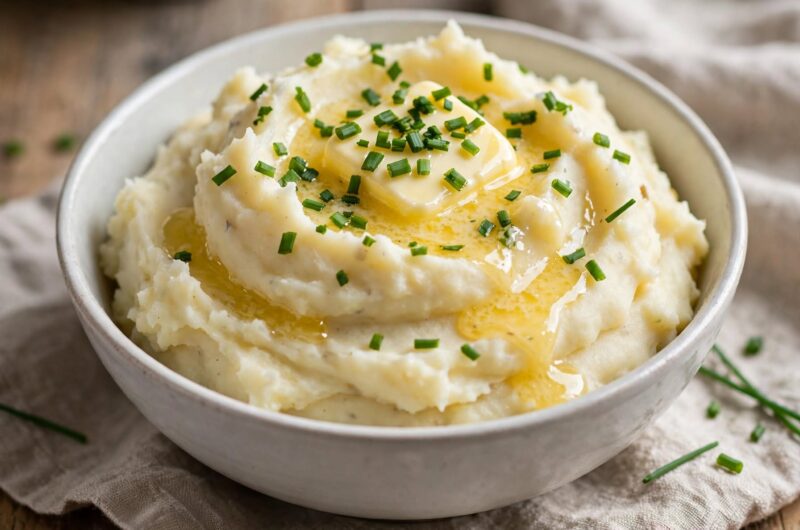
Creamy Mashed Potatoes
The best creamy, buttery mashed potatoes from scratch — fluffy, smooth, and never gluey.
6
servings15
minutes20
minutes35
minutesIngredients
3 lb (1.36 kg) Yukon Gold potatoes, peeled and cut into 1½-inch chunks
8 tbsp (113 g) unsalted butter, softened
¾ cup (180 ml) whole milk, warmed
½ cup (120 ml) heavy cream, warmed
1½ tsp fine sea salt, plus 1 tbsp for the cooking water
¼ tsp freshly ground black pepper
Directions
- Peel and cut the potatoes into even 1½-inch chunks.
- Place in a large pot, cover with cold water by 1 inch, add 1 tbsp salt, and bring to a boil.
- Simmer 15–20 minutes, until a knife slides through with no resistance. Drain.
- Return the potatoes to the hot, empty pot over low heat for 1 minute to steam off moisture.
- Off the heat, mash in the softened butter, then fold in the warm milk and cream gradually.
- Add the 1½ tsp salt and pepper, taste, adjust, and serve warm.
Notes
- Steam-drying the drained potatoes is the key to creamy, not watery, mash.nUse a ricer or hand masher — never a food processor or electric mixer, which turn potatoes gluey.nWarm the dairy so it doesn’t cool or stiffen the potatoes.