Mac n Cheese — The Creamiest Homemade Recipe
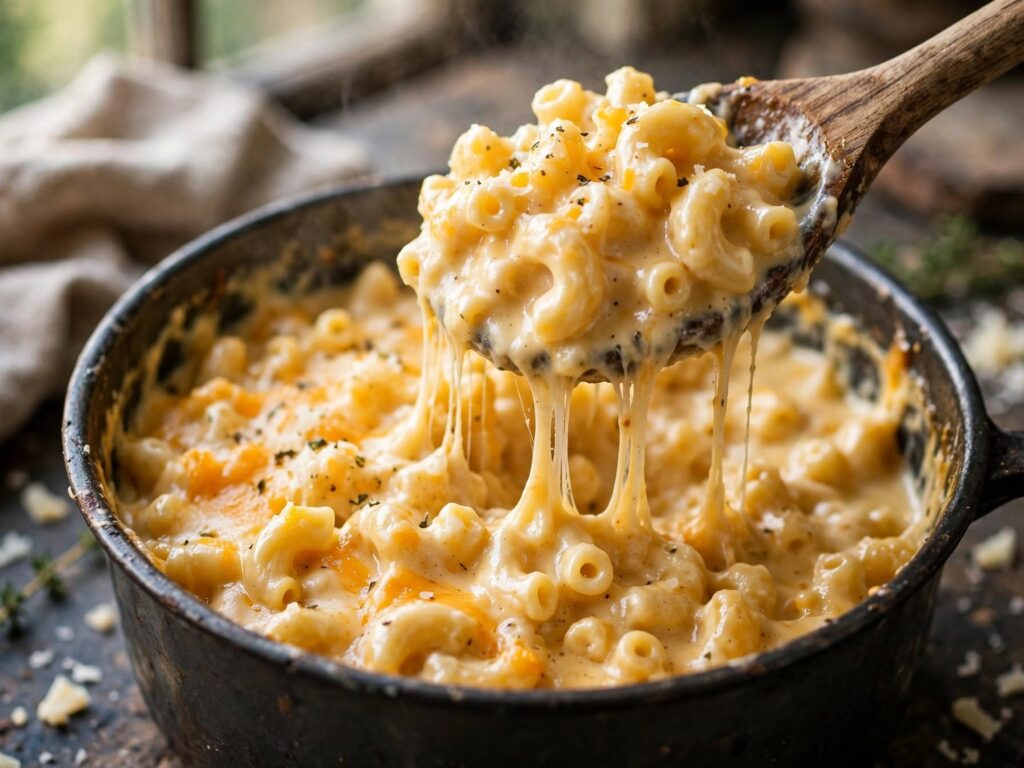
This mac n cheese is ultra-creamy, deeply cheesy, and smooth from the first bite to the last — no grainy sauce, no dry corners. You build a quick cheese sauce from a simple roux, stir in a blend of sharp and melty cheeses, and fold in perfectly cooked pasta.
It’s ready on the stovetop in about 30 minutes, or take it one step further with a crispy baked topping. Either way, it beats the boxed stuff by a mile.
| Prep time | 10 minutes |
| Cook time | 20 minutes |
| Total time | 30 minutes |
| Servings | 6 |
| Difficulty | Easy |
| Cuisine | American |
| Key method | Roux-based cheese sauce with freshly shredded cheese |
Cook the pasta just under al dente, make a béchamel, melt in the cheese off high heat, and combine. Bake it with a buttered crumb topping if you want a crispy crust.
- Why You’ll Love It
- What Makes It Different
- Ingredients
- Equipment You’ll Need
- How to Make It
- Making It Creamy
- Expert Tips
- The Secret to Ultra-Creamy Mac and Cheese
- From Scratch, No-Bake & One-Pot
- Variations & Add-Ins
- What to Serve With It
- How to Store
- Make-Ahead Instructions
- Troubleshooting
- Nutrition Information
- FAQ
- Related Recipes
Why You’ll Love This Mac and Cheese
- Genuinely creamy — a proper roux and the right cheese blend keep the sauce smooth, never grainy.
- Rich, sharp flavor from real cheddar plus a good melting cheese.
- Stovetop or baked — one recipe, two ways to serve it.
- 30 minutes on the stove — faster than most casseroles.
- No boxed powder — just real cheese and a handful of pantry staples.
- Crowd-pleasing — a side dish for a party or a main on its own.
Ingredients You’ll Need
Ingredient Notes
- Elbow macaroni (1 lb): The classic shape — its ridges and curves hold sauce. Cook it just under al dente so it doesn’t turn mushy, especially if baking.
- Butter and all-purpose flour: Cooked together they form the roux that thickens the sauce and prevents graininess.
- Whole milk: The body of the sauce. Whole milk gives richness without breaking; warm it first so it blends into the roux smoothly.
- Sharp cheddar: The flavor. Sharp or extra-sharp gives that unmistakable cheesy punch. Shred it yourself — pre-shredded cheese is coated in starch that makes sauces grainy.
- Gruyère or Monterey Jack: The melter. These add stretch and smoothness that cheddar alone can’t. Gruyère is nutty; Jack is mild and creamy.
- Mustard powder: A savory background note that makes the cheese taste more intense without tasting of mustard.
- Garlic powder, salt, and pepper: Round out the seasoning.
- Cayenne or paprika (optional): A pinch adds warmth and depth.
Substitutions & Swaps
- No gruyère? Use Monterey Jack, fontina, or Gouda — any good melting cheese.
- Gluten-free: Use gluten-free pasta and a 1:1 gluten-free flour for the roux.
- Lighter: Use 2% milk and reduce the cheese slightly; the sauce will be thinner but still creamy.
- Extra-rich: Replace ½ cup of the milk with heavy cream or evaporated milk for a more decadent sauce.
- Different pasta: Cavatappi, shells, or rotini all work and hold sauce well.
- No mustard powder? A teaspoon of Dijon stirred into the sauce works in its place.
What Makes This Mac and Cheese Different
The difference is the cheese sauce foundation. Instead of dumping shredded cheese into hot milk and hoping, you build a béchamel — butter and flour cooked into a roux, then whisked with warm milk — which gives the cheese something stable to melt into. That base is what keeps the sauce creamy and pourable instead of splitting into oily, grainy clumps. Pair it with freshly shredded cheese and a two-cheese blend, and you get a sauce that stays silky whether you serve it straight from the pot or bake it.
Equipment You’ll Need
- Large pot (for the pasta)
- Large saucepan or deep skillet (for the sauce)
- Whisk
- Box grater
- Colander
- 9×13-inch baking dish (only if baking)
How to Make Mac n Cheese
Step 1 — Cook the Pasta
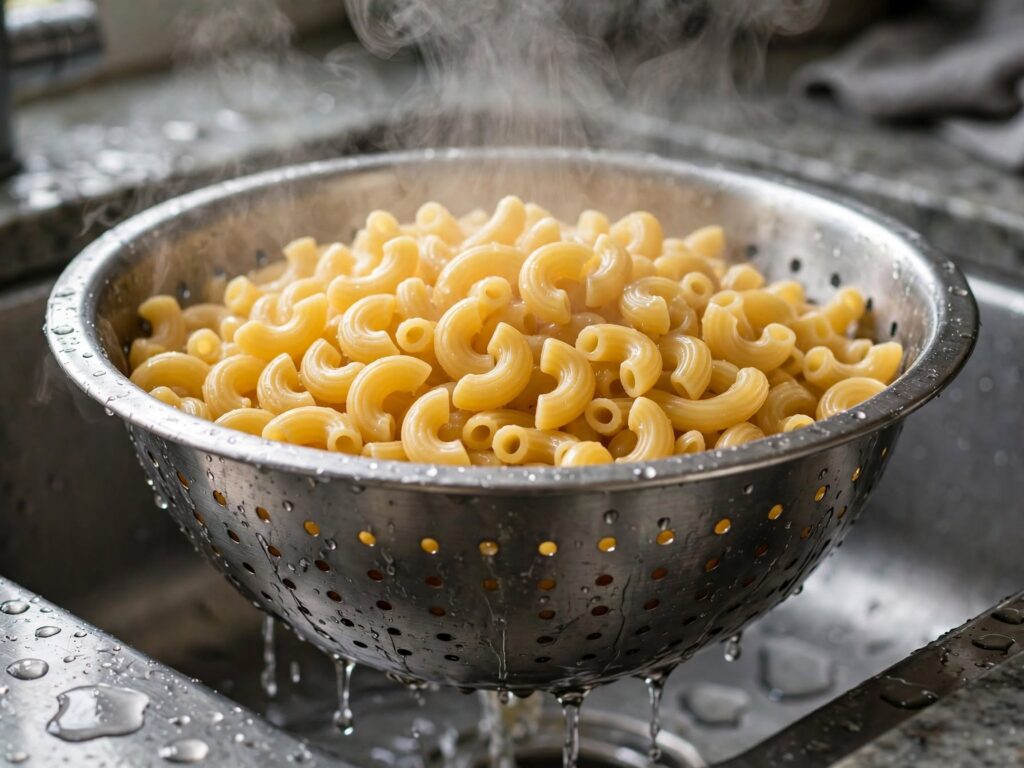
Boil the macaroni in salted water for 1 minute less than the package says — it should be firm, since it keeps cooking in the hot sauce. Drain and set aside; don’t rinse, as the surface starch helps the sauce cling.
Step 2 — Make the Roux
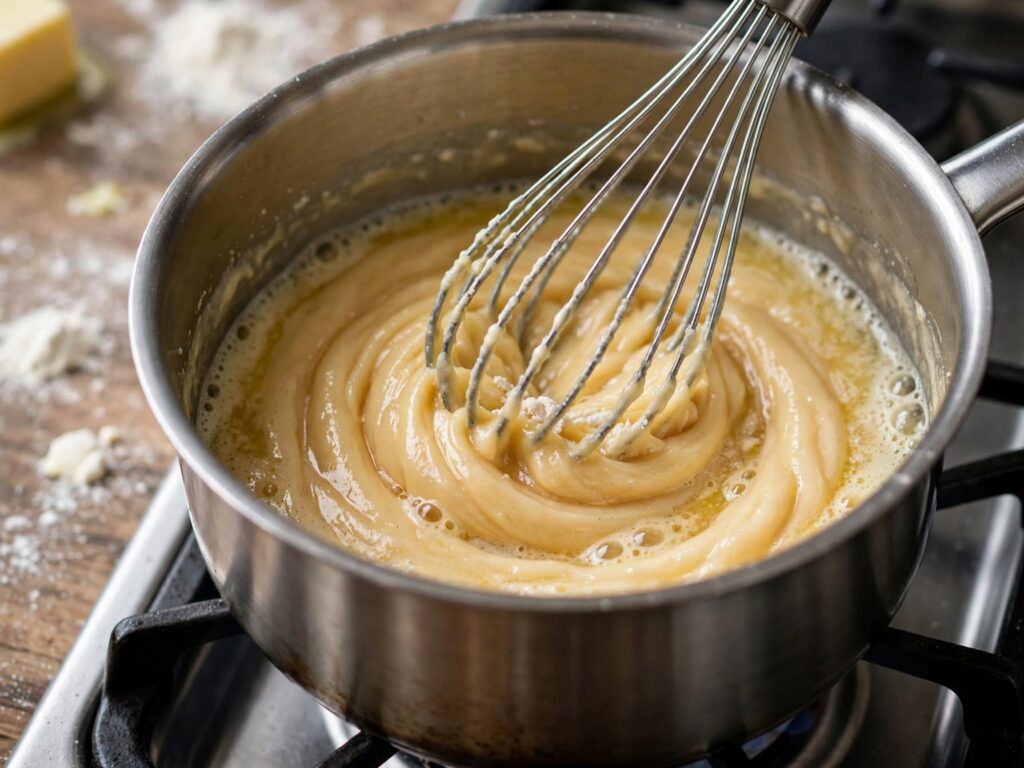
Melt the butter in a large saucepan over medium heat. Whisk in the flour and cook, whisking, for 1–2 minutes until it smells slightly nutty and turns pale gold. This cooks out the raw-flour taste and sets up the sauce.
Step 3 — Build the Sauce
Slowly pour in the warm milk, whisking constantly to keep it lump-free. Simmer gently for 3–5 minutes, whisking, until the sauce thickens enough to coat the back of a spoon.

Step 4 — Melt in the Cheese
Reduce the heat to low. Stir in the mustard powder, garlic powder, salt, and pepper, then add the shredded cheeses a handful at a time, stirring until each addition melts before adding more. Keeping the heat low here is what stops the sauce from turning grainy.

Step 5 — Combine
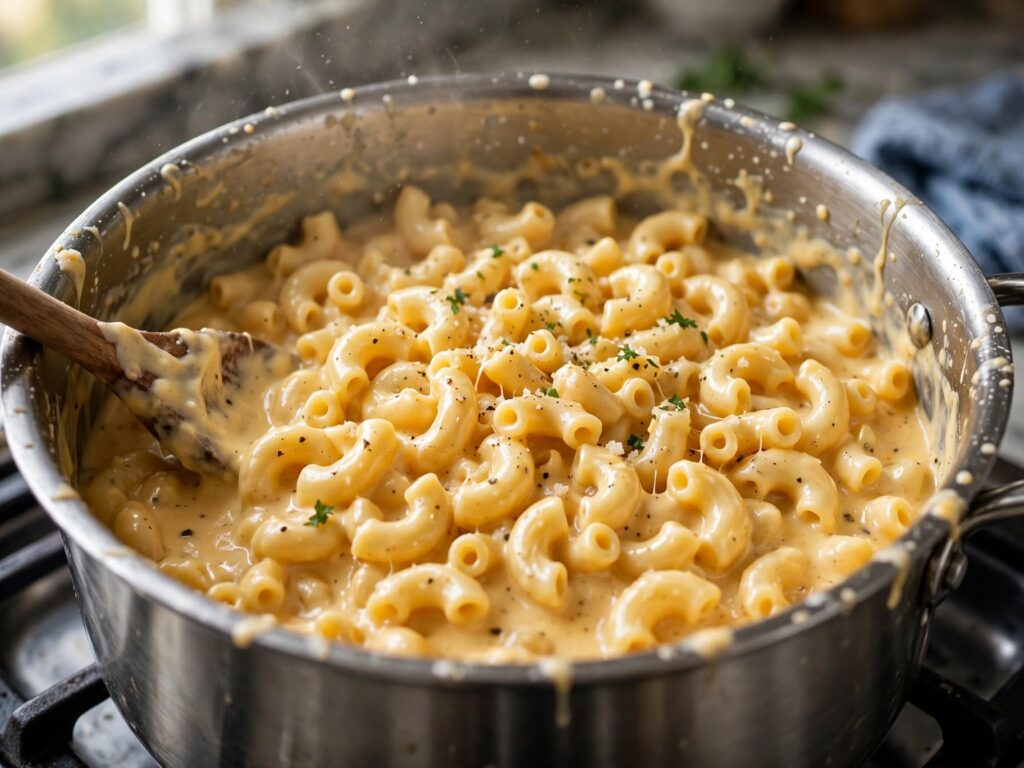
Fold the drained pasta into the cheese sauce until every piece is coated. If it’s thicker than you like, loosen it with a splash of warm milk. Serve immediately for the creamiest result.
Step 6 — Bake (Optional)
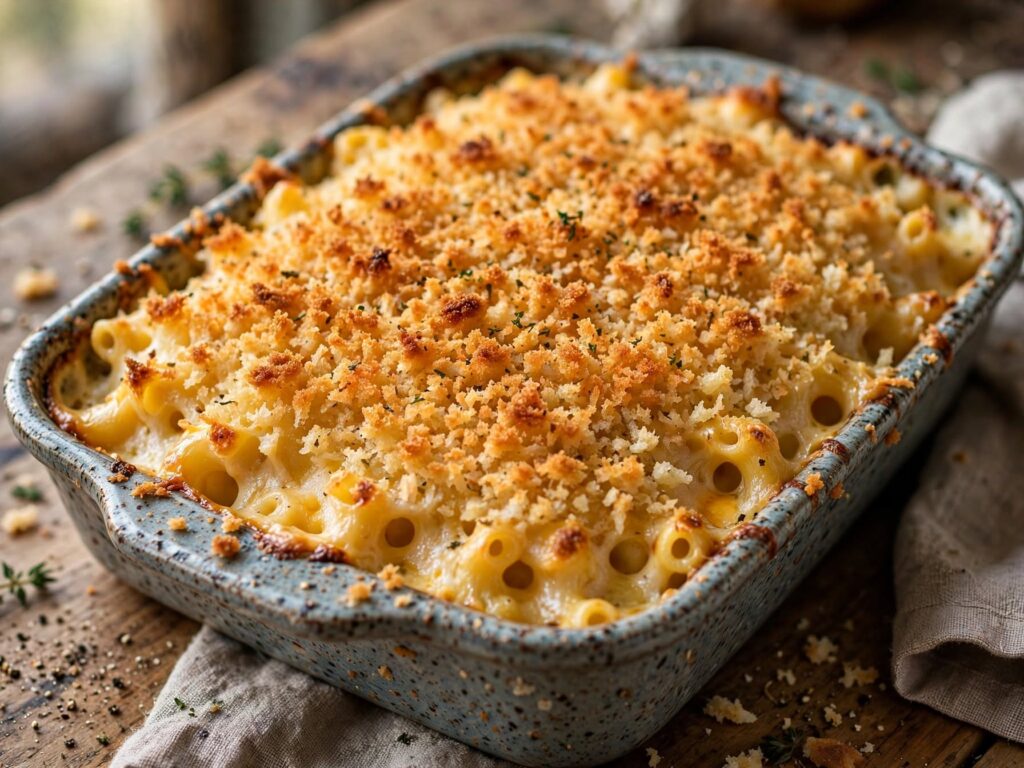
For a crispy top, transfer to a buttered 9×13 dish, scatter over extra cheese and buttered breadcrumbs, and bake at 375°F for 18–22 minutes until golden and bubbling.
How Do You Make Mac and Cheese Creamy?
You make mac and cheese creamy by building a roux-based sauce, using freshly shredded cheese, and melting it in over low heat. The roux gives the milk a stable, velvety body; freshly grated cheese melts cleanly into it; and low heat keeps the fat from separating out. Skip any of the three and you risk a grainy or oily sauce.
Three moves that guarantee a creamy result:
- Warm the milk before it meets the roux. Cold milk into hot roux is the main cause of lumps.
- Shred your own cheese. Bagged shredded cheese is coated in starch and cellulose that stop it melting smoothly.
- Add cheese off the boil. Once dairy and cheese are in, keep the heat low — boiling breaks the sauce.
Expert Tips for the Best Mac and Cheese
- Undercook the pasta. Pull it a minute early so it stays tender, not mushy, especially if you’re baking it.
- Use a cheese blend. Sharp cheddar for flavor, a melting cheese for smoothness — the combination beats any single cheese.
- Always shred fresh. This single change prevents most grainy-sauce problems.
- Add a little mustard powder. It deepens the cheesy flavor without tasting like mustard.
- Make the sauce slightly loose. It thickens as it sits and clings to the pasta, so err on the saucier side.
- Season the pasta water well. Under-seasoned pasta makes the whole dish taste flat.
The Secret to Ultra-Creamy Mac and Cheese
The secret is the béchamel base plus the right cheese chemistry. A roux thickened with milk creates an emulsion that holds fat and liquid together, so the melted cheese blends into a smooth, glossy sauce rather than seizing. This is why roux-based mac and cheese stays creamy where “just melt cheese into milk” versions turn oily and split.
Cheese choice is the other half. Aged cheeses like sharp cheddar have big flavor but can turn grainy alone, while younger cheeses like Monterey Jack or gruyère melt into a smooth stretch. Blending the two gives you both flavor and texture, and shredding fresh keeps starchy coatings from interfering with the melt. Nail the base and the blend, and the creaminess takes care of itself.
Creamy Mac and Cheese Three Ways: From Scratch, No-Bake & One-Pot
People look for creamy mac and cheese in several forms: a classic from-scratch recipe, a stovetop version with no oven, and a one-pot shortcut. Here’s how this recipe fits each.
How to Make Creamy Mac and Cheese from Scratch
Homemade mac and cheese from scratch is a simple cheese sauce poured over pasta, and you only need five steps:
- Boil 1 lb of elbow macaroni in well-salted water for 1 minute less than the package says, then drain without rinsing.
- Melt 4 tablespoons of butter, whisk in 4 tablespoons of flour, and cook 1–2 minutes until pale gold.
- Slowly whisk in 3 cups of warm whole milk and simmer 3–5 minutes until it coats a spoon.
- Lower the heat and stir in the seasonings, then 3 cups of shredded sharp cheddar and 1 cup of Gruyère or Monterey Jack, a handful at a time.
- Fold in the pasta and serve right away.
It’s a from-scratch recipe because the sauce starts with a real roux, not a powder or a jar. Shred the cheese yourself and keep the heat low, and the sauce stays smooth.
Super Creamy Mac and Cheese Recipe (No Bake)
You don’t need an oven for this mac and cheese. The stovetop version in the recipe above is the creamiest, because the sauce is never dried out by baking. It’s ready in about 30 minutes and goes straight from the pot to the bowl.
To make it even creamier, replace ½ cup of the milk with heavy cream or evaporated milk, and keep the sauce a little looser than you think you need, since it thickens as it sits. Serve it immediately, and reheat leftovers on the stove with a splash of milk. Save the baking step for when you want a crispy topping.
Creamy One-Pot Mac and Cheese – So Easy!
For a one-pot version, cook the pasta right in the sauce liquid so the pasta’s starch thickens it and there’s no roux or draining. This makes a smaller batch of about 3–4 servings. Add 8 oz of elbow macaroni, 2 cups of water, 1½ cups of whole milk, ½ teaspoon of salt, and ¼ teaspoon each of mustard powder and garlic powder to a large, deep pot.
Bring to a gentle boil, then simmer over medium-low heat for 8–10 minutes, stirring often so the pasta doesn’t stick, until the macaroni is tender and the liquid has thickened. Take it off the heat, then stir in 2 cups of freshly shredded cheese (cheddar with a little Gruyère or Monterey Jack) a handful at a time until smooth. Let it sit for 2 minutes to thicken. Add a splash of milk if it looks tight.
Delicious Variations & Add-Ins
Baked Mac and Cheese
Transfer the finished mac to a baking dish, top with extra cheese and buttered panko, and bake at 375°F for about 20 minutes for a crispy, golden crust over the creamy base.
Three-Cheese Mac and Cheese
Add a third cheese — gruyère, fontina, or smoked gouda — for a deeper, more complex flavor. Keep the total cheese amount the same.
Lighter Mac and Cheese
Use 2% milk, cut the cheese by a quarter, and stir in a spoonful of plain Greek yogurt at the end for creaminess with less fat.
Gluten-Free Mac and Cheese
Use gluten-free pasta and a 1:1 gluten-free flour blend for the roux. The method stays exactly the same.
Loaded Add-Ins
Stir in crispy bacon, roasted jalapeños, buffalo chicken, or lobster to turn it into a signature dish. Add cooked mix-ins at the end so they don’t overcook.
What to Serve With Mac and Cheese
- BBQ or pulled pork — the creamy mac balances smoky, saucy meat.
- Fried chicken — a classic Southern-style pairing.
- Roasted broccoli or green beans — a fresh, crisp contrast to the richness.
- A sharp green salad — cuts through the cheese and rounds out the plate.
- Grilled sausage or ham — hearty proteins that make it a full meal.
How to Store Mac and Cheese
Room Temperature
Don’t leave mac and cheese out longer than 2 hours — it’s a dairy dish and spoils quickly. Cool and refrigerate leftovers promptly.
Fridge
Store in an airtight container for up to 4 days. Reheat gently on the stove or in the microwave with a splash of milk, stirring, to bring the sauce back to creamy — dry reheating makes it clumpy.
Freezer
Yes, you can freeze mac and cheese. Baked mac and cheese freezes best for up to 3 months. Cool completely, wrap tightly, and thaw overnight in the fridge before reheating, adding a little milk to loosen the sauce. Stovetop-style can freeze too but is more prone to a slightly grainy texture on reheating.
Make-Ahead Instructions
Assemble baked mac and cheese up to a day ahead: prepare it through combining the pasta and sauce, spread it in the baking dish, cover, and refrigerate. Add the topping and bake straight from the fridge, adding 5–10 minutes to the bake time. If making the sauce ahead separately, keep it a little loose and rewarm gently with milk, since it thickens as it chills.
Troubleshooting Common Problems
Why Is My Mac and Cheese Grainy or Gritty?
The sauce got too hot or you used pre-shredded cheese. High heat forces the fat out of the cheese, and bagged shredded cheese is coated in starch that resists smooth melting. Melt freshly shredded cheese in over low heat, a handful at a time, and the grittiness disappears.
Why Did My Mac and Cheese Turn Out Dry?
Too little sauce, overcooked pasta, or over-baking. Make the sauce saucier than you think you need, undercook the pasta by a minute, and don’t bake longer than needed — the pasta keeps absorbing liquid the whole time.
Why Is My Cheese Sauce Clumpy or Lumpy?
The roux had lumps or the milk was added too fast. Whisk the milk in gradually and constantly, and warm it first so it incorporates smoothly. If it’s already lumpy, a quick pass with a whisk or immersion blender smooths it out.
Nutrition Information
Per serving (based on 6 servings — estimate):
- Calories: ~580
- Fat: ~30 g
- Carbohydrates: ~52 g
- Protein: ~26 g
- Sodium: ~640 mg
Values are an estimate and will vary with your exact ingredients, brands, and cheese blend.
Frequently Asked Questions
What cheese is best for mac and cheese?
A blend of sharp cheddar for flavor and a good melting cheese like gruyère or Monterey Jack for smoothness gives the best texture and taste.
Why is my mac and cheese grainy?
The sauce overheated or you used pre-shredded cheese. Melt freshly shredded cheese over low heat, adding it gradually, to keep the sauce smooth.
Should I use pre-shredded cheese?
No. Pre-shredded cheese is coated with starch to stop it clumping in the bag, which also stops it melting smoothly and causes graininess.
How do I keep mac and cheese from drying out?
Make the sauce extra creamy, undercook the pasta slightly, and reheat with a splash of milk. The pasta keeps absorbing liquid, so start saucier than you think.
Stovetop or baked mac and cheese — which is better?
Stovetop is creamiest and fastest; baked gives you a crispy top. This recipe does both from the same base.
Do I have to boil the pasta first?
For this recipe, yes — boil it just under al dente before combining. Undercook it so it doesn’t turn mushy in the sauce.
Can I make mac and cheese ahead of time?
Yes. Assemble baked mac and cheese a day ahead, refrigerate, and bake from cold, adding a few extra minutes.
Can you freeze mac and cheese?
Yes, up to 3 months — baked versions freeze best. Thaw overnight and reheat with a little milk to restore creaminess.
How do I reheat mac and cheese?
Warm it gently on the stove or microwave with a splash of milk, stirring, to bring the sauce back to smooth and creamy.
Can I make it gluten-free?
Yes — use gluten-free pasta and a 1:1 gluten-free flour for the roux. Everything else stays the same.
More Recipes You’ll Love
Mac n Cheese
The creamiest homemade mac n cheese, with a smooth roux-based cheese sauce over tender pasta. Ready in 30 minutes on the stovetop, or baked with a crispy top.
6
servings10
minutes20
minutes30
minutesIngredients
1 lb (450 g) elbow macaroni
4 tbsp (57 g) butter
4 tbsp (30 g) all-purpose flour
3 cups (720 ml) whole milk, warmed
3 cups (about 12 oz / 340 g) sharp cheddar, freshly shredded
1 cup (about 4 oz / 115 g) gruyère or Monterey Jack, freshly shredded
1/2 tsp mustard powder
1/4 tsp garlic powder
1 tsp salt (plus more for pasta water)
1/2 tsp black pepper
Pinch of cayenne or paprika (optional)
1/2 cup panko breadcrumbs tossed with 1 tbsp melted butter
1/2 cup extra shredded cheese
Directions
- Boil the macaroni in well-salted water for 1 minute less than package directions. Drain and set aside; don’t rinse.
- Melt the butter in a large saucepan over medium heat. Whisk in the flour and cook 1–2 minutes until pale gold.
- Slowly whisk in the warm milk. Simmer 3–5 minutes, whisking, until thickened enough to coat a spoon.
- Reduce heat to low. Stir in mustard powder, garlic powder, salt, pepper, and cayenne. Add the cheeses a handful at a time, stirring until smooth.
- Fold in the drained pasta until fully coated. Loosen with a splash of warm milk if needed. Serve immediately.
- For baked mac: transfer to a buttered 9×13 dish, top with extra cheese and buttered panko, and bake at 375°F (190°C) for 18–22 minutes until golden.
Notes
- Always shred your own cheese – pre-shredded makes the sauce grainy.
- Undercook the pasta so it stays tender in the sauce.
- Make the sauce a little loose; it thickens as it sits.