Chicken Fried Rice — The Best Easy Restaurant-Style Recipe
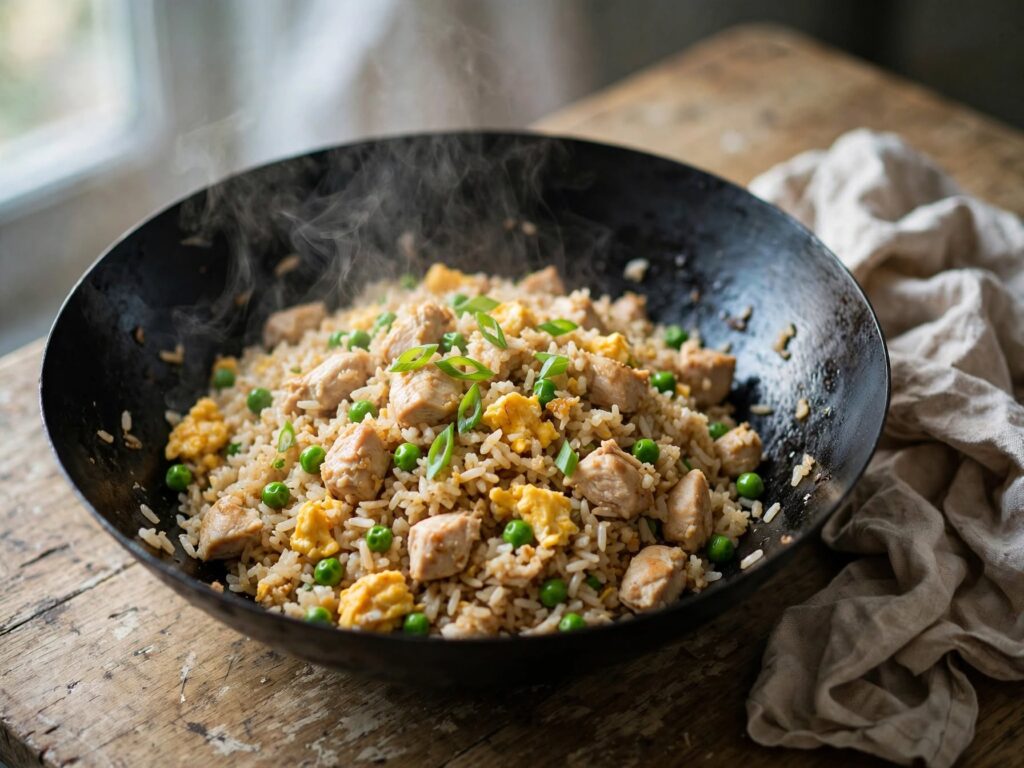
Chicken fried rice is the fastest way to turn leftover rice and a single chicken breast into a full dinner in 25 minutes. This version gives you the two things takeout gets right — separate, lightly toasted grains and deeply savory flavor — without the greasy heaviness. You cook it in one pan, in stages, so the chicken stays tender, the egg stays soft, and every grain gets coated instead of clumped.
| Prep time | 10 minutes |
| Cook time | 15 minutes |
| Total time | 25 minutes |
| Servings | 4 |
| Difficulty | Easy |
| Cuisine | Chinese-American / Asian-inspired |
| Key method | High-heat stir-fry in stages, using cold day-old rice |
If you have cooked rice already in the fridge, this is a weeknight dish. If not, cook the rice first and spread it out to cool (see below) — that step is what separates good fried rice from mushy fried rice.
In This Post
- Why You’ll Love It
- What Makes It Different
- Ingredients & Substitutions
- Equipment You’ll Need
- How to Make It
- Why Cold, Day-Old Rice Is Best
- Expert Tips
- Secret to Separate, Non-Mushy Grains
- Better Than Takeout, Spicy Garlic & Asian-Style
- Variations & Add-Ins
- What to Serve With It
- Storage & Make-Ahead
- Troubleshooting
- Nutrition Information
- FAQ
- Recipe Card
Why You’ll Love This Chicken Fried Rice
- Faster than delivery. Start to plate in about 25 minutes with rice already cooked.
- One pan, easy cleanup. Chicken, egg, vegetables, and rice all go through the same wok or skillet.
- Restaurant texture at home. Cold rice plus high heat gives you separate, slightly chewy grains instead of a sticky pile.
- Budget-friendly and flexible. Uses pantry staples and stretches one chicken breast across four servings.
- Better balance than takeout. You control the oil, salt, and sauce, so it’s savory without being greasy.
- A blank canvas. Swap the protein or vegetables based on what’s in your fridge.
What Makes This Chicken Fried Rice Different
The difference is cooking in stages instead of dumping everything in at once. Restaurant fried rice tastes better because each component is cooked to its own doneness — the chicken gets a real sear, the egg stays soft, and the rice gets direct contact with a screaming-hot pan for that faint toasted, smoky note cooks call wok hei. When you crowd a cold pan with everything at once, the ingredients steam instead of fry, and you end up with soggy, pale rice. Staging fixes that with no special equipment.
Ingredients You’ll Need
- 4 cups (about 600 g) cooked long-grain white rice, cold and preferably day-old (jasmine is ideal)
- 1 lb (450 g) boneless, skinless chicken breast or thigh, cut into ½-inch pieces
- 3 large eggs, lightly beaten
- 1 cup frozen peas and carrots (or 1 diced carrot + ½ cup peas)
- 4 green onions, sliced (white and green parts kept separate)
- 3 cloves garlic, minced
- 3 tablespoons soy sauce
- 1 tablespoon oyster sauce
- 1 teaspoon toasted sesame oil
- 3 tablespoons neutral oil (canola, vegetable, or peanut), divided
- ½ teaspoon white pepper
- ¼ teaspoon salt, plus more to taste
Ingredient Notes
- Rice is the backbone here — use long-grain white rice, and use it cold. Cold grains have firmed up and lost surface moisture, so they fry and separate instead of turning to paste.
- Chicken thigh stays juicier under high heat and forgives a few extra seconds in the pan; breast is leaner and cooks faster, so watch it.
- Oyster sauce adds a savory, slightly sweet depth that soy sauce alone can’t — it’s the quiet reason takeout tastes “rounder.”
- Toasted sesame oil is a finishing oil, not a cooking oil; add it at the end so its aroma survives.
- White pepper gives that distinct, mildly floral heat you taste in Chinese restaurant fried rice, different from black pepper.
Substitutions & Swaps
- No oyster sauce? Use 1 extra teaspoon soy sauce plus ½ teaspoon sugar, or hoisin for a sweeter result. Vegetarian mushroom “oyster” sauce works one-for-one.
- Gluten-free: swap soy sauce for tamari and use a certified gluten-free oyster sauce (or the soy-and-sugar sub above).
- Lower sodium: use low-sodium soy sauce and hold back the added salt until you taste at the end.
- No day-old rice: cook fresh rice with slightly less water, spread it on a sheet pan, and chill it in the freezer for 20–30 minutes.
- Different protein: shrimp, diced beef, or firm tofu all work; adjust cook time so each is just done.
Equipment You’ll Need
- A wok or large (12-inch) heavy skillet — the wider the better for direct heat contact
- A sturdy spatula or wok turner
- A sheet pan (for cooling fresh rice quickly, if needed)
- A sharp knife and cutting board
How to Make Chicken Fried Rice
Step 1 — Prep the Cold Rice
Break up the cold rice with your hands or a fork so there are no clumps. You want loose, separate grains before they hit the pan — clumps trap steam and turn mushy. Have every other ingredient measured and within reach, because stir-frying moves fast once you start.
Step 2 — Sear the Chicken
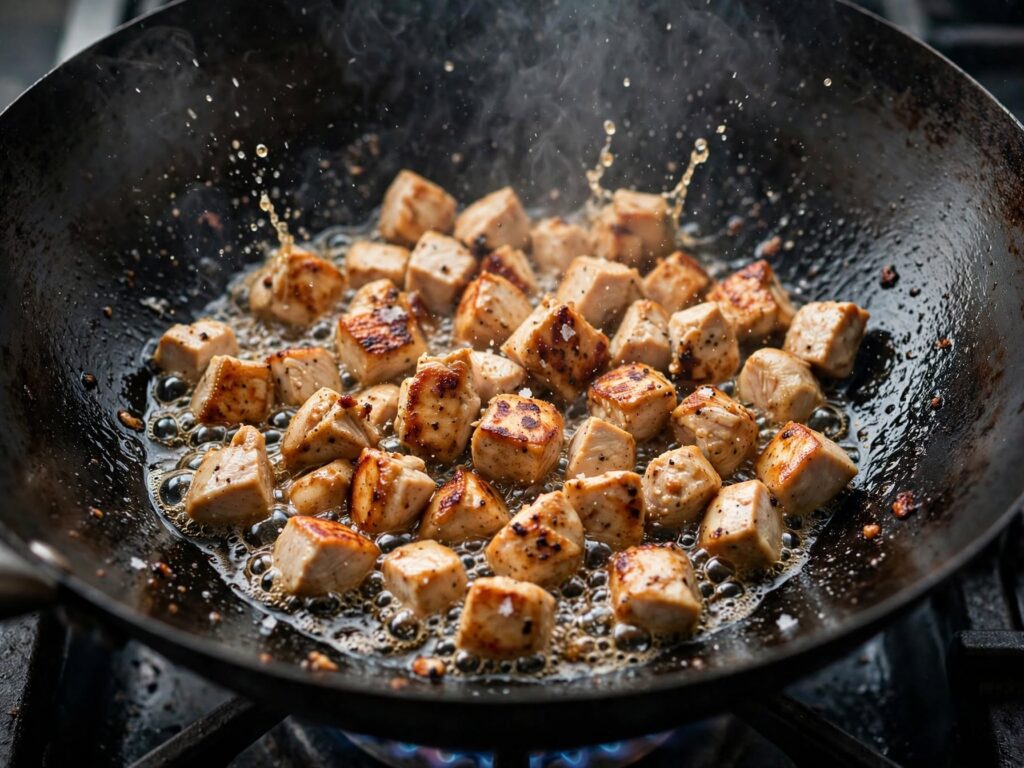
Heat 1 tablespoon neutral oil in the wok over high heat until shimmering. Add the chicken in a single layer, season with a pinch of salt, and let it sear undisturbed for about a minute before tossing. Cook 3–4 minutes until golden and just cooked through, then scrape it onto a plate.
Step 3 — Scramble the Eggs
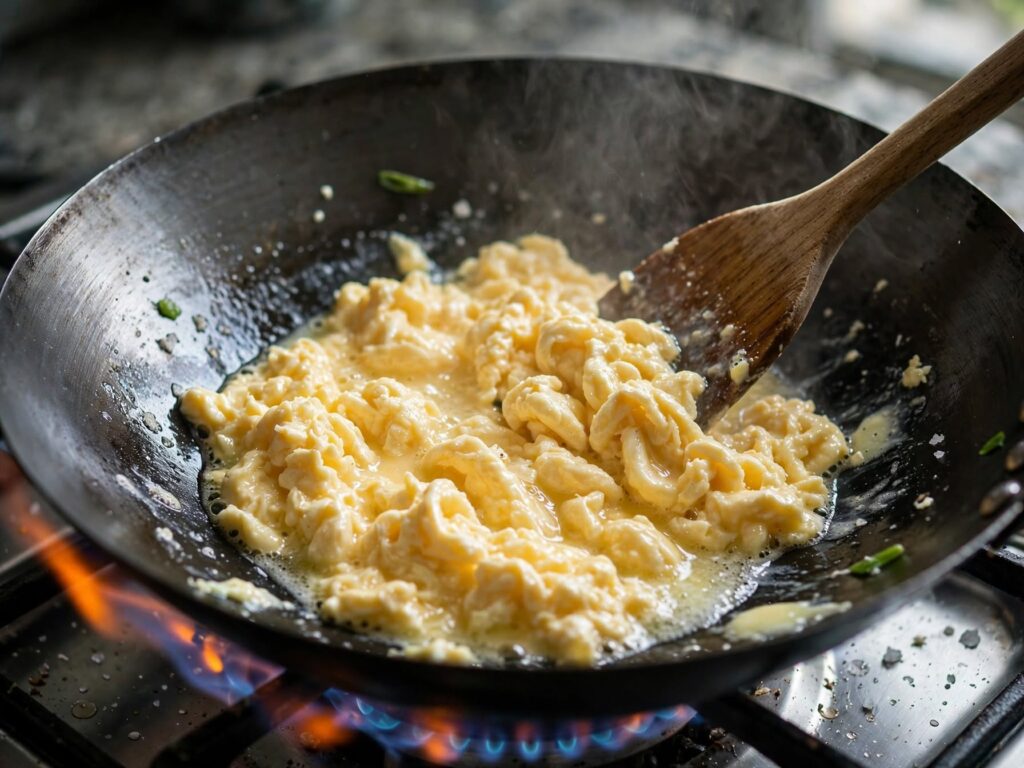
Add ½ tablespoon oil to the same pan, pour in the beaten eggs, and let them set for a few seconds. Scramble into soft, large curds — pull them off the heat while still slightly glossy, since they’ll firm up. Move the egg to the plate with the chicken.
Step 4 — Cook the Aromatics and Vegetables
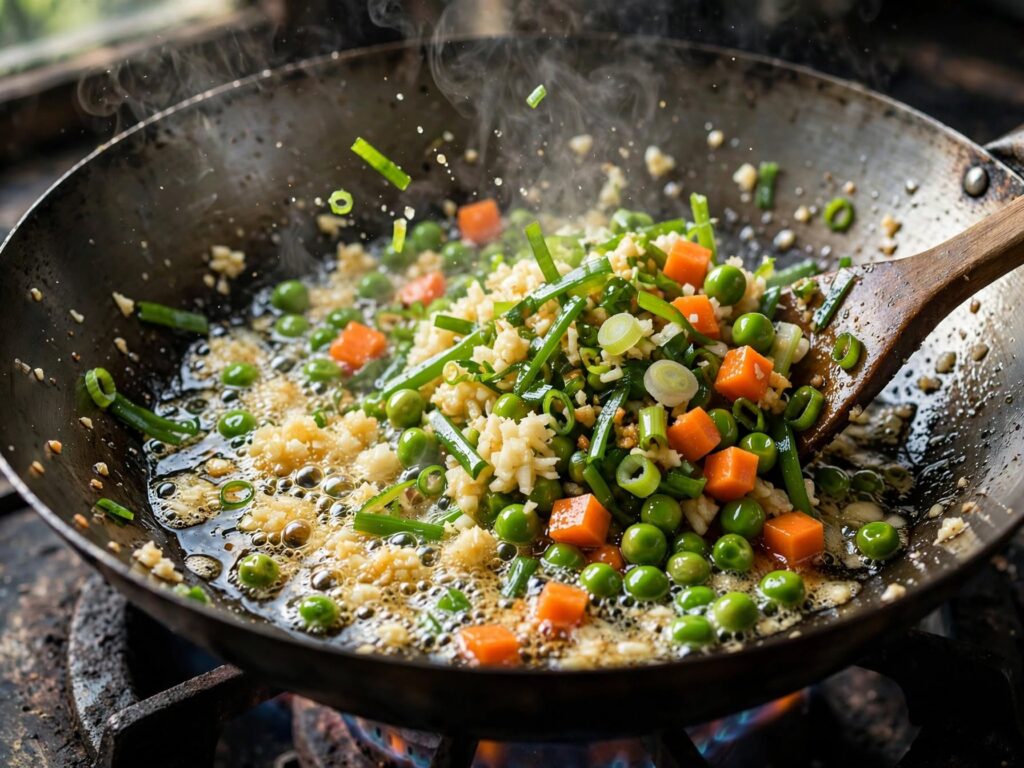
Add the remaining 1½ tablespoons oil, then the white parts of the green onions and the garlic. Stir for 15–20 seconds until fragrant, then add the peas and carrots and cook 1–2 minutes until heated through and bright.
Step 5 — Fry the Rice
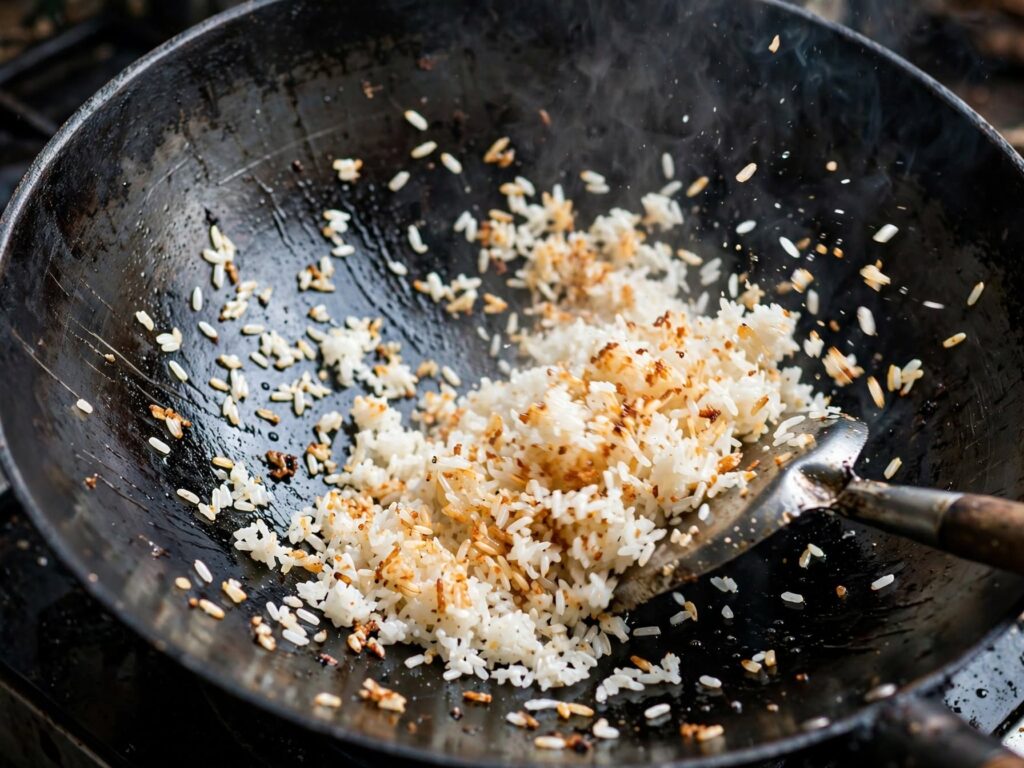
Add the cold rice and press it into the pan. Let it sit for 20–30 seconds at a time before tossing, repeating so the grains get direct heat and start to toast. This is where the texture develops — you should hear a steady sizzle, not a wet bubbling.
Step 6 — Add the Sauce
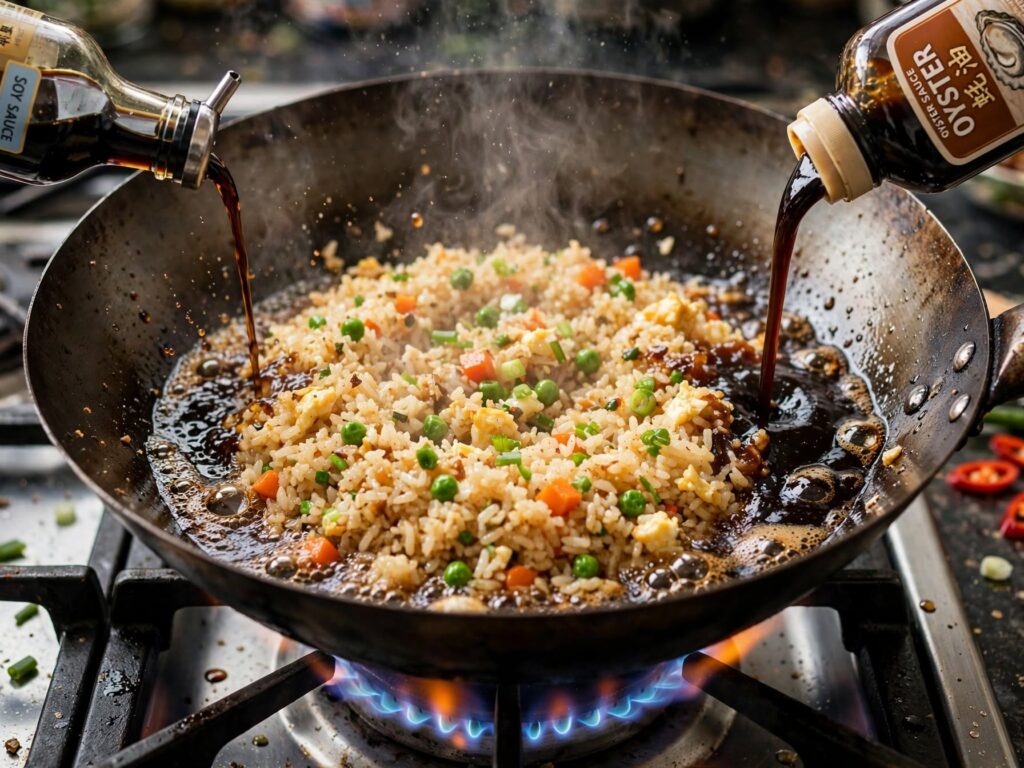
Drizzle the soy sauce and oyster sauce around the edge of the pan (not directly on the rice) so it hits the hot metal and caramelizes for a second before you toss. Add the white pepper and stir until every grain is evenly colored, about 1 minute.
Step 7 — Finish and Serve
Return the chicken and egg to the pan, add the green parts of the onions, and toss everything together for 1 minute to reheat. Turn off the heat, drizzle in the sesame oil, toss once more, and taste for salt. Serve immediately.
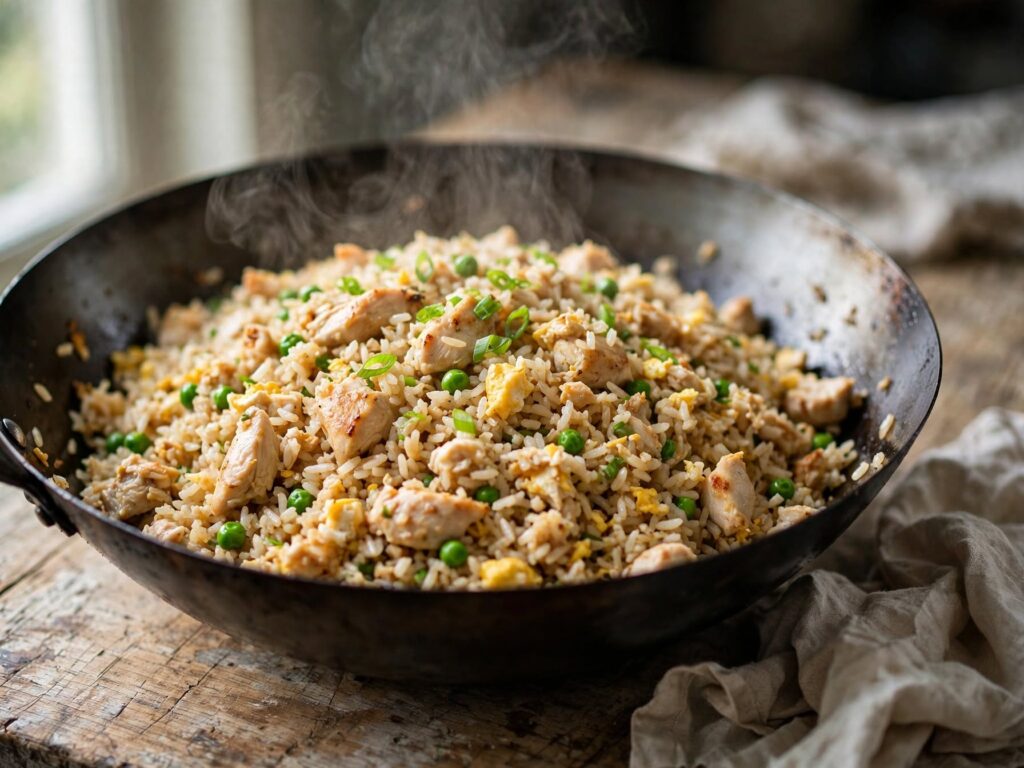
Why Cold, Day-Old Rice Makes the Best Fried Rice
Cold, day-old rice is the single most important factor in good fried rice because chilling dries out the grains and lets them separate. As cooked rice sits in the fridge, its starches firm up (a process called retrogradation) and surface moisture evaporates. Dry, firm grains fry and toast in hot oil; warm, moist grains release steam and clump into a sticky mass. If you only have fresh rice, cook it with about 10% less water than usual, spread it in a thin layer on a sheet pan, and chill it uncovered in the freezer for 20–30 minutes to mimic day-old rice.
Expert Tips for the Best Chicken Fried Rice
- Get the pan genuinely hot before anything goes in. Fried rice is a high-heat dish; a lukewarm pan steams instead of fries.
- Cook in stages and don’t crowd the pan. Everything out, rice in alone — crowding drops the temperature and makes it soggy.
- Season the sauce onto the pan, not the rice. Pouring soy and oyster sauce around the hot edge caramelizes it and spreads the flavor evenly.
- Let the rice sit still between tosses. Constant stirring cools the surface; brief stillness lets grains toast.
- Undercook the egg slightly. It keeps cooking on the hot plate and when you fold it back in, so soft curds stay tender.
- Taste before adding more salt. Soy and oyster sauce are already salty; adjust at the very end.
💡 Tip: Drizzle the sauce around the hot edge of the pan, not directly onto the rice. That brief contact with bare metal caramelizes it before it mixes in, spreading flavor far more evenly.
The Secret to Separate, Non-Mushy Grains
The secret to fluffy, separate grains is dry rice plus a hot pan plus room to breathe. Moisture is the enemy: it turns to steam, steam softens the starch on each grain’s surface, and softened starch is what makes grains stick together. Cold day-old rice starts dry, a screaming-hot wok flashes off any remaining surface moisture instantly, and cooking in a wide pan (or in two batches) keeps the temperature high so nothing has a chance to stew. Get those three right and the rice separates on its own — no extra technique required.
Three Ways to Make Fried Rice: Better Than Takeout, Spicy Garlic & Asian-Style
The recipe above is a solid base for any style of fried rice. Here’s how to make it taste better than takeout, kick it up with garlic and spice, and give it a classic Asian-style flavor.
Easy Chicken Fried Rice – Better Than Takeout
This chicken fried rice beats takeout because you control what goes in the pan. Takeout fried rice is often greasy and heavy on salt, while this version uses just 3 tablespoons of oil for the whole batch, fresh chicken seared to order, and a sauce you can taste and adjust. It’s also ready in about 25 minutes, which is often faster than delivery.
Three habits make the biggest difference: use cold day-old rice, get the pan very hot, and cook in stages so nothing steams. Do those and you’ll get the separate, lightly toasted grains that make restaurant fried rice so good.
Spicy Garlic Fried Rice You Can Make at Home
For spicy garlic fried rice, double the garlic and add real heat. Use 6 minced garlic cloves instead of 3, and stir in 1–2 teaspoons of chili garlic sauce with the soy sauce, plus ½ teaspoon of red pepper flakes if you like it hot. Keep the garlic to 15–20 seconds in the hot pan before adding the vegetables, since burnt garlic turns bitter.
For extra garlic flavor and crunch, thinly slice 4 more cloves and fry them in a little oil over medium-low heat for 1–2 minutes until golden, then scatter them over the finished rice. This version also works without the chicken if you want a simple garlic fried rice side. Cool it down with a squeeze of lime or a cucumber salad on the side.
Easy Asian-Style Fried Rice with Chicken
This Asian-style fried rice gets its flavor from a short list of pantry sauces: soy sauce for salt, oyster sauce for savory depth, toasted sesame oil for aroma, and white pepper for gentle heat. Together they give it the familiar taste of classic Chinese-American fried rice. A little grated fresh ginger, stirred in with the garlic, adds extra warmth if you like.
It’s also flexible. Swap in whatever vegetables you have, such as diced bell pepper, edamame, or broccoli, and use shrimp or tofu in place of the chicken. Serve it with egg drop soup, potstickers, or an Asian cucumber salad for a full meal.
💡 Tip: Whichever version you make, prep every ingredient before you turn on the heat. Fried rice cooks in minutes, and there’s no time to chop once the pan is hot.
Delicious Variations & Add-Ins
Spicy Chicken Fried Rice
Stir in 1–2 teaspoons of sriracha or chili garlic sauce with the soy sauce, or add a sliced fresh chili with the aromatics for cleaner heat. For a garlicky version, see the spicy garlic fried rice above.
Pineapple Chicken Fried Rice
Add ¾ cup diced fresh or well-drained canned pineapple in Step 5, and reduce the added salt slightly — the fruit’s sweetness balances the savory sauce.
Healthier, Lighter Version
Swap in cold cooked brown rice or riced cauliflower, cut the oil to 1½ tablespoons total, and load in extra vegetables like bell pepper, edamame, or broccoli. Cauliflower cooks faster, so shorten the frying step.
Dairy-Free and Gluten-Free Option
This recipe is naturally dairy-free. To make it gluten-free, use tamari in place of soy sauce and a certified gluten-free oyster sauce.
Chicken Fried Rice Meal-Prep Bowls
Divide the finished rice into four airtight containers with a lime wedge and extra green onion. It reheats well for 3–4 days, making it an easy lunch format.
What to Serve With Chicken Fried Rice
- Egg drop soup — a light, silky starter that doesn’t compete with the rice.
- Potstickers or spring rolls — a crisp contrast to the soft rice.
- Asian cucumber salad — cool, tangy, and refreshing against the savory fried rice.
- Hot and sour soup — adds brightness and a little heat to round out the meal.
- Steamed or garlic broccoli — an easy green to bulk up the plate.
How to Store Chicken Fried Rice
In the Refrigerator
Cool the rice to room temperature within two hours, then store it in an airtight container in the fridge for up to 4 days. Reheat in a hot skillet with a splash of oil rather than the microwave to bring back some texture.
Freezing & Thawing
Yes, you can freeze chicken fried rice. Pack it flat in a freezer bag or airtight container for up to 2 months. Thaw overnight in the fridge, then reheat in a hot pan — freezing softens the grains, so a quick stir-fry helps revive them. Reheat only once, and make sure the chicken is piping hot throughout.
Make-Ahead Instructions
Fried rice is built for prepping ahead. Cook the rice up to 3 days in advance and keep it cold — that actually improves the final texture. You can also dice the chicken, mince the garlic, slice the green onions, and premix the soy, oyster sauce, and white pepper into a small bowl the night before. With everything staged, the actual stir-fry takes under 10 minutes.
Troubleshooting Common Problems
Why Is My Chicken Fried Rice Mushy?
Mushy fried rice almost always comes from wet rice or a pan that isn’t hot enough. Warm, freshly cooked rice carries too much moisture; use cold day-old rice instead. Also make sure the pan is very hot and don’t overcrowd it — cook in two batches if your pan is small.
Why Is My Fried Rice Sticky and Clumpy?
Clumping happens when the grains stick together before they hit the oil. Break up the cold rice completely with your hands before cooking, and give it direct contact with the hot pan so the surface starch sets instead of gluing grains together.
Why Is My Chicken Fried Rice Bland?
Bland fried rice usually needs more savory depth, not just more salt. Make sure you’re using oyster sauce alongside soy, season the sauce onto the hot pan so it caramelizes, and finish with sesame oil and white pepper. A final taste-and-adjust step matters — soy sauce brands vary in saltiness.
Why Does My Rice Stick to the Pan?
Sticking is a sign of too little oil or too low heat. Make sure the pan is fully preheated and lightly coated with oil before the rice goes in, and let the rice sit briefly rather than scraping constantly, which can tear grains and leave residue behind.
Nutrition Information
Estimated per serving (recipe serves 4): approximately 430 calories, 30 g protein, 45 g carbohydrates, 14 g fat, 3 g fiber, and 900 mg sodium.
Values are estimates and vary with the exact brands, cuts, and quantities you use.
Frequently Asked Questions
What kind of rice is best for chicken fried rice?
Long-grain white rice, especially jasmine, is best because the grains stay firm and separate. Medium- and short-grain rice are stickier and clump more easily.
Can I use fresh rice instead of day-old?
Yes, but cook it with about 10% less water, spread it thin on a sheet pan, and chill it in the freezer for 20–30 minutes so it dries out and firms up first.
Do I have to use oyster sauce?
No. It adds savory depth, but you can substitute an extra teaspoon of soy sauce plus a pinch of sugar, hoisin, or a vegetarian mushroom sauce.
What cut of chicken works best?
Thigh stays juicier and more forgiving under high heat; breast is leaner and cooks faster. Both work — just cut the pieces small and even.
Why do restaurants’ fried rice taste smoky?
That flavor is wok hei, created by very high heat and a well-seasoned wok. You can approximate it at home by getting your pan as hot as possible and not overcrowding it.
Can I make chicken fried rice without egg?
Yes. Simply skip the egg step; the dish still works. Add a little extra vegetable or protein to make up the volume if you like.
Is chicken fried rice healthy?
It can be a balanced meal with protein, carbs, and vegetables. To lighten it, use brown or cauliflower rice, reduce the oil, and add more vegetables.
Can I double the recipe?
Yes, but cook in batches. A single crowded pan drops in temperature and steams the rice instead of frying it.
How do I reheat fried rice so it isn’t dry?
Reheat in a hot skillet with a small splash of oil or water, tossing until heated through — this restores texture better than a microwave.
Related Recipes
Recipe Card
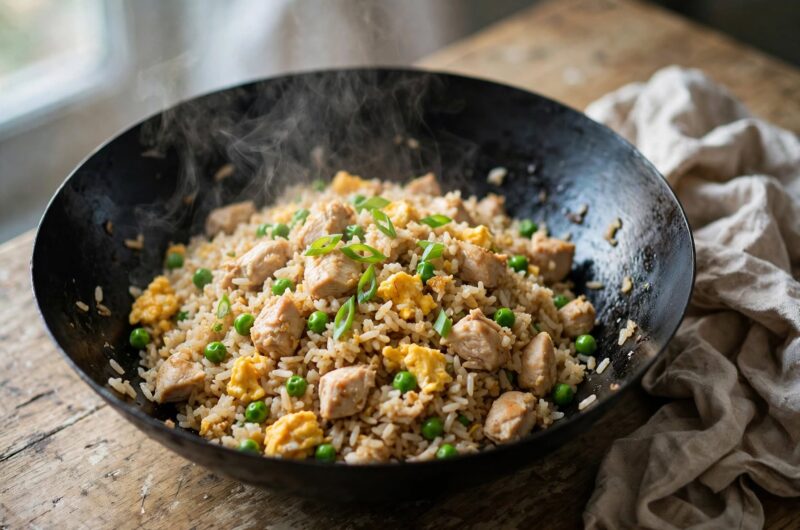
Chicken Fried Rice
Fast, restaurant-style chicken fried rice with tender chicken, soft egg, and separate, lightly toasted grains — made in one pan in 25 minutes.
4
servings10
minutes15
minutes25
minutesIngredients
4 cups (600 g) cooked long-grain white rice, cold/day-old
1 lb (450 g) boneless, skinless chicken breast or thigh, cut into ½-inch pieces
3 large eggs, lightly beaten
1 cup frozen peas and carrots
4 green onions, sliced (white and green parts separated)
3 cloves garlic, minced
3 tablespoons soy sauce
1 tablespoon oyster sauce
1 teaspoon toasted sesame oil
3 tablespoons neutral oil, divided
½ teaspoon white pepper
¼ teaspoon salt, plus more to taste
Directions
- Break up the cold rice so there are no clumps and measure out all remaining ingredients.
- Heat 1 tablespoon oil in a wok over high heat. Sear the chicken in a single layer with a pinch of salt for 3–4 minutes until golden and cooked through; remove to a plate.
- Add ½ tablespoon oil, pour in the eggs, and scramble into soft curds. Remove to the plate with the chicken.
- Add the remaining 1½ tablespoons oil, then the white parts of the green onions and the garlic; stir 15–20 seconds. Add peas and carrots and cook 1–2 minutes.
- Add the cold rice, press it into the pan, and let it sit 20–30 seconds between tosses so it toasts, about 2–3 minutes total.
- Drizzle the soy sauce and oyster sauce around the edge of the pan, add white pepper, and toss until evenly coated, about 1 minute.
- Return the chicken and egg, add the green onion tops, and toss 1 minute to reheat. Off the heat, add sesame oil, toss, taste for salt, and serve.
Notes
- Cold, day-old rice is essential for the right texture. No day-old rice? Cook fresh with 10% less water and chill on a sheet pan for 20–30 minutes.nFor gluten-free, use tamari and a certified gluten-free oyster sauce.nCook in batches when doubling to keep the pan hot.