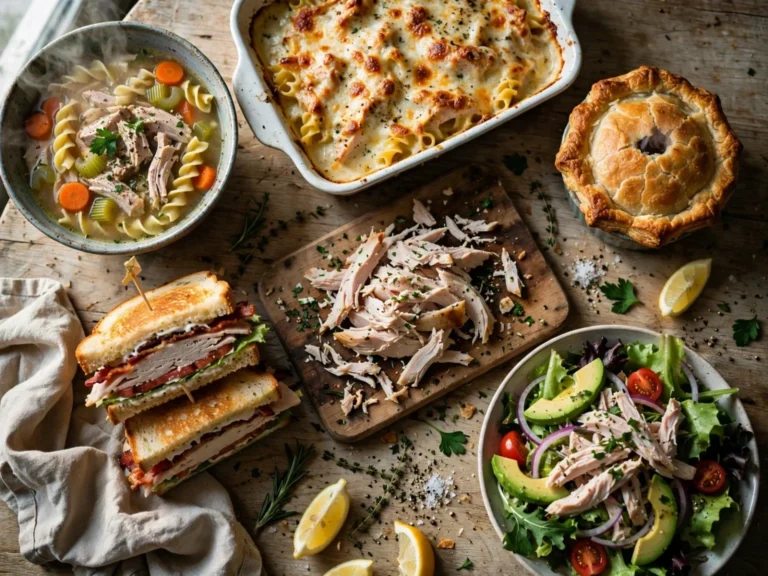
Chicken Pot Pie Casserole — Creamy, Easy, and Ready for Dinner Tonight
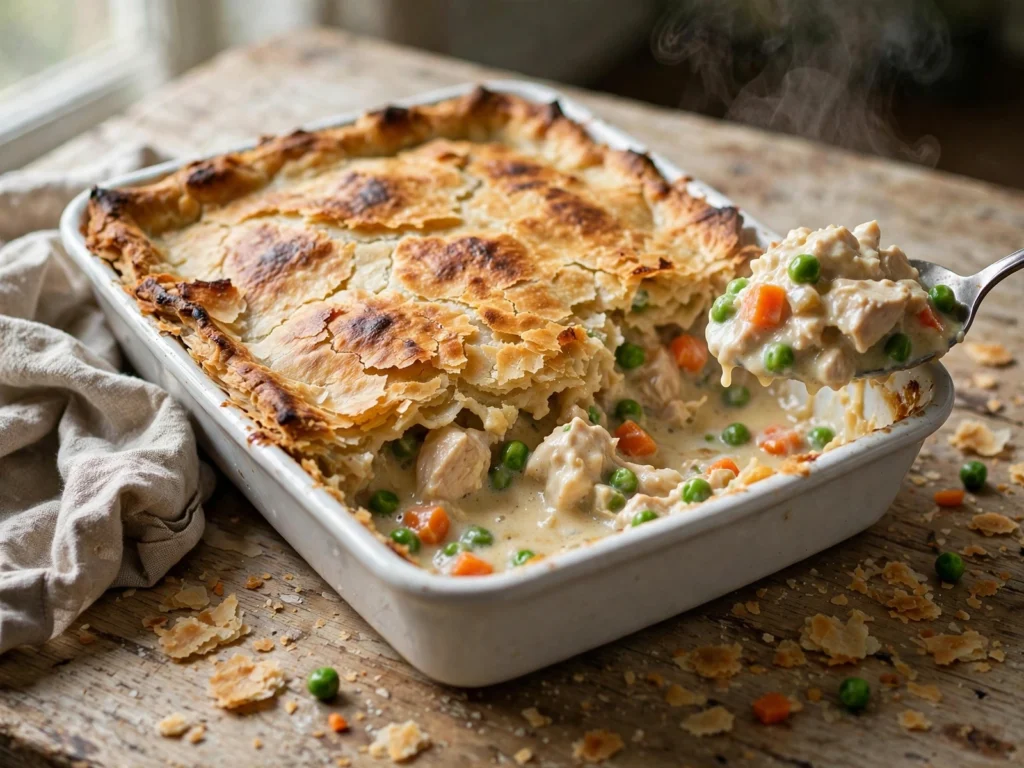
This chicken pot pie casserole gives you every part you love about pot pie — tender chicken, vegetables, and a rich savory sauce under a golden crust — with none of the fussy work of a bottom crust. You build one creamy filling, lay a flaky top over it, and bake. It comes out of the oven thick, comforting, and easy to spoon onto a plate, and it feeds a full table without you rolling out a single round of dough.
| Prep time | 20 minutes |
| Cook time | 30 minutes |
| Total time | 50 minutes |
| Servings | 6–8 |
| Difficulty | Easy |
| Cuisine | American |
| Key method | Stovetop sauce, baked under a pastry top |
Make the filling on the stovetop, pour it into a baking dish, top with pie crust, and bake at 400°F until the top is deep golden. Use rotisserie or leftover chicken and the whole thing comes together in under an hour.
In This Post
Why You’ll Love This Casserole
- No bottom crust to fight with. One top layer means no soggy base and no blind baking.
- Genuinely creamy filling that stays thick after it rests, so each serving holds its shape instead of running.
- Uses cooked chicken — rotisserie, roasted, or last night’s leftovers all work.
- One pan of vegetables and sauce, so cleanup is minimal.
- Feeds a crowd and reheats beautifully for lunches.
- Flexible topping — pie crust, puff pastry, or biscuits, depending on what you have.
What Makes This Casserole Different
The difference is in the sauce. Instead of leaning on canned soup, you build a quick roux — butter, flour, then broth, milk, and a splash of cream — so the filling tastes fresh and clean rather than tinny. That roux is also what keeps the casserole from going watery: it locks the liquid into a proper velvety sauce that clings to the chicken and vegetables. You get the depth of a from-scratch pot pie with the speed of a weeknight casserole.
Ingredients You’ll Need
- 4 tbsp butter
- 1 medium onion, finely diced
- 2 medium carrots, diced
- 2 celery stalks, diced
- 3 garlic cloves, minced
- ⅓ cup all-purpose flour
- 2 cups low-sodium chicken broth
- 1 cup whole milk
- ½ cup heavy cream
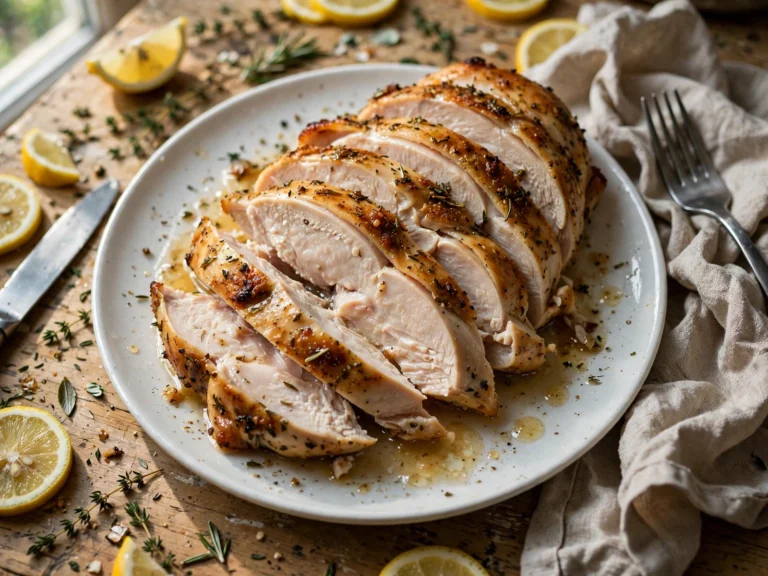
- 3 cups cooked chicken, shredded or cubed
- 1 cup frozen peas
- 1 tsp salt (adjust to taste)
- ½ tsp black pepper
- ½ tsp dried thyme
- 2 tbsp fresh parsley, chopped
- 1 sheet refrigerated pie crust (or puff pastry)
- 1 large egg, beaten with 1 tsp water (egg wash)
Ingredient Notes
- Cooked chicken (3 cups, shredded or cubed): Rotisserie chicken is the fastest and most flavorful. Pull the meat while it’s still warm so it shreds cleanly. Boneless thighs give you the most tender, forgiving result; breast works if you don’t overcook it. Use halal-certified chicken if that matters for your kitchen.
- Butter and all-purpose flour: These form the roux, the base of the sauce. Equal-ish weights cooked together for a minute or two thicken the whole dish and prevent a raw-flour taste.
- Chicken broth: Use low-sodium so you control the salt. This carries the savory backbone.
- Whole milk and heavy cream: Whole milk keeps it rich without being heavy; the cream adds body and that signature pot pie silkiness. Skip skim — it thins the sauce and can break.
- Onion, carrots, celery: The classic aromatic base. Dice them small so they cook through in the filling and you get some in every bite.
- Frozen peas: Add them at the end so they stay bright green and don’t turn to mush.
- Garlic, thyme, salt, and pepper: Thyme is the herb that reads instantly as “pot pie.” Fresh parsley at the end lifts the whole dish.
- Pie crust (1 sheet) and 1 egg: A store-bought refrigerated crust is the shortcut here. The egg wash gives you that bakery-gold, glossy top.
Substitutions & Swaps
- No cream? Use all whole milk, or swap in half-and-half. The sauce will be slightly less rich but still creamy.
- Gluten-free: Use a 1:1 gluten-free flour blend for the roux and a gluten-free crust or biscuit topping.
- No pie crust: Top with refrigerated biscuits, puff pastry, or crescent roll dough (see Variations for the exact bake changes).
- Dairy-free: Use plant butter, unsweetened oat or soy milk, and a splash of full-fat coconut milk for richness.
- Turkey instead of chicken: A direct 1:1 swap — this is an ideal use for Thanksgiving leftovers.
- Extra vegetables: Diced potato, corn, green beans, or mushrooms all fit. Add firmer vegetables like potato with the carrots so they cook through.
Equipment You’ll Need
- Large skillet or sauté pan (for the sauce)
- 9×13-inch baking dish (or a 2.5–3 quart casserole dish)
- Whisk
- Sharp knife and cutting board
- Pastry brush (for the egg wash)
How to Make Chicken Pot Pie Casserole
Step 1 — Sauté the Aromatics
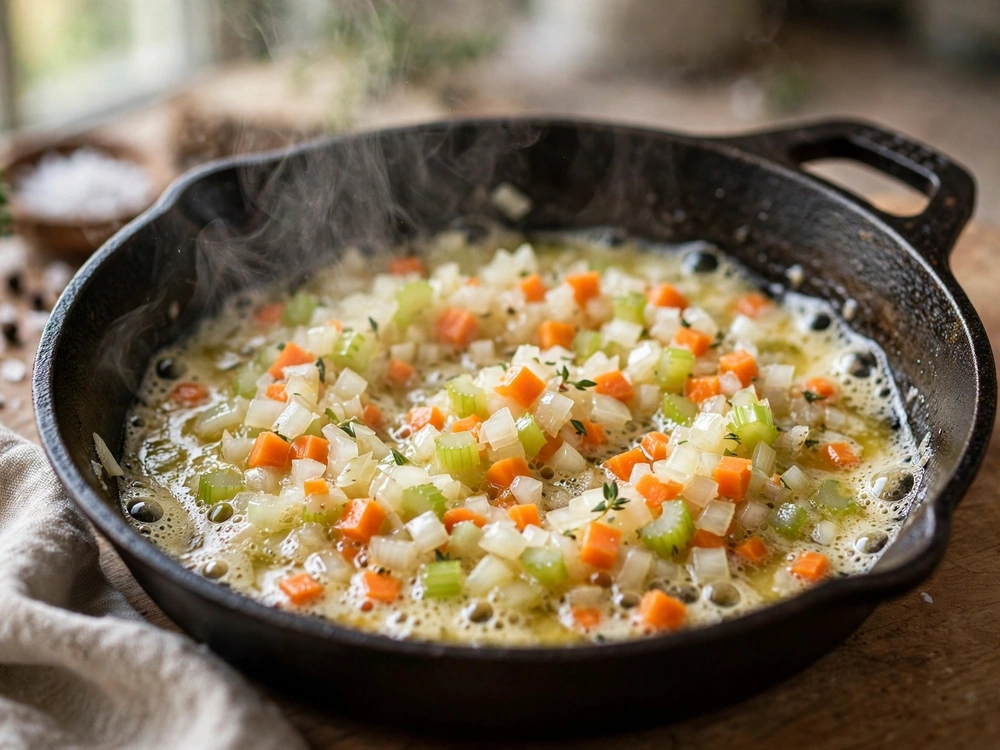
Melt 4 tablespoons butter in a large skillet over medium heat. Add the diced onion, carrots, and celery with a pinch of salt. Cook 6–8 minutes, stirring, until the onion is translucent and the carrots have started to soften. They should look glossy and smell sweet, not raw.
Step 2 — Build the Roux
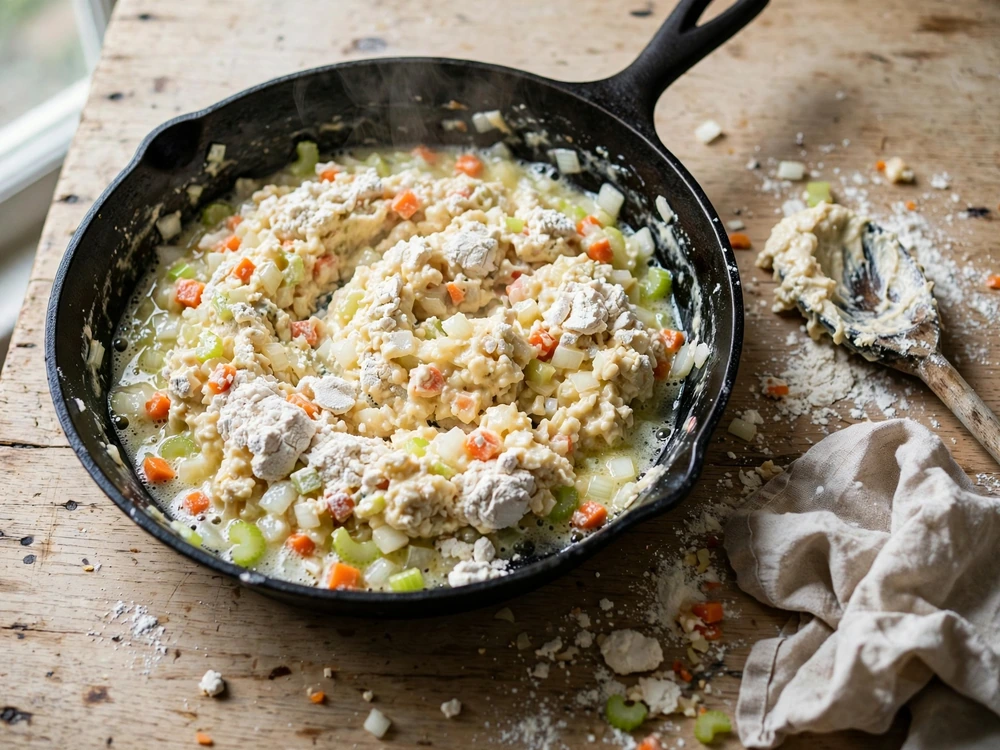
Add the minced garlic and cook 30 seconds until fragrant. Sprinkle the flour over the vegetables and stir constantly for 1–2 minutes. The mixture will look like wet sand and turn from bright white to pale gold — that means the raw-flour taste has cooked out.
Step 3 — Make the Sauce
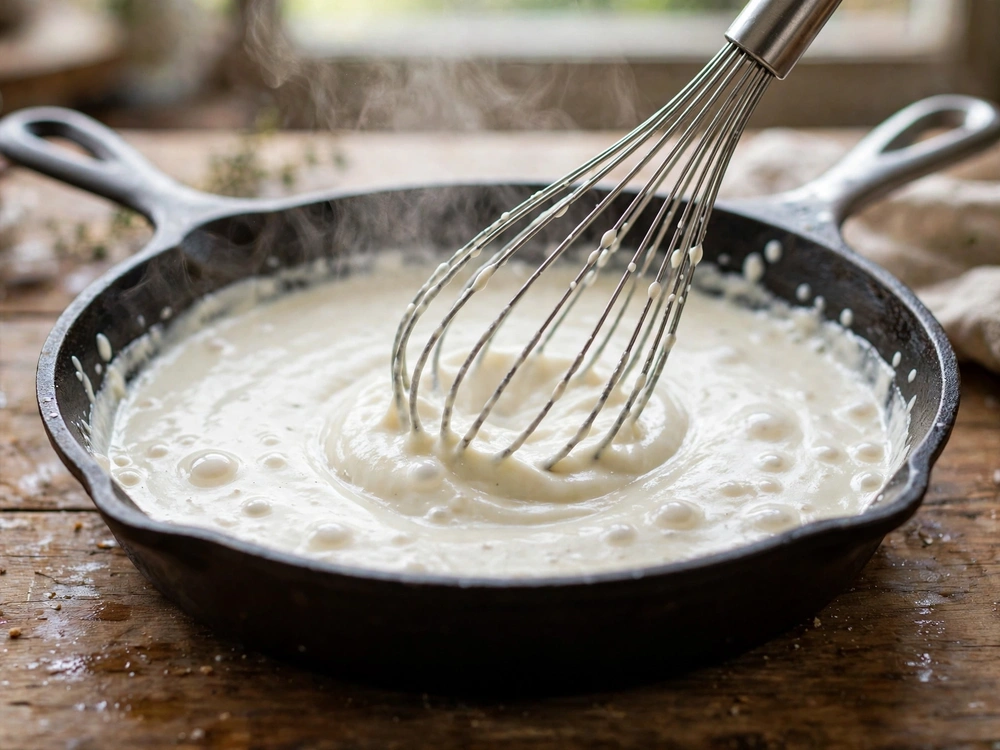
Slowly pour in the chicken broth while whisking, then the milk and cream. Whisk out any lumps. Bring to a gentle simmer and cook 3–5 minutes, stirring, until the sauce thickens enough to coat the back of a spoon. This is the moment that decides whether your casserole is creamy or runny — don’t rush it.
Step 4 — Add Chicken and Peas
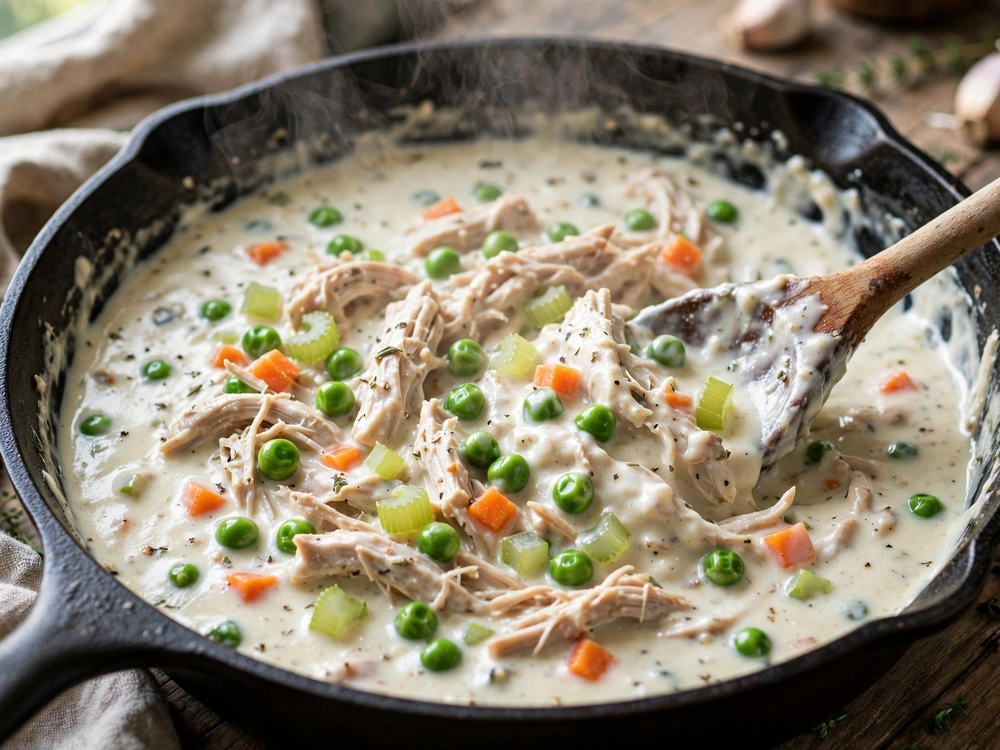
Stir in the cooked chicken, frozen peas, thyme, salt, and pepper. Taste and adjust the seasoning now, while it’s easy. The filling should be thick and stew-like, not soupy. Remove from the heat and stir in the parsley.
Step 5 — Assemble the Casserole
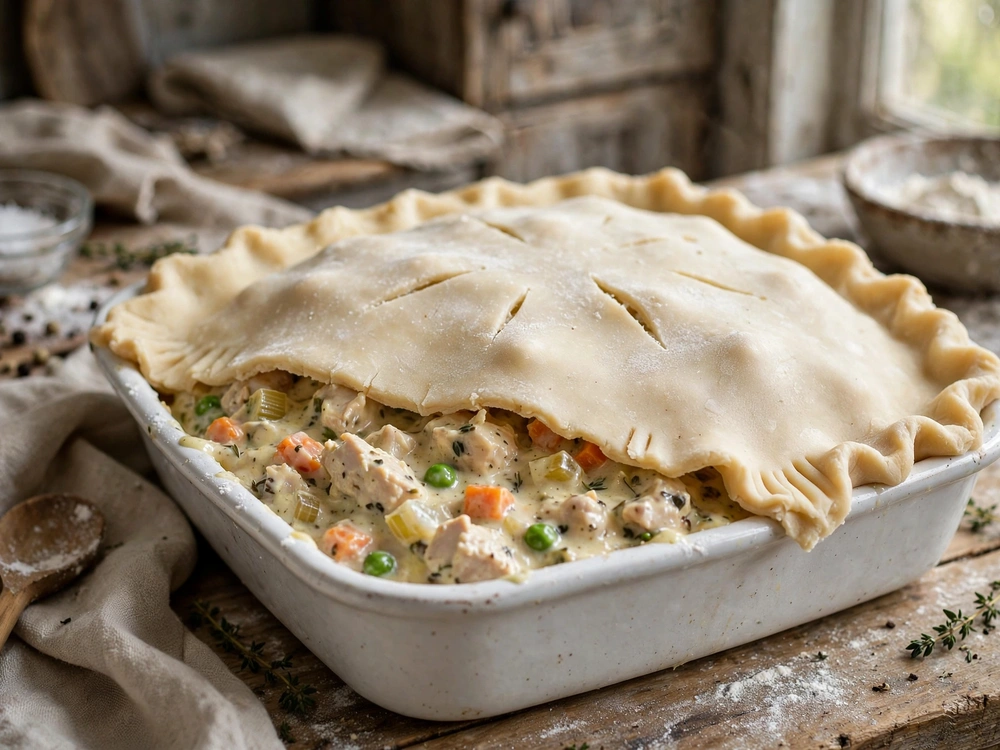
Pour the filling into your baking dish and spread it level. Lay the pie crust over the top, letting it drape to the edges. Trim any large overhang and press it lightly to the rim. Beat the egg with a teaspoon of water and brush it over the crust for shine.
Step 6 — Vent and Bake
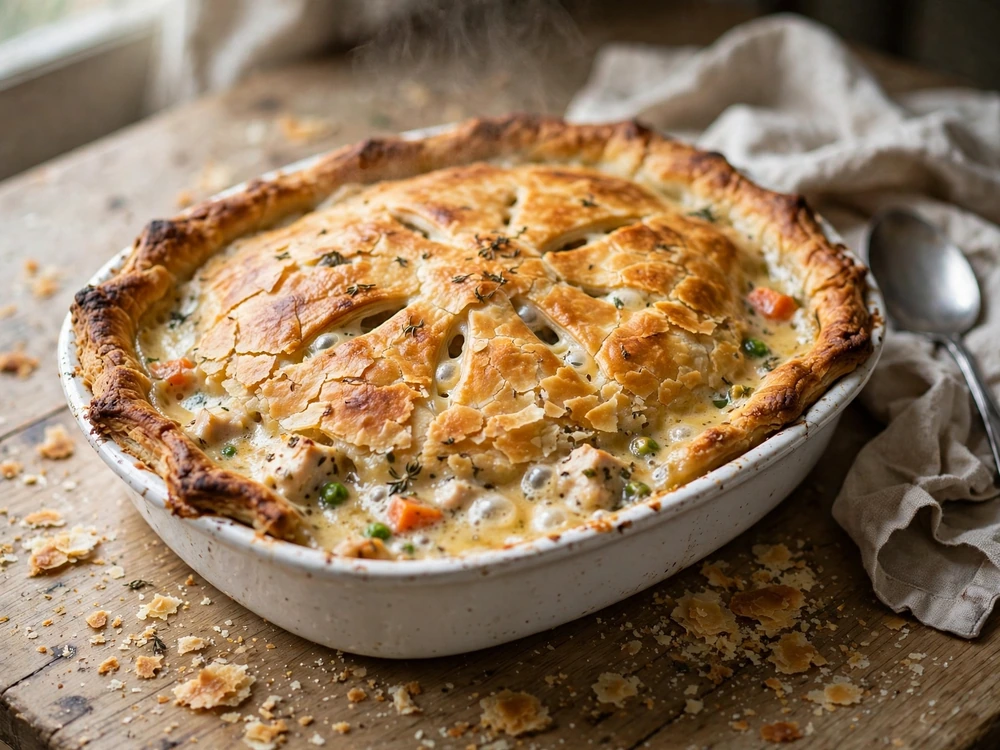
Cut 3–4 small slits in the crust so steam can escape and the top stays crisp. Bake at 400°F for 25–30 minutes, until the crust is deep golden and the filling bubbles at the edges. If the top browns too fast, tent it loosely with foil.
Step 7 — Rest Before Serving
Let the casserole rest 10 minutes out of the oven. This is not optional — resting lets the sauce set so it holds its shape on the plate instead of flooding it. Serve warm.
How Do You Keep Chicken Pot Pie Casserole From Being Runny?
You keep it from being runny by fully cooking a roux and simmering the sauce until it visibly thickens before it ever goes in the oven. A pot pie filling doesn’t set in the oven the way a custard does — it needs to be thick going in. The two most common causes of a watery casserole are undercooking the roux (so the flour never activates) and using thin liquids like skim milk or extra broth.
Three fixes that work every time:
- Simmer until it coats a spoon. If a line drawn through the sauce on the back of a spoon holds for a second, it’s ready.
- Don’t skip the rest. Ten minutes of resting thickens the filling noticeably as it cools slightly.
- Drain watery add-ins. Thaw and pat frozen vegetables dry, and cook mushrooms first to release their water, so they don’t loosen the sauce mid-bake.
Expert Tips for the Best Casserole
- Season the filling before it bakes, not after. The crust seals the top, so you can’t adjust it later — taste and correct at Step 4.
- Cut the vegetables small and even. Large chunks stay firm; small dice cooks through and gives you a bite of vegetable in every spoonful.
- Warm your broth and milk slightly before adding them to the roux. Cold liquid into hot roux is the main cause of lumps.
- Egg-wash the crust for that glossy, golden bakery finish — plain crust bakes up pale and matte.
- Vent the top. Steam trapped under the crust makes it soggy from below; the slits keep it flaky.
- Let it rest. The single biggest difference between a clean slice and a puddle is those ten minutes on the counter.
💡 Tip: Simmer the sauce until it coats the back of a spoon before it ever touches the baking dish. The oven only browns the crust — it won’t thicken a thin filling — so getting this step right on the stove is what decides creamy versus runny.
The Secret to a Thick, Creamy Filling
The secret is a properly cooked roux carrying dairy, not broth alone. When you toast flour in butter and then whisk in milk and cream, the starch granules swell and trap the liquid into a smooth, glossy sauce — the same technique behind a béchamel. Broth alone gives you a thin, brothy filling; the milk and cream are what make it luxurious and spoonable.
Two things protect that texture. First, keep the sauce at a gentle simmer, not a hard boil — a rolling boil can cause the dairy to separate. Second, get the sauce to the right thickness on the stove, because the oven won’t thicken it further; it only browns the top. Nail those two, and the filling stays creamy from the first serving to the last reheated bowl.
Delicious Variations & Add-Ins
Biscuit-Topped Casserole
Skip the pie crust and top the filling with refrigerated or homemade biscuits, spaced slightly apart. Bake at 375°F for 25–30 minutes so the biscuit centers cook through. This is the cozy, “cobbler-style” version.
Puff Pastry Top
Lay a sheet of thawed puff pastry over the filling for an extra-flaky, restaurant-style top. Egg-wash it and bake at 400°F until deeply puffed and golden, about 25 minutes.
Healthier, Lighter Version
Use whole milk in place of the cream, load in extra vegetables (green beans, cauliflower, extra peas), and top with a single layer of phyllo brushed lightly with olive oil instead of pie crust. You keep the flavor and cut a good amount of the fat.
Dairy-Free Version
Use plant butter and unsweetened oat milk for the sauce, with 2–3 tablespoons of full-fat coconut milk for richness. Top with a dairy-free puff pastry. The filling stays creamy without any dairy.
Skillet or Single-Skillet Format
Build the filling in an oven-safe skillet, lay the crust right on top, and bake in the same pan. It’s the fastest cleanup and makes a great centerpiece straight from the stove to the table.
What to Serve With Chicken Pot Pie Casserole
- A crisp green salad with a sharp vinaigrette — the acidity cuts the richness of the filling.
- Roasted green beans or asparagus for a simple, fresh vegetable side.
- Cranberry sauce — its tartness plays beautifully against the creamy chicken, especially with a turkey version.
- Crusty bread for scooping up every bit of sauce.
- A light soup like a tomato or vegetable broth to start, keeping the meal comforting but not heavy.
How to Store Chicken Pot Pie Casserole
In the Refrigerator
Cool the casserole completely, then cover tightly or transfer to an airtight container. It keeps in the fridge for up to 4 days. Reheat individual portions in the microwave, or warm the whole dish, covered with foil, at 350°F until hot through.
Freezing & Thawing
Yes, you can freeze chicken pot pie casserole. Freeze it either fully baked and cooled, or assembled-but-unbaked, wrapped tightly in a freezer-safe dish for up to 3 months. Thaw overnight in the fridge before reheating. For best texture, freeze the filling and add a fresh crust when you bake — a pre-baked crust can soften on thawing.
Make-Ahead Instructions
Make the filling up to 2 days ahead and store it covered in the fridge. When you’re ready, spread the cold filling in the baking dish, top with fresh crust, and bake — add 5–10 minutes to the bake time since you’re starting cold. You can also fully assemble the unbaked casserole (filling plus crust) the night before, keep it covered in the fridge, and bake it straight from cold the next day.
Troubleshooting Common Problems
Why Is My Chicken Pot Pie Casserole Runny?
The filling was too thin before baking. The roux wasn’t cooked long enough, or the sauce wasn’t simmered until thick. Fix it next time by simmering until the sauce coats a spoon, and always rest the finished casserole 10 minutes so it can set.
Why Is the Bottom of My Casserole Soggy?
Trapped steam and an over-thin filling are the usual causes. Cut vents in the crust so steam escapes upward, and make sure the filling is thick, not soupy, going into the oven. Serving straight from a hot dish without resting also makes it read as soggy.
Why Did My Crust Brown Too Fast?
Your oven runs hot, or the crust sat too close to the top element. Tent it loosely with foil once it reaches a golden color, and finish baking until the filling bubbles at the edges. The filling, not the crust color alone, tells you it’s done.
Why Is My Chicken Dry?
The chicken was overcooked before it went in, or the casserole baked too long. Since the meat is already cooked, it only needs to warm through — bake just until the crust is golden and the edges bubble, and use thighs if you want the most forgiving, juicy result.
Nutrition Information
Per serving (based on 8 servings, with pie crust topping), estimated:
- Calories: ~410
- Fat: ~24 g
- Carbohydrates: ~26 g
- Protein: ~24 g
- Sodium: ~620 mg
Values are an estimate and will vary with your exact ingredients, brands, and topping choice.
Frequently Asked Questions
Can I use rotisserie chicken?
Yes — it’s the easiest and most flavorful option. You’ll need about 3 cups of shredded meat, roughly one medium rotisserie chicken.
Can I make chicken pot pie casserole ahead of time?
Yes. Make the filling up to 2 days ahead, or fully assemble it unbaked the night before, and bake from cold, adding a few extra minutes.
Can I freeze chicken pot pie casserole?
Yes, for up to 3 months, baked or unbaked. For the best crust texture, freeze the filling only and add a fresh top when you bake.
What can I use instead of pie crust?
Refrigerated biscuits, puff pastry, or crescent roll dough all work. Biscuit-topped versions bake a little lower and longer so the centers cook through.
Do I need a bottom crust?
No. This casserole uses only a top crust, which is what makes it faster and avoids a soggy base.
How do I thicken the filling if it’s too thin?
Simmer it a few minutes longer before assembling, or stir in a slurry of 1 tablespoon cornstarch mixed with 2 tablespoons cold water and simmer until thickened.
Can I use frozen mixed vegetables?
Yes. Add them at Step 4 so they don’t overcook, and thaw and pat them dry first so they don’t water down the sauce.
What’s the best chicken to use — breast or thigh?
Thighs stay the most tender and forgiving. Breast works well too, as long as you don’t overcook it before adding it to the filling.
Can I make it gluten-free?
Yes. Use a 1:1 gluten-free flour for the roux and a gluten-free crust or biscuit topping.
What size dish should I use?
A 9×13-inch baking dish or a 2.5–3 quart casserole dish holds this recipe comfortably.
Related Recipes
Recipe Card
Chicken Pot Pie Casserole
Course: Main CourseCuisine: AmericanDifficulty: Easy8
servings20
minutes30
minutes50
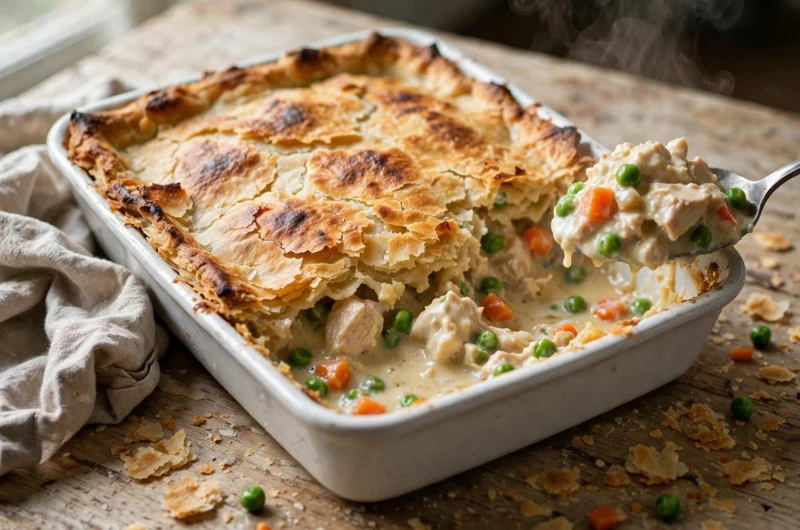
minutesA creamy chicken pot pie casserole with tender chicken, vegetables, and a flaky golden crust — no bottom crust and ready in under an hour.
Ingredients
4 tbsp butter
1 medium onion, finely diced
2 medium carrots, diced
2 celery stalks, diced
3 garlic cloves, minced
⅓ cup all-purpose flour
2 cups low-sodium chicken broth
1 cup whole milk
½ cup heavy cream
3 cups cooked chicken, shredded or cubed
1 cup frozen peas
1 tsp salt
½ tsp black pepper
½ tsp dried thyme
2 tbsp fresh parsley, chopped
1 sheet refrigerated pie crust
1 large egg, beaten with 1 tsp water
Directions
- Preheat oven to 400°F. Melt butter in a large skillet over medium heat and cook onion, carrots, and celery 6–8 minutes until softened.
- Add garlic and cook 30 seconds. Stir in flour and cook 1–2 minutes until pale gold.
- Whisk in broth, then milk and cream. Simmer 3–5 minutes until the sauce coats a spoon.
- Stir in chicken, peas, thyme, salt, and pepper. Remove from heat and add parsley.
- Pour filling into a 9×13-inch dish, top with pie crust, brush with egg wash, and cut vent slits.
- Bake 25–30 minutes until golden and bubbling. Tent with foil if browning too fast.
- Rest 10 minutes before serving so the filling sets.
Notes
- Rotisserie chicken makes this fastest; thighs stay the most tender.nFor a biscuit topping, bake at 375°F for 25–30 minutes so the centers cook through.nThe filling can be made 2 days ahead; add a few minutes to the bake if starting cold.