Scalloped Potatoes — The Best Creamy & Easy Recipe
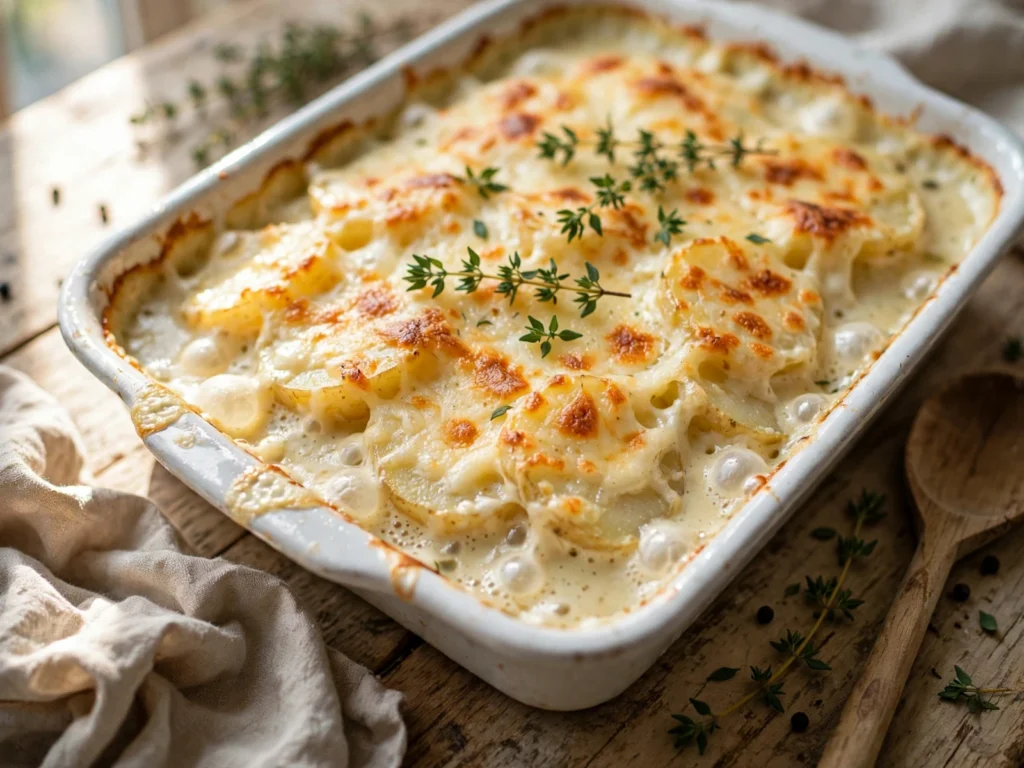
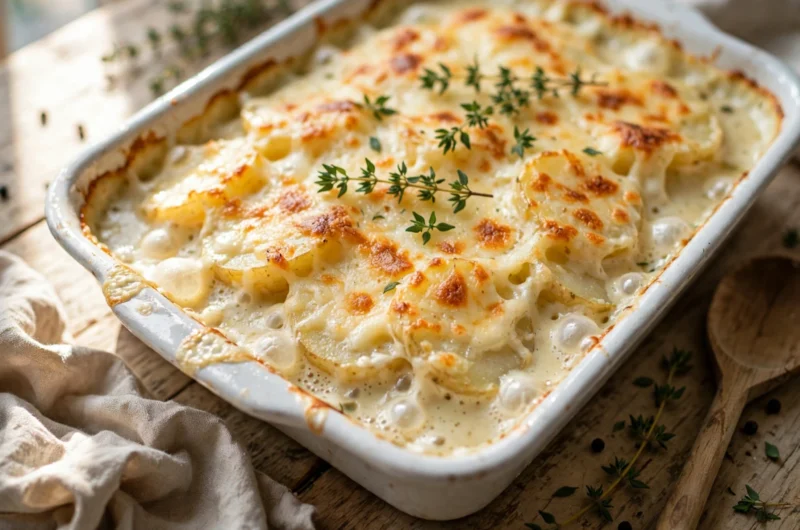
These creamy scalloped potatoes turn a handful of pantry staples into the side dish everyone reaches for twice. You get thin, tender potato layers folded into a silky garlic-cream sauce that never curdles, finished with a golden top — no boiling, no fussy steps. It’s easy enough for a weeknight and confident enough for a holiday table, and below you’ll get the exact technique that keeps the sauce smooth and the potatoes fully cooked through.
| Prep time | 25 minutes |
| Cook time | 1 hour 15 minutes |
| Rest time | 15 minutes |
| Total time | About 1 hour 55 minutes |
| Servings | 8 (as a side) |
| Difficulty | Easy |
| Cuisine | American |
| Key method | Layered and baked in a garlic béchamel — raw potatoes, no pre-boiling |
If you have potatoes, butter, flour, and milk, you can make this tonight. Everything else is optional flavor.
In This Post
Why You’ll Love This Scalloped Potatoes Recipe
- Truly creamy, never watery — a proper béchamel coats every slice instead of pooling at the bottom.
- No boiling required — raw potatoes go straight into the dish and cook in the sauce.
- Curdle-proof — the flour-thickened sauce keeps the dairy silky even at oven heat.
- Make-ahead friendly — assemble a day early and bake when you need it.
- Flexible — leave it classic and cheeseless, or add cheese for a richer, au-gratin style.
- Crowd-sized — one 9×13 dish feeds eight and reheats beautifully.
What Makes This Scalloped Potatoes Recipe Different
Most recipes just pour milk over raw potatoes and hope it thickens — which is exactly why so many turn out thin and grainy. This version starts with a real garlic béchamel: butter, flour, and warmed dairy cooked into a pourable sauce before it ever touches the potatoes. That single step is the difference between a set, spoonable side and a puddle. It also lets the potatoes bake from raw without any pre-cooking, so the layers stay tender and the sauce stays glossy.
Ingredients You’ll Need
- 3 lbs (1.4 kg) Yukon Gold potatoes (about 6 medium), peeled and sliced ⅛ inch thick
- 4 tbsp (57 g) unsalted butter
- 3 garlic cloves, minced
- ¼ cup (30 g) all-purpose flour
- 2 cups (480 ml) whole milk, warmed
- 1 cup (240 ml) heavy cream, warmed
- 1¼ tsp salt, plus more to taste
- ½ tsp freshly ground black pepper
- ¼ tsp ground nutmeg
- 1 tsp fresh thyme leaves (or ½ tsp dried)
- Optional: 1½ cups (150 g) shredded Gruyère or sharp cheddar
- 2 tbsp chopped fresh parsley, to garnish
Ingredient Notes
- Yukon Gold potatoes are the sweet spot — waxy enough to hold their shape in layers, starchy enough to help the sauce set. Russets work too and drink up more sauce (add a splash more cream); avoid very waxy red potatoes, which stay firm and slide apart.
- Whole milk + heavy cream gives richness without being greasy. All milk turns out lighter; all cream can feel heavy. The 2:1 ratio is the reliable middle.
- Flour is the quiet hero — it thickens the sauce and stabilizes the dairy so it won’t split in the oven.
- Nutmeg is traditional and easy to overdo. A ¼ teaspoon adds warmth you’ll notice only if it’s missing.
- Gruyère melts silky and nutty; sharp cheddar is punchier and more budget-friendly. Both are optional — leave them out for a true classic scalloped potato.
Substitutions & Swaps
- No heavy cream? Use 3 cups whole milk total and add an extra tablespoon of flour for body.
- Gluten-free: Swap the flour for a 1:1 gluten-free blend or 2 tablespoons cornstarch (whisked into the cold milk first).
- Dairy-free: Use vegan butter, unsweetened oat or full-fat coconut milk, and 2 tablespoons nutritional yeast for savory depth.
- Onion lovers: Layer thin half-moons of yellow onion between the potatoes for a sweeter, deeper flavor.
Equipment You’ll Need
- A mandoline — for fast, even ⅛-inch slices, the single biggest shortcut here.
- A sharp chef’s knife, as a backup
- A medium saucepan for the sauce
- A whisk
- A 9×13-inch baking dish
- Aluminum foil
How to Make Scalloped Potatoes
Step 1 — Prep the Oven and Dish
Preheat the oven to 375°F (190°C) and butter a 9×13-inch baking dish. A greased dish keeps the edges from sticking and makes serving clean.
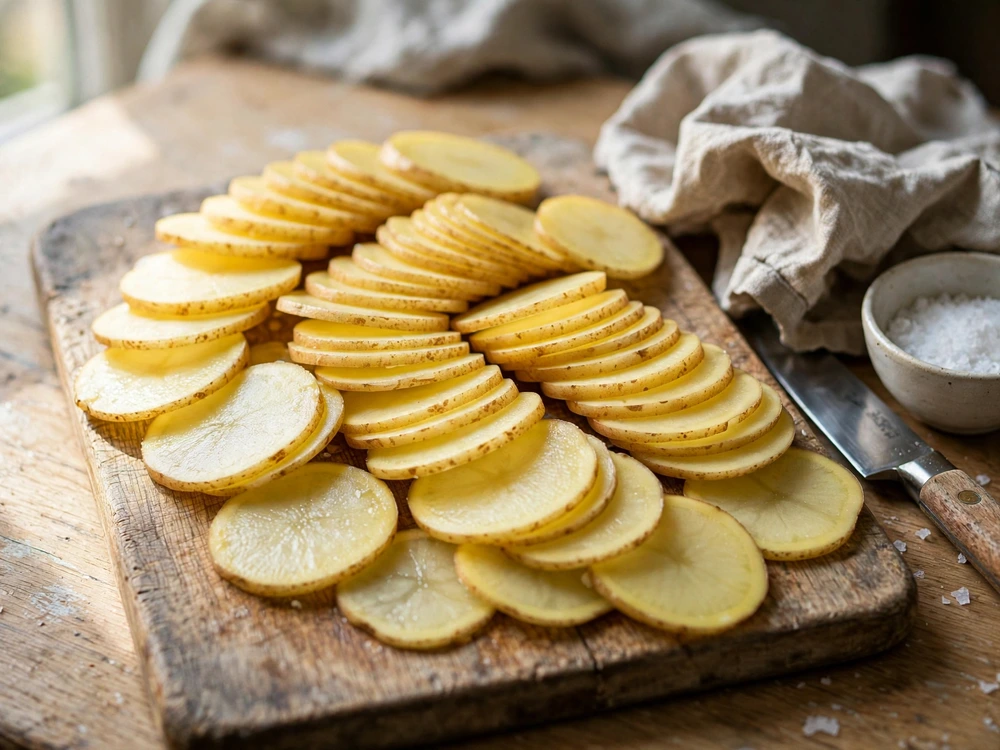
Step 2 — Slice the Potatoes
Peel and slice the potatoes ⅛ inch thick, as evenly as you can. Even slices are what let every layer finish cooking at the same time — a mandoline makes this effortless.
Step 3 — Start the Sauce
Melt the butter in a saucepan over medium heat, add the garlic, and cook about 30 seconds, just until fragrant. Don’t let the garlic brown or it turns bitter.
Step 4 — Build the Roux
Whisk in the flour and cook for 1 full minute, stirring constantly. This short cook removes the raw-flour taste and sets up the sauce to thicken smoothly.
Step 5 — Add the Dairy
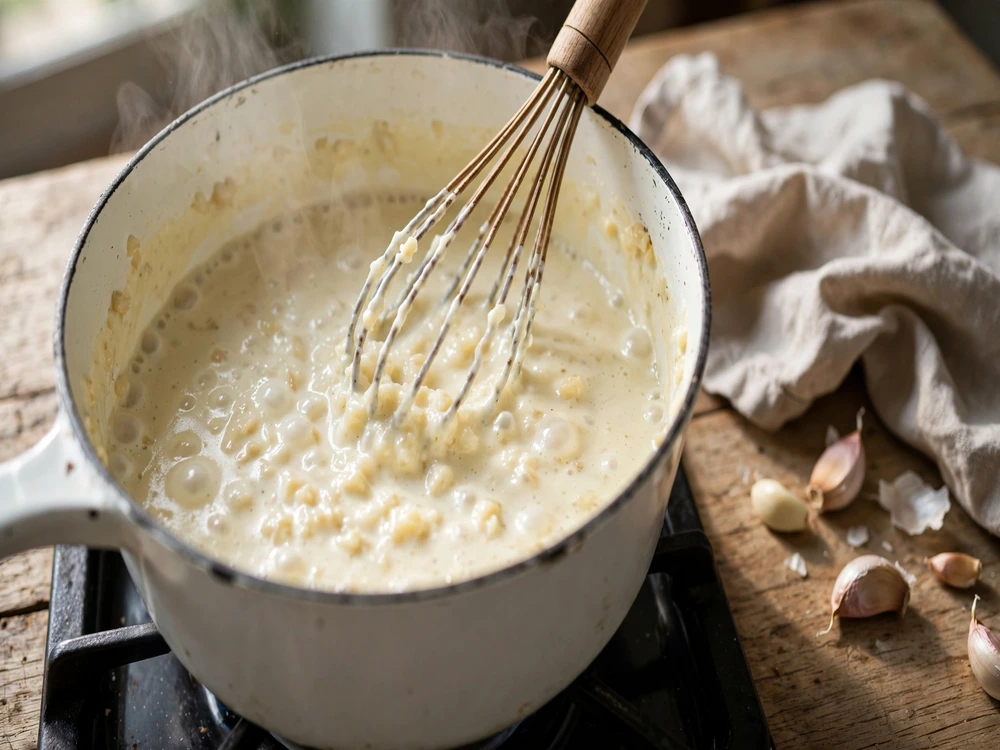
Slowly whisk in the warm milk and cream. Keep whisking and simmer 3–5 minutes until the sauce coats the back of a spoon. It should look like thin gravy — it will tighten further in the oven.
Step 6 — Season
Off the heat, stir in the salt, pepper, nutmeg, and thyme (and half the cheese, if using). Taste and adjust — the sauce should be a touch saltier than you’d normally like, since the potatoes are unseasoned.
Step 7 — Layer
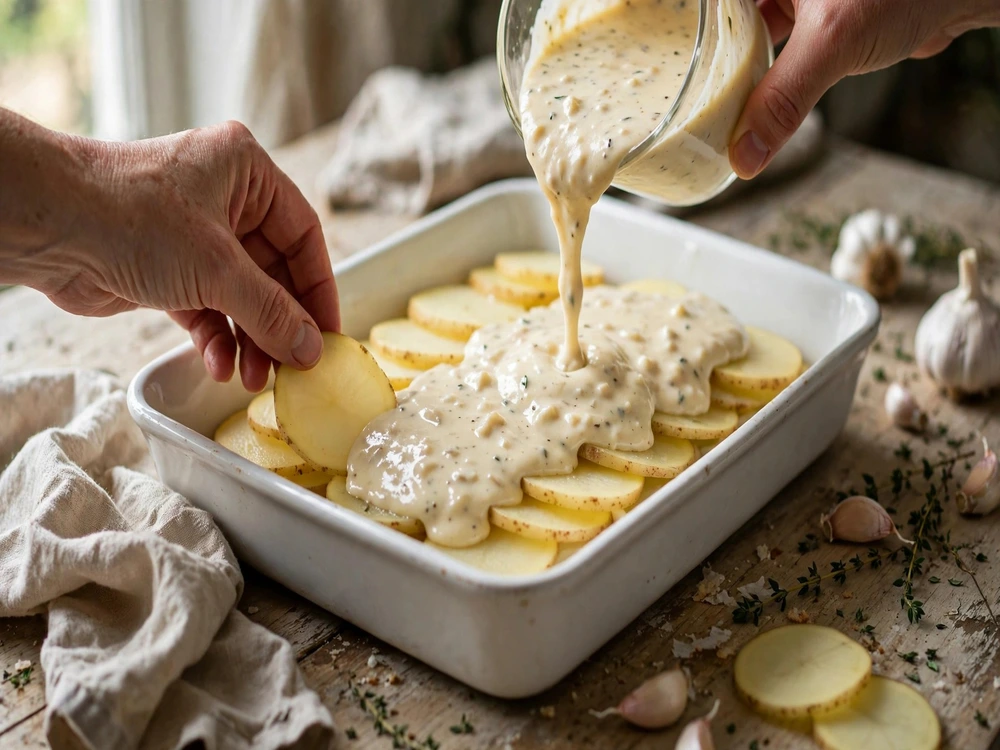
Arrange half the potato slices in the dish, overlapping like shingles, then pour over half the sauce. Repeat with the remaining potatoes and sauce so every slice is coated.
Step 8 — Bake Covered
Cover tightly with foil and bake 40 minutes. The trapped steam softens the potatoes from raw without drying out the top.
Step 9 — Bake Uncovered
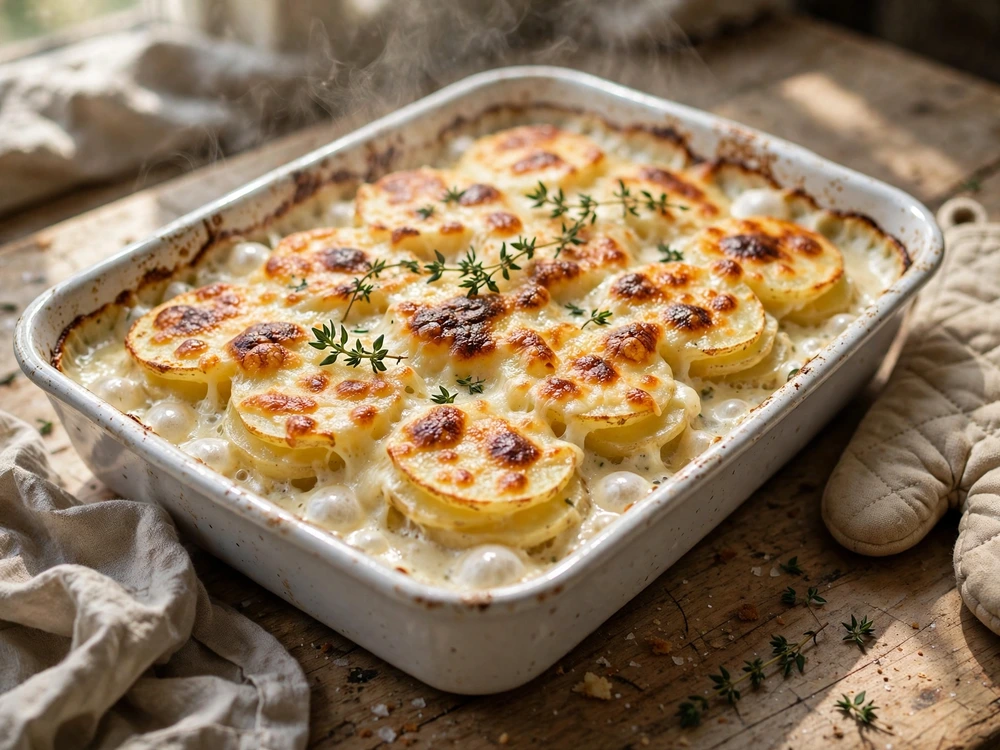
Remove the foil (scatter on the reserved cheese now, if using) and bake another 30–35 minutes, until the top is golden and a knife slides through the center with no resistance.
Step 10 — Rest, Then Serve
Let it rest 10–15 minutes so the sauce sets into something spoonable, then garnish with parsley. Skipping the rest is why sauce runs across the plate.
Do You Have to Boil Potatoes Before Making Scalloped Potatoes?
No — you don’t need to boil the potatoes first. Sliced thin (⅛ inch) and baked in a hot sauce, raw potatoes cook fully in about an hour, and skipping the boil actually gives you better texture and more flavor. Pre-boiling washes out starch and often leaves you with mushy, waterlogged layers. The only real requirements are thin, even slices and a covered first bake so the potatoes steam-cook before the top browns.
Expert Tips for the Best Scalloped Potatoes
- Slice thin and even. ⅛ inch is the target. Thick or uneven slices are the #1 reason the middle stays hard while the top burns.
- Warm your dairy first. Adding cold milk to a hot roux can seize the sauce; warm liquid whisks in smooth.
- Over-season the sauce. The potatoes bring nothing but starch — the sauce has to carry the seasoning for the whole dish.
- Cover, then uncover. Foil for the first 40 minutes cooks the potatoes; removing it lets the top brown. Do both.
- Don’t crowd russets. If you use starchy russets, they absorb more liquid — add ¼ cup extra cream so it doesn’t dry out.
- Rest before serving. Ten minutes lets the sauce thicken from soupy to spoonable.
💡 Tip: Warm the milk and cream before whisking them into the roux — cold dairy hitting a hot roux is what causes a grainy, seized sauce.
The Secret to Creamy Scalloped Potatoes (That Never Curdle)
The secret is the béchamel — and it works because of chemistry, not luck. When dairy is heated on its own, its proteins can clump and separate (that grainy, “broken” look). Flour prevents this: the starch molecules coat the milk proteins and trap water, keeping everything emulsified even at oven temperatures. Building a proper roux-based sauce before layering does two jobs at once — it guarantees a silky texture and gives the dish enough structure to set. If you add cheese, stir it in off the heat or scatter it on top near the end, since direct high heat is what makes cheese turn oily and stringy.
Delicious Variations & Add-Ins
Cheesy Scalloped Potatoes (Au Gratin Style)
Stir 1 cup of Gruyère or cheddar into the sauce and top with another ½ cup before the uncovered bake for a golden, bubbling crust.
Scalloped Potatoes with Beef
Layer 2 cups of diced cooked roast beef or beef sausage between the potato layers to turn the side into a full meal — great for using up holiday leftovers.
Healthier / Lighter Version
Swap the cream for extra whole (or 2%) milk, cut the butter to 2 tablespoons, and add a tablespoon of flour to keep the body. Lighter, still creamy.
Dairy-Free / Vegan Version
Use vegan butter, unsweetened oat milk, and 2 tablespoons of nutritional yeast for savory depth. A splash of coconut cream restores richness.
Individual Ramekin Portions
Build the layers in buttered ramekins for a dinner-party-ready plated side. Reduce the covered bake to 25 minutes and the uncovered to 15–20.
What to Serve With Scalloped Potatoes
- Roast beef or lamb — the classic holiday pairing; rich roasted meat against creamy potatoes.
- Roast chicken — an easy weeknight main that lets the potatoes shine.
- Beef roast or prime rib — rich meat and rich potatoes made for special occasions.
- Roasted green beans or asparagus — a bright, crisp counterpoint cuts the richness.
- Simple green salad — a sharp vinaigrette resets the palate between bites.
How to Store Scalloped Potatoes
At Room Temperature
Don’t leave scalloped potatoes out longer than 2 hours; the dairy sauce spoils quickly. Cool leftovers and refrigerate promptly.
In the Refrigerator
Store in an airtight container (or the dish, covered) for up to 3–4 days. Reheat covered at 350°F, or in the microwave with a splash of milk to loosen the sauce.
Freezing & Thawing
Can you freeze scalloped potatoes? Yes, but expect some texture change — cream-based sauces can turn slightly grainy and potatoes soften. Freeze, tightly wrapped, for up to 2 months, thaw overnight in the fridge, and reheat covered at 350°F until hot in the center. For the best results, freeze before baking rather than after.
Make-Ahead Instructions
Assemble the entire dish, cover tightly, and refrigerate for up to 24 hours before baking — add 10–15 minutes to the covered bake since it’s going in cold. Short on time day-of? Slice the potatoes ahead and hold them in cold water (up to 12 hours) to prevent browning; drain and pat dry before layering.
Troubleshooting Common Problems
Why Are My Scalloped Potatoes Still Hard?
Two usual causes: the slices were too thick, or the dish was baked uncovered the whole time. Thin slices and a covered first bake let the potatoes steam-cook through before the top sets. If they’re nearly there, re-cover and give them another 15 minutes.
Why Did My Scalloped Potatoes Curdle?
The sauce split from too much direct heat or from skipping the flour. A roux-based béchamel stabilizes the dairy; if you added cheese, stir it in off the heat. High, fast heat on plain cream is what breaks it.
Why Are My Scalloped Potatoes Watery or Runny?
The sauce was too thin going in, or you skipped the rest. Simmer the béchamel until it coats a spoon before layering, and let the baked dish rest 10–15 minutes so the sauce sets.
Why Did the Top Burn Before the Middle Cooked?
The dish baked uncovered too early. Always start covered with foil so the interior cooks, then uncover only for the final 30–35 minutes to brown the top.
Nutrition Information
Estimated per serving (⅛ of the dish, classic version without added cheese):
- Calories: ~330
- Fat: 19 g (Saturated 12 g)
- Carbohydrates: 34 g
- Fiber: 3 g
- Sugar: 5 g
- Protein: 7 g
- Sodium: ~420 mg
Adding 1½ cups of cheese adds roughly 90 calories and 3 g protein per serving. Values are estimates and vary with brands and exact quantities.
Frequently Asked Questions
What’s the difference between scalloped and au gratin potatoes?
Classic scalloped potatoes are baked in a plain cream or béchamel sauce, while au gratin potatoes include cheese (and often a breadcrumb top). Add cheese to this recipe and you’ve essentially made au gratin.
What are the best potatoes for scalloped potatoes?
Yukon Golds are ideal — creamy and sturdy enough to hold their layers. Russets work and soak up more sauce; very waxy red potatoes stay too firm.
Do I need a mandoline?
No, but it helps a lot. Even ⅛-inch slices cook uniformly. A sharp knife and a steady hand will do the job.
Why are my scalloped potatoes grainy?
The dairy separated. Use a flour-based sauce, warm your milk before adding it, and stir cheese in off the heat to keep everything smooth.
Can I make scalloped potatoes ahead of time?
Yes. Assemble up to 24 hours ahead, refrigerate covered, and add 10–15 minutes to the bake since it starts cold.
Can I freeze scalloped potatoes?
Yes, for up to 2 months, though the texture softens slightly. Freezing before baking gives the best result.
How do I reheat scalloped potatoes without drying them out?
Cover and warm at 350°F, or microwave individual portions with a splash of milk stirred in to bring the sauce back.
Can I make this without cream?
Yes — use 3 cups of whole milk total and add an extra tablespoon of flour for body.
How far in advance can I slice the potatoes?
Up to 12 hours ahead if you keep them submerged in cold water; drain and pat dry before layering so the sauce clings.
Related Recipes
Recipe Card
Creamy Scalloped Potatoes
Course: Side DishCuisine: AmericanDifficulty: Easy8
servings25
minutes1
hour15
minutes1
hour40
minutesTender layered potatoes baked in a silky garlic-cream sauce — no boiling, no curdling, ready for a weeknight or a holiday table.
Ingredients
3 lbs (1.4 kg) Yukon Gold potatoes, peeled and sliced ⅛ inch thick
4 tbsp (57 g) unsalted butter
3 garlic cloves, minced
¼ cup (30 g) all-purpose flour
2 cups (480 ml) whole milk, warmed
1 cup (240 ml) heavy cream, warmed
1¼ tsp salt
½ tsp freshly ground black pepper
¼ tsp ground nutmeg
1 tsp fresh thyme leaves (or ½ tsp dried)
Optional: 1½ cups (150 g) shredded Gruyère or sharp cheddar
2 tbsp chopped fresh parsley, to garnish
Directions
- Preheat oven to 375°F (190°C) and butter a 9×13-inch baking dish.
- Peel and slice the potatoes ⅛ inch thick; set aside.
- Melt the butter in a saucepan over medium heat. Add the garlic and cook 30 seconds until fragrant.
- Whisk in the flour and cook 1 minute.
- Slowly whisk in the warm milk and cream. Simmer 3–5 minutes, whisking, until the sauce coats the back of a spoon.
- Off the heat, stir in salt, pepper, nutmeg, and thyme (and half the cheese, if using).
- Layer half the potatoes in the dish, pour over half the sauce, then repeat with the remaining potatoes and sauce.
- Cover with foil and bake 40 minutes.
- Uncover (top with reserved cheese, if using) and bake 30–35 minutes more, until golden and a knife slides through with no resistance.
- Rest 10–15 minutes, garnish with parsley, and serve.
Notes
- Even ⅛-inch slices are the key to potatoes that cook through evenly.nWarm the dairy before adding it to keep the sauce from seizing.nFor a cheesy au-gratin version, stir 1 cup cheese into the sauce and top with ½ cup more.