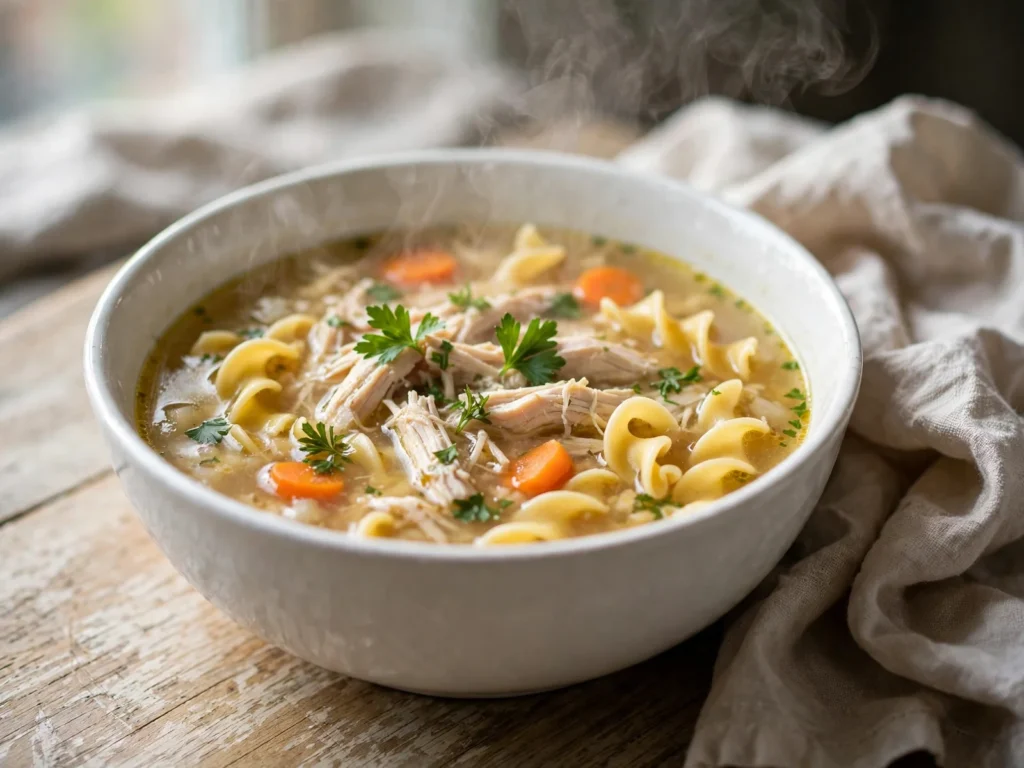
Chicken Noodle Soup — The Best Easy, Cozy Homemade Recipe
This chicken noodle soup is the from-scratch bowl you’ll reach for on cold nights, sick days, and lazy Sundays alike. It comes together in one pot in under an hour with tender chicken, a rich golden broth, and noodles that stay springy instead of turning to mush. You get real depth of flavor without simmering a carcass all day — and a clear method for making it right the first time.
| Prep time | 15 minutes |
| Cook time | 30 minutes |
| Total time | 45 minutes |
| Servings | 6 bowls |
| Difficulty | Easy |
| Cuisine | American |
| Key method | One-pot simmer (poach the chicken right in the broth) |
If you have a pot, a knife, and 45 minutes, you can make this. No stock-from-scratch marathon required.
In This Post
Why You’ll Love This Soup
- One pot, under an hour. Everything cooks in a single Dutch oven — minimal cleanup, weeknight-friendly.
- Rich broth without the wait. A few simple moves give you deep, savory flavor from regular boxed broth.
- Springy noodles, not mush. A specific timing trick keeps the egg noodles from turning gummy.
- Naturally cozy and forgiving. Hard to overcook, easy to scale, and endlessly adaptable.
- Meal-prep and freezer ready. Store it smart and it reheats like it was just made.
What Makes This Chicken Noodle Soup Different
Most quick versions dump pre-cooked chicken into store broth and hope for the best — the result tastes flat. Here you poach raw chicken directly in the broth, then shred it back in. The chicken flavors the liquid as it cooks, and the broth keeps the chicken moist. That single change turns “fine” into “why does this taste like it simmered all day?”
Ingredients You’ll Need
For 6 servings:
- 2 tablespoons olive oil (or unsalted butter)
- 1 medium yellow onion, diced (about 1 cup)
- 3 medium carrots, sliced into coins (about 1½ cups)
- 3 celery stalks, sliced (about 1 cup)
- 4 garlic cloves, minced
- 1 teaspoon dried thyme (or 1 tablespoon fresh)
- 1 bay leaf
- 8 cups (2 quarts / 1.9 L) low-sodium chicken broth
- 1½ pounds (680 g) boneless, skinless chicken breasts or thighs
- 6 ounces (170 g) wide egg noodles (about 3 cups)
- 2 tablespoons chopped fresh parsley
- 1 tablespoon fresh lemon juice (optional, but recommended)
- Salt and black pepper, to taste
Ingredient Notes
- Chicken breasts vs. thighs. Breasts give you classic, lean shreds; thighs stay a touch juicier and more forgiving if you walk away from the pot. Either works — use what you like.
- Egg noodles. Wide egg noodles are traditional because they hold their shape and catch broth in their curls. They also cook fast, which matters (see the mushy-noodle fix below).
- Low-sodium broth. Start low-sodium so you control the salt. A concentrated broth or added bouillon builds more flavor than water-thin stock.
- Mirepoix (onion, carrot, celery). This trio is the flavor base of nearly every good soup. Cut the pieces evenly so they cook at the same rate.
- Fresh lemon juice. A small squeeze at the end lifts the whole pot and makes the savory notes pop — you won’t taste “lemon,” just brightness.
Substitutions & Swaps
- No egg noodles? Use rotini, ditalini, or broken spaghetti. Or swap in cooked rice or orzo for a lighter feel.
- Gluten-free: Use gluten-free noodles or cooked white rice, and check that your broth is certified GF.
- No fresh herbs? Dried works — use ⅓ the amount of any fresh herb called for.
- Rotisserie shortcut: Skip poaching and stir in about 3 cups shredded cooked chicken during the last 5 minutes.
- Vegetarian base: Use vegetable broth and chickpeas instead of chicken; add a splash of soy sauce for savory depth.
Equipment You’ll Need
- A large Dutch oven or heavy 6-quart pot
- A sharp chef’s knife and cutting board
- Tongs and two forks (for shredding)
- A ladle
You don’t need anything fancy — a heavy-bottomed pot just heats more evenly and holds temperature better than a thin one.
How to Make Chicken Noodle Soup
Step 1 — Sauté the Aromatics
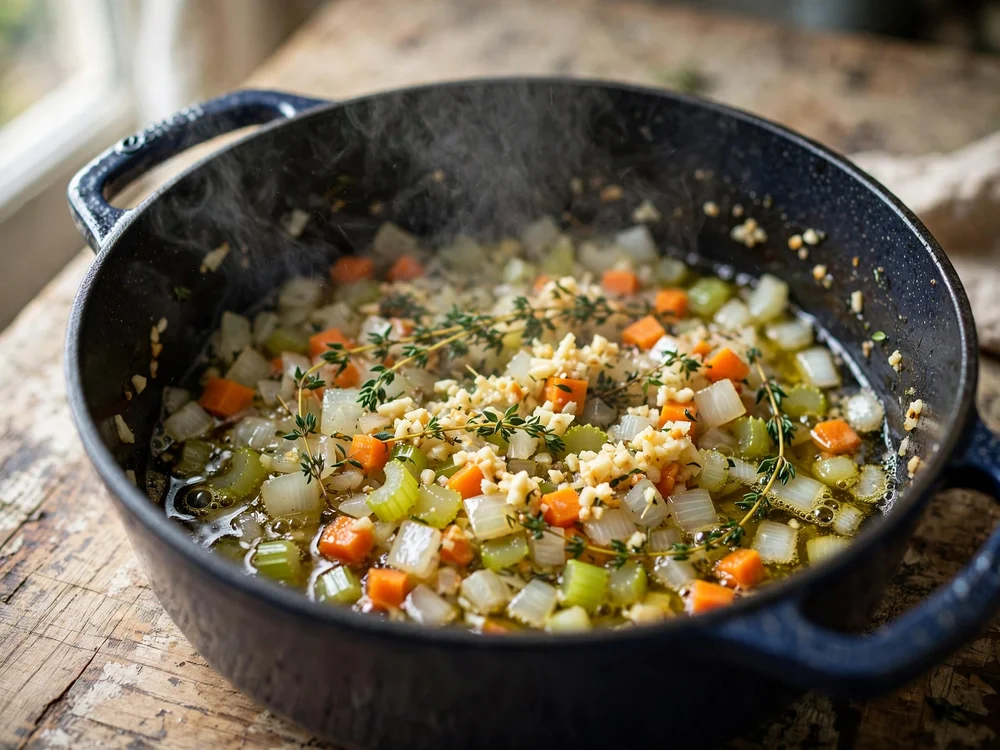
Heat the oil in your pot over medium heat. Add the onion, carrots, and celery, and cook 5–7 minutes, stirring occasionally, until the onion turns translucent and the edges soften. This builds the flavor base — don’t rush it.
Step 2 — Bloom the Garlic and Herbs
Add the minced garlic, thyme, and bay leaf. Cook 30–60 seconds, just until the garlic smells fragrant. Blooming the herbs in the fat now releases far more flavor than dumping them into liquid later.
Step 3 — Add Broth and Poach the Chicken
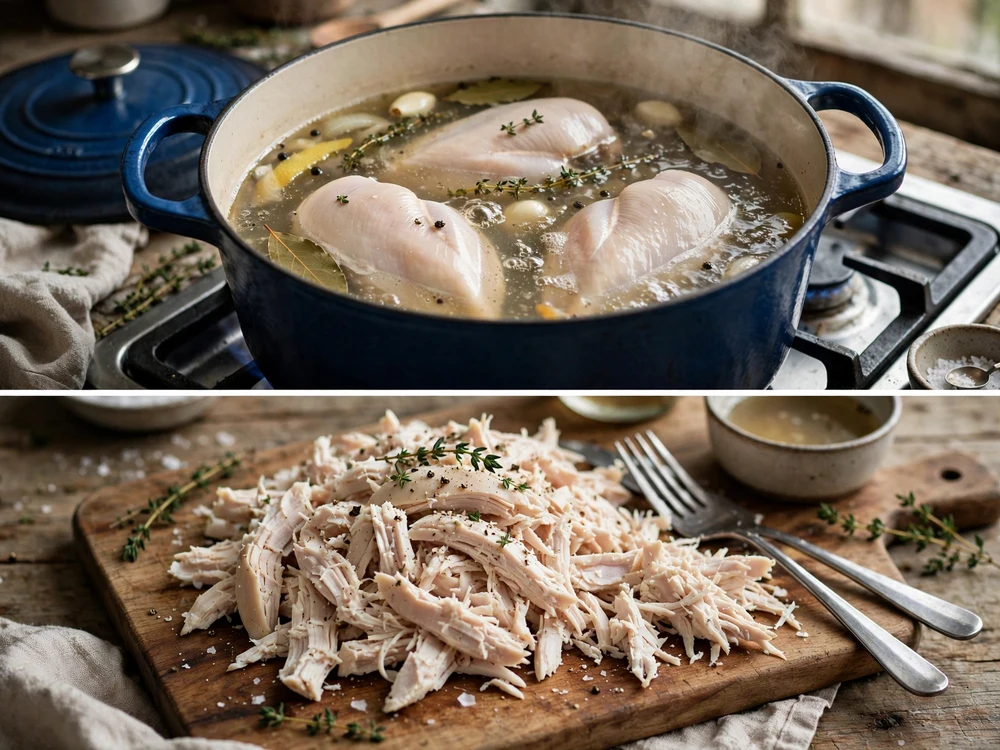
Pour in the broth and nestle the raw chicken into the liquid. Bring to a gentle boil, then reduce to a low simmer. Cook 15–20 minutes (breasts) or 20–25 minutes (thighs), until the chicken reaches 165°F (74°C) internally.
Step 4 — Shred the Chicken
Remove the chicken to a plate and shred it with two forks. It should pull apart easily — if it resists, give it a few more minutes in the broth. Set aside.
Step 5 — Cook the Noodles
Return the broth to a boil and add the egg noodles. Cook according to package time, usually 6–8 minutes, until just tender. Taste one — you want them still slightly firm, since they keep softening in the hot broth.
Step 6 — Finish and Season
Return the shredded chicken to the pot. Stir in the parsley and lemon juice, then discard the bay leaf. Taste and adjust with salt and pepper. Serve hot.
How Do You Keep the Noodles From Getting Mushy?
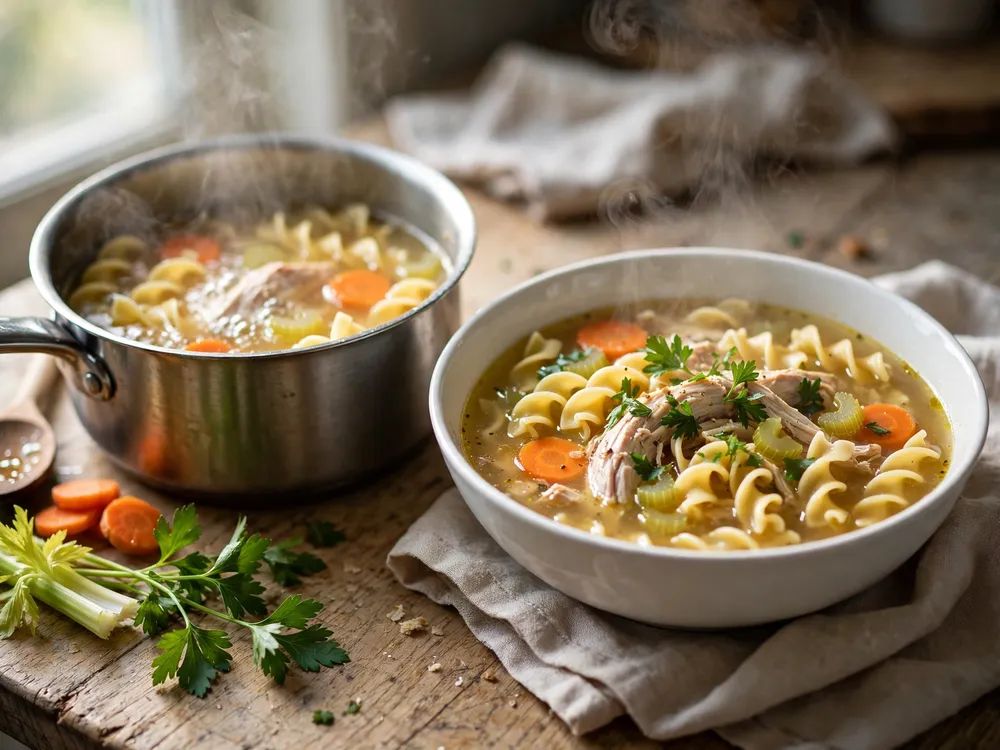
The fix is timing: add the noodles last and don’t overcook them. Egg noodles keep absorbing liquid and softening as long as they sit in hot broth, so a bowl that’s perfect at dinner turns to paste by the next day.
Three ways to keep them springy:
- Undercook slightly. Pull the noodles about a minute before the package says done — residual heat finishes them.
- Serve the same day. For same-day soup, cooking them in the pot is fine.
- Cook separately for leftovers. If you’re storing or freezing, cook the noodles in a side pot, keep them apart, and add them to each bowl as you serve. Your leftovers will taste freshly made.
Expert Tips for the Best Chicken Noodle Soup
- Poach, don’t pre-cook. Cooking raw chicken in the broth seasons the liquid and keeps the meat tender. This is the single biggest flavor upgrade.
- Salt in stages. Season the vegetables lightly, then again at the end. Salting only at the finish leaves the soup tasting one-dimensional.
- Simmer, never hard-boil, the chicken. A rolling boil makes the meat tough and stringy. Keep it at a lazy bubble.
- Deglaze the fond. If browned bits stick to the pot after sautéing, the broth will loosen them — scrape them up; that’s pure flavor.
- Finish with acid. That tablespoon of lemon juice (or a splash of white wine vinegar) is what separates a flat soup from a bright, crave-worthy one.
- Add fresh herbs off the heat. Parsley stirred in at the end stays green and fresh; boiled parsley goes drab.
💡 Tip: Poaching the raw chicken directly in the broth — instead of stirring in pre-cooked chicken — is the single biggest upgrade here. The chicken seasons the broth as it cooks, and the broth keeps the chicken moist.
The Secret to a Rich, Flavorful Broth
The secret is layering flavor at every stage instead of relying on the broth alone. Boxed broth is your starting point, not your finished product.
Here’s the logic: fat carries flavor, so sautéing the vegetables and blooming the garlic and thyme in oil extracts and holds their aroma. Poaching the chicken directly in the liquid adds savory, meaty depth (called umami) that pre-cooked chicken can’t. And finishing with acid and fresh herbs sharpens everything so the flavors read as bright and full rather than muddy. Each step is small — stacked together, they’re the difference between “canned tasting” and “made from scratch.”
If you want even deeper flavor, add a parmesan rind while it simmers, or stir in a teaspoon of chicken bouillon paste with the broth.
Delicious Variations & Add-Ins
Creamy Chicken Noodle Soup
Stir in ½ cup heavy cream (or a slurry of 2 tablespoons flour whisked into ¼ cup milk) during the last 5 minutes. You get a velvety, chowder-like bowl.
Lemon Chicken Orzo
Swap the egg noodles for ¾ cup orzo and double the lemon juice. Finish with extra parsley and a little grated zest for a bright, Mediterranean-leaning version.
Healthier / Lighter Version
Use whole-wheat egg noodles, double the carrots and celery, add a handful of spinach or kale at the end, and stick with low-sodium broth. More vegetables, same comfort.
Gluten-Free Version
Replace the egg noodles with gluten-free pasta or 1½ cups cooked white rice, and confirm your broth is certified gluten-free. Everything else stays the same.
Slow Cooker / Crockpot Version
Add the sautéed vegetables, broth, herbs, and raw chicken to a slow cooker. Cook on low 6–7 hours (or high 3–4), shred the chicken, then stir in the noodles for the final 20–30 minutes on high.
What to Serve With Chicken Noodle Soup
- Crusty bread or dinner rolls — for soaking up every last spoonful of broth.
- Grilled cheese — the classic pairing; the crisp, buttery sandwich plays off the light soup.
- A simple green salad — a lemony vinaigrette echoes the acid in the soup.
- Buttermilk biscuits — flaky and rich, ideal for a heartier meal.
- Saltine or oyster crackers — the low-effort, nostalgic finish.
How to Store Chicken Noodle Soup
At Room Temperature
Don’t leave the soup out longer than 2 hours (1 hour if your kitchen is above 90°F / 32°C). Cool it, then refrigerate promptly.
In the Refrigerator
Store in an airtight container for 3–4 days. For the best texture, keep the noodles separate from the broth and combine when reheating. Reheat gently on the stove over medium, adding a splash of broth if it has thickened.
Freezing & Thawing
Yes, you can freeze chicken noodle soup — but freeze it without the noodles. Frozen noodles turn mushy and grainy when thawed. Freeze the broth, chicken, and vegetables in an airtight container for up to 3 months. Thaw overnight in the fridge, reheat on the stove, and cook fresh noodles to stir in.
Make-Ahead Instructions
Make the full soup base (broth, chicken, vegetables) up to 3 days ahead and refrigerate. Cook the noodles fresh just before serving and add them to the reheated base. This is the single best way to have “instant” homemade soup on hand without sacrificing texture.
Troubleshooting Common Problems
Why Did My Chicken Noodle Soup Get Mushy?
The noodles overcooked or sat in hot broth too long. Egg noodles keep absorbing liquid, so cook them just under done and store them separately from the broth for leftovers.
Why Is My Chicken Noodle Soup Bland?
Under-seasoning and no acid are the usual culprits. Salt in stages, use a concentrated (not watery) broth, and finish with lemon juice. A parmesan rind or a teaspoon of bouillon adds instant depth.
Why Did My Chicken Turn Out Dry or Rubbery?
You boiled it too hard or too long. Keep the broth at a gentle simmer and pull the chicken as soon as it hits 165°F (74°C). Thighs are more forgiving than breasts if this keeps happening.
Why Did My Broth Turn Out Cloudy?
A hard, rolling boil emulsifies fat and proteins into the liquid, clouding it. Keep the heat at a low simmer and skim any foam that rises for a clearer, cleaner-tasting broth.
Nutrition Information
Approximate values per serving (recipe makes 6 servings; noodles included):
- Calories: ~340 kcal
- Protein: 27 g
- Carbohydrates: 28 g
- Fat: 9 g
- Fiber: 3 g
- Sugar: 4 g
- Sodium: ~890 mg
Values are estimates and vary with brands, cuts, and broth sodium.
Frequently Asked Questions
Can I use rotisserie chicken?
Yes. Skip the poaching step and stir in about 3 cups of shredded cooked chicken during the last 5 minutes. To make up for the flavor the raw chicken would have added, use a concentrated broth or a teaspoon of bouillon.
Can you freeze chicken noodle soup?
Freeze it without the noodles for up to 3 months; noodles get mushy when frozen and thawed. Add freshly cooked noodles after reheating.
Why do my noodles soak up all the broth?
Egg noodles keep absorbing liquid as they sit. Cook them separately for leftovers, or add extra broth when reheating.
What noodles are best for chicken noodle soup?
Wide egg noodles are traditional — they hold their shape and catch broth. Rotini, ditalini, or broken spaghetti also work.
Can I make it ahead of time?
Yes. Make the broth-and-chicken base up to 3 days ahead and cook the noodles fresh before serving for the best texture.
Should I use chicken breast or thigh?
Breast gives classic lean shreds; thigh stays juicier and is harder to overcook. Both work — pick your preference.
Related Recipes
Recipe Card
Chicken Noodle Soup
Course: Soup, Main CourseCuisine: AmericanDifficulty: Easy6
servings15
minutes30
minutes45
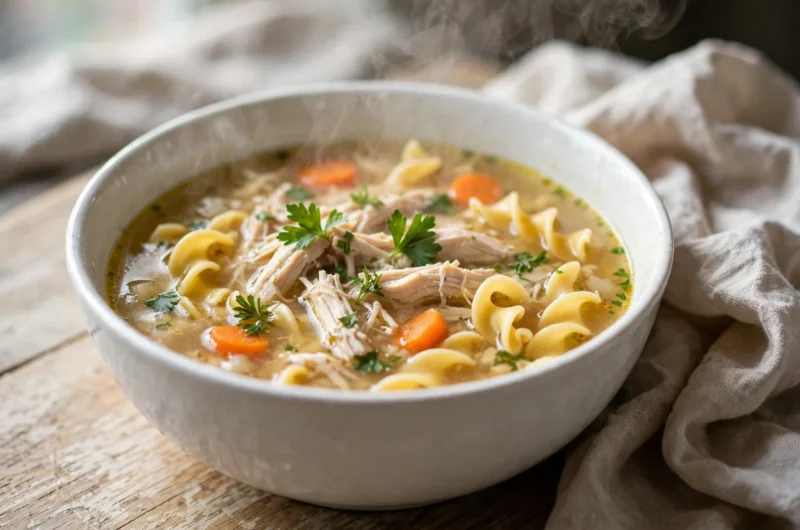
minutesAn easy, one-pot homemade chicken noodle soup with tender chicken, hearty vegetables, egg noodles, and a rich broth — ready in under an hour.
Ingredients
2 tablespoons olive oil (or unsalted butter)
1 medium yellow onion, diced
3 medium carrots, sliced
3 celery stalks, sliced
4 garlic cloves, minced
1 teaspoon dried thyme
1 bay leaf
8 cups (1.9 L) low-sodium chicken broth
1½ lbs (680 g) boneless, skinless chicken breasts or thighs
6 oz (170 g) wide egg noodles
2 tablespoons chopped fresh parsley
1 tablespoon fresh lemon juice (optional)
Salt and black pepper, to taste
Directions
- Heat oil in a large pot over medium. Add onion, carrots, and celery; cook 5–7 minutes until softened.
- Add garlic, thyme, and bay leaf; cook 30–60 seconds until fragrant.
- Pour in the broth and add the raw chicken. Bring to a gentle boil, reduce to a simmer, and cook 15–20 minutes (breasts) or 20–25 minutes (thighs), until the chicken reaches 165°F (74°C).
- Remove the chicken and shred with two forks.
- Return the broth to a boil, add the noodles, and cook 6–8 minutes until just tender.
- Stir the shredded chicken back in with the parsley and lemon juice. Discard the bay leaf. Season with salt and pepper. Serve hot.
Notes
- For leftovers, cook and store the noodles separately so they don’t turn mushy.nFreeze the soup without noodles for up to 3 months.nAdd a parmesan rind while simmering for extra depth.