Chicken Pot Pie — The Best Creamy, Flaky Homemade Recipe
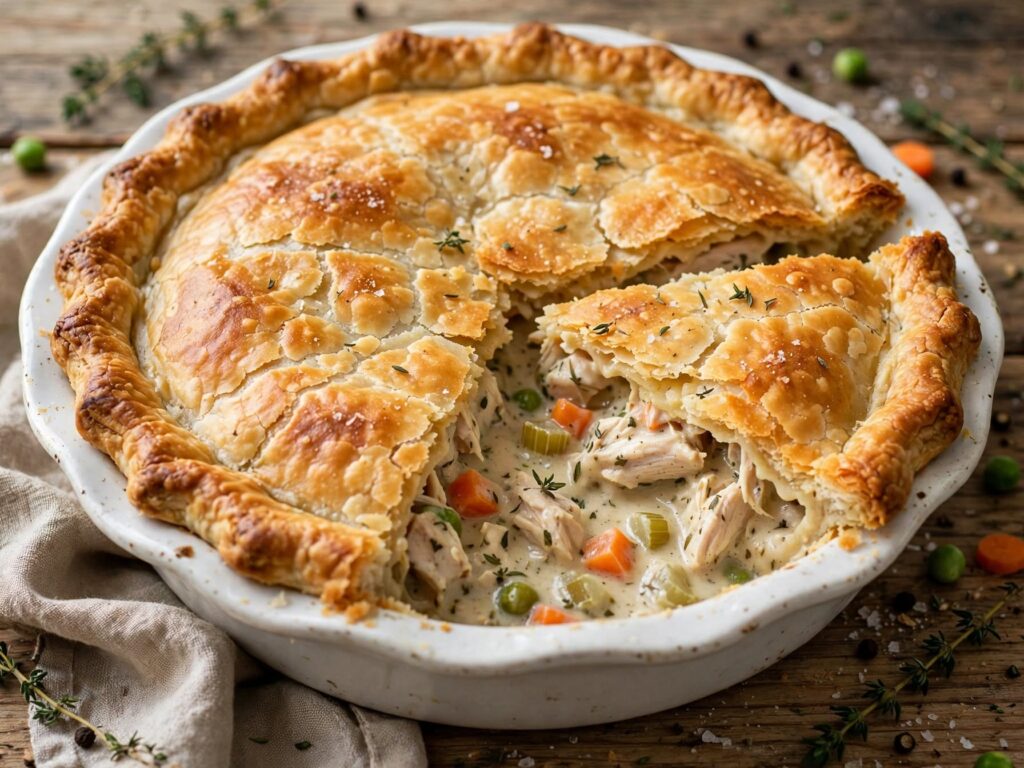
This chicken pot pie delivers everything the dish promises: tender chicken and vegetables in a thick, creamy sauce, all sealed inside a golden, flaky crust. You’ll get a from-scratch filling that never runs, a bottom crust that stays crisp, and a clear sensory cue at every step so it works the first time. No shortcuts that cost flavor — just the technique that makes it reliably great.
| Prep time | 30 minutes |
| Cook time | 40 minutes |
| Cooling/rest | 15 minutes |
| Total time | about 1 hour 25 minutes |
| Servings | 6 |
| Difficulty | Intermediate (easy with store-bought crust) |
| Cuisine | American |
| Key method | Roux-based filling, double-crust, baked at 400°F (200°C) |
If you want a full-flavored comfort dinner and can spare about 90 minutes, this is a yes. Using refrigerated pie crust cuts the active time to roughly 20 minutes.
In This Post
Why You’ll Love This Chicken Pot Pie
- Creamy, never watery. A proper roux thickens the filling so it holds its shape when you cut in.
- Crisp bottom crust. A hot baking sheet and a cooled filling stop the dreaded soggy base.
- Flexible protein. Rotisserie, leftover roast, or poached chicken all work.
- Make-ahead friendly. Assemble and refrigerate or freeze, then bake when you need it.
- One dish, full meal. Protein, vegetables, and starch in every slice.
- Reliable results. Every step includes what it should look and feel like, so you’re never guessing.
What Makes This Chicken Pot Pie Different
The difference is in the sauce ratio and the crust setup. Most runny pot pies use too little flour for the liquid, so the filling never sets. This recipe uses a measured roux (equal butter and flour by feel, balanced against 2½ cups total liquid) to guarantee a filling that’s spoonable when warm and sliceable once rested. Paired with a preheated baking sheet under the pie, you get a crust that’s browned on the bottom, not pale and damp — the single thing that separates a bakery-quality pot pie from a homemade one that looks great but leaks.
Ingredients You’ll Need
For the filling:
- ⅓ cup (75g) unsalted butter
- 1 medium yellow onion, diced (about 1 cup)
- 2 medium carrots, diced (about 1 cup)
- 2 celery stalks, diced (about ¾ cup)
- 3 garlic cloves, minced
- ⅓ cup (40g) all-purpose flour
- 1½ cups (360ml) low-sodium chicken broth
- 1 cup (240ml) whole milk (or half-and-half for richer filling)
- ½ teaspoon salt, plus more to taste
- ¼ teaspoon black pepper
- ½ teaspoon dried thyme
- 3 cups (about 450g) cooked chicken, shredded or diced
- 1 cup (140g) frozen peas
- 2 tablespoons chopped fresh parsley (optional)
For the crust:
- 1 double-crust batch homemade pastry (recipe in the card) or 2 refrigerated pie crusts
- 1 large egg, beaten (for egg wash)
Ingredient Notes
- Butter builds the roux and carries flavor. Unsalted lets you control seasoning.
- The mirepoix (onion, carrot, celery) is the aromatic base — dice evenly so everything cooks at the same rate.
- Flour is the thickener. Cooking it in the butter for a minute removes the raw-flour taste before liquid goes in.
- Broth + milk together give body and richness. Low-sodium broth keeps the filling from turning salty as it reduces.
- Chicken: thigh meat stays juicier, but breast works fine. Rotisserie chicken is the fastest route.
- Peas go in at the end and cook from frozen — no need to thaw.
Substitutions & Swaps
- No milk? Use all broth for a lighter filling, or all half-and-half for a richer one.
- Gluten-free: swap in a 1:1 gluten-free flour blend for the roux and use a gluten-free crust.
- Dairy-free: use plant butter and unsweetened oat or soy milk; the sauce still thickens.
- No fresh thyme or parsley? Dried thyme is built in; skip parsley or use a pinch of dried.
- Turkey instead of chicken: an even swap — ideal for leftover roast turkey.
Equipment You’ll Need
- 9-inch (23cm) deep pie dish
- Large skillet or saucepan
- Rimmed baking sheet (to preheat under the pie)
- Whisk
- Rolling pin (if making crust from scratch)
- Pastry brush
How to Make Chicken Pot Pie
Step 1 — Preheat and Prep
Place a rimmed baking sheet on the middle rack and heat the oven to 400°F (200°C). The hot sheet is what crisps the bottom crust. Dice your vegetables and shred the chicken so everything is ready before you start the sauce.
Step 2 — Cook the Aromatics
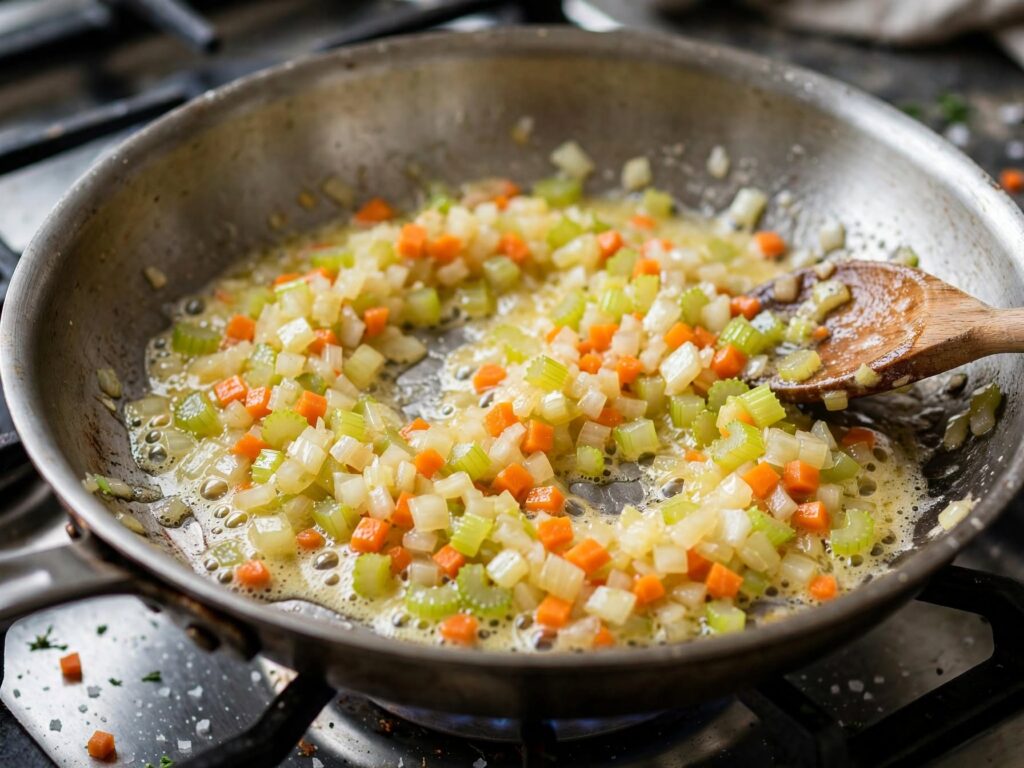
Melt the butter in a large skillet over medium heat. Add onion, carrot, and celery and cook 6–8 minutes, until the onion is translucent and the carrots have started to soften. Stir in the garlic and cook 30 seconds, just until fragrant.
Step 3 — Build the Roux
Sprinkle the flour over the vegetables and stir constantly for 1–2 minutes. The mixture will look pasty and coat the vegetables — that’s the roux cooking out its raw taste. Don’t let it brown.
Step 4 — Add the Liquid and Thicken
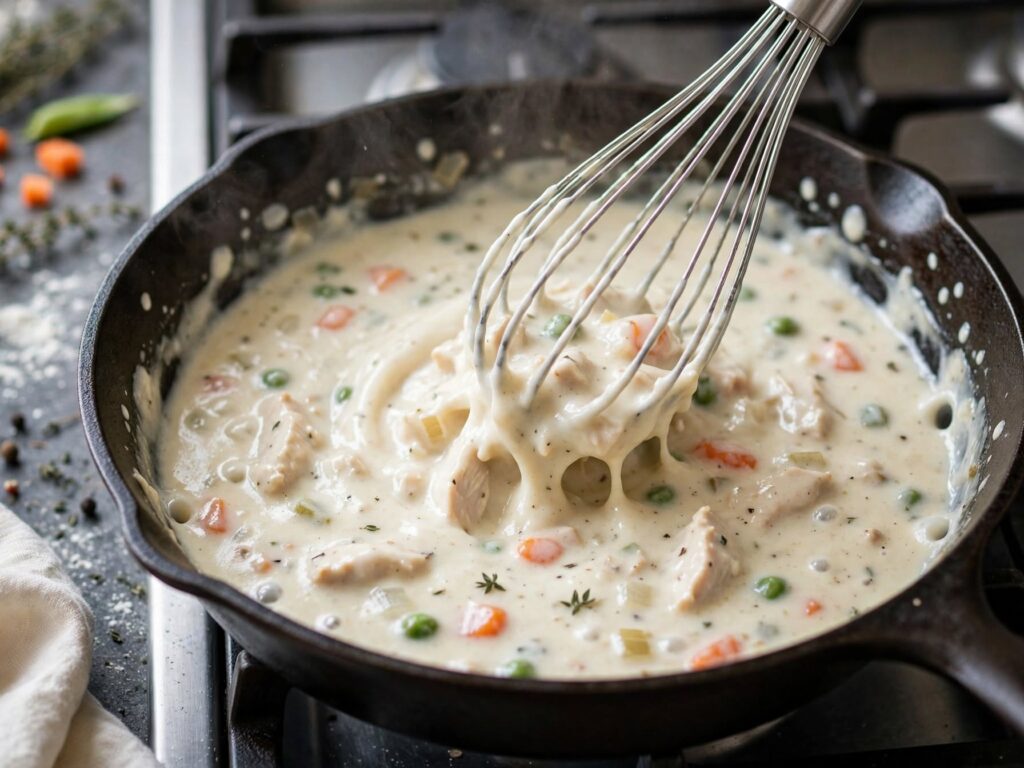
Pour in the broth slowly while whisking, then the milk. Keep whisking until smooth. Bring to a gentle simmer and cook 3–5 minutes, stirring often, until the sauce is thick enough to coat the back of a spoon. Season with salt, pepper, and thyme.
Step 5 — Fold in Chicken and Peas
Remove from the heat. Stir in the cooked chicken, frozen peas, and parsley. Taste and adjust salt. Let the filling cool for at least 15 minutes — warm filling steams the bottom crust and makes it soggy.
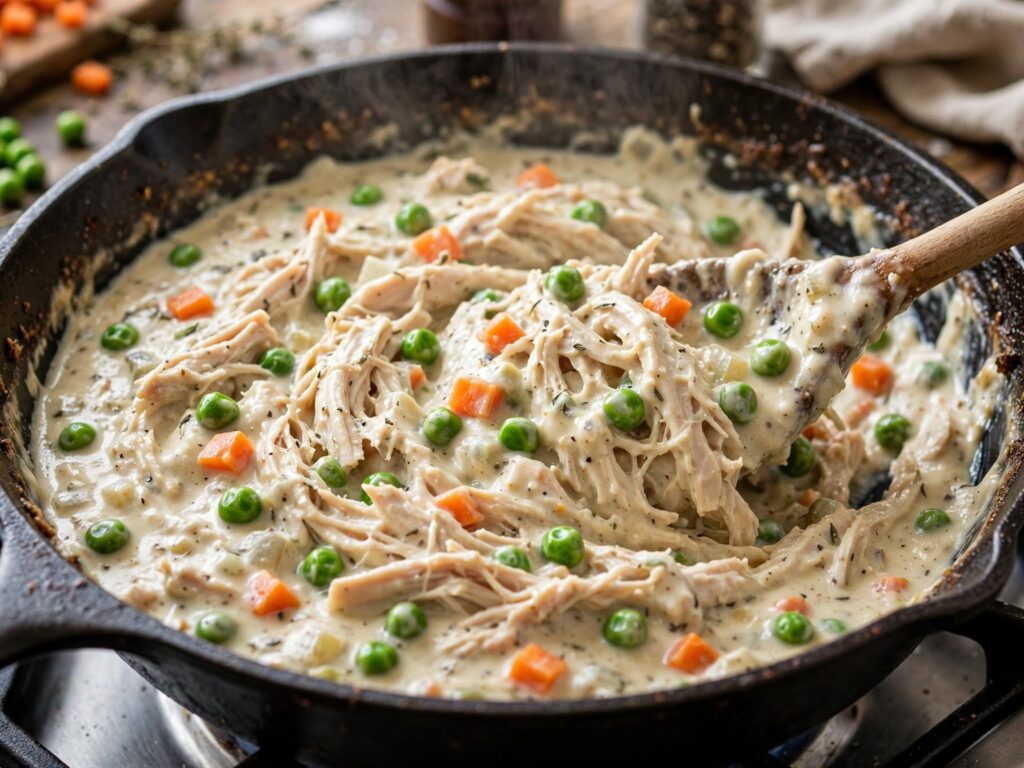
Step 6 — Assemble the Pie
Line your pie dish with the bottom crust. Spoon in the cooled filling and level it. Lay the top crust over, trim the overhang to about ½ inch, and crimp the edges to seal. Cut 3–4 vents in the top so steam escapes. Brush all over with beaten egg.
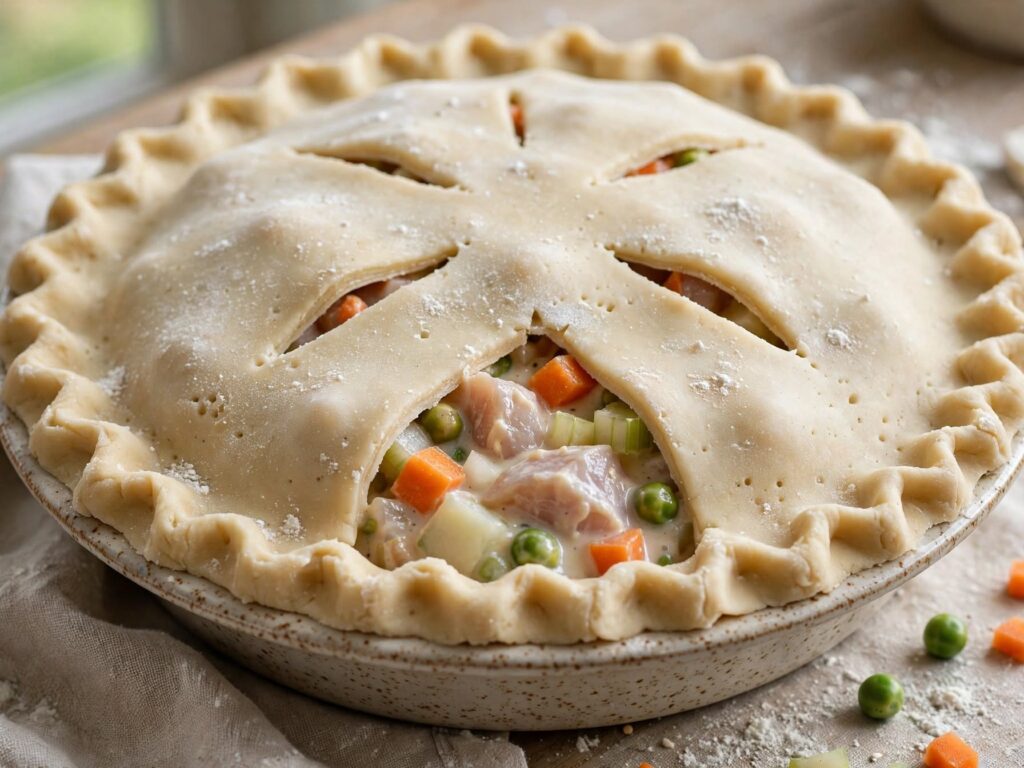
Step 7 — Bake
Set the pie on the preheated baking sheet and bake 35–40 minutes, until the crust is deep golden and the filling bubbles through the vents. If the edges brown too fast, tent them with foil.
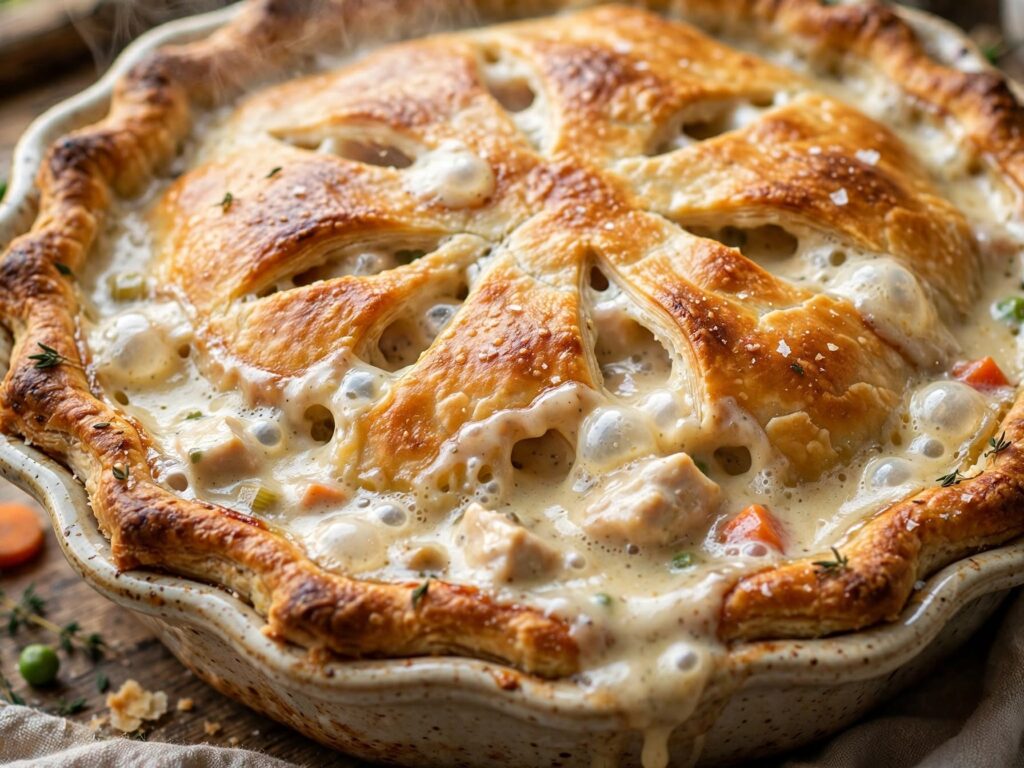
Step 8 — Rest and Serve
Let the pie rest 10–15 minutes before slicing. This lets the filling set so it holds its shape instead of flooding the plate.
How Do You Keep the Bottom Crust From Getting Soggy?
Preheat a baking sheet and bake the pie directly on it, and cool your filling before it goes in. A soggy bottom happens when the base crust doesn’t get enough direct heat to set before the wet filling soaks in. The hot metal sheet delivers that heat from below, effectively “blind baking” the bottom as the pie cooks. Cooling the filling to warm (not hot) removes the steam that would otherwise soften the pastry from the inside. For extra insurance, you can brush the bottom crust with a thin layer of beaten egg before filling — it forms a seal that resists moisture.
Expert Tips for the Best Chicken Pot Pie
- Cook the roux, then go slow with liquid. Adding broth gradually while whisking prevents lumps and gives you a silky sauce.
- Undersalt the sauce slightly. It concentrates as it bakes, and rotisserie chicken already adds salt.
- Cool the filling before assembling. The most common cause of a soggy base and a filling that won’t set.
- Vent the top crust. Skipping vents traps steam, which can make the crust puff unevenly or split.
- Egg wash for color. A beaten whole egg gives the deepest golden shine; egg white alone bakes paler.
- Rest before cutting. Ten minutes is the difference between clean slices and a soupy plate.
💡 Tip: Cool the filling before it goes into the crust. Warm filling steams the bottom pastry from the inside — this single step is the biggest fix for a soggy base.
The Secret to a Creamy, Never-Runny Filling
The secret is the roux ratio: use enough flour cooked in fat to thicken all the liquid you add. Flour thickens by absorbing liquid and swelling when heated, but only if it’s fully dispersed and cooked. This recipe balances ⅓ cup flour against 2½ cups of combined broth and milk — enough thickening power for a filling that’s creamy when warm and sliceable once rested. Cook the roux for a full minute before adding liquid so the starch is activated and the raw taste is gone, then simmer the sauce until it visibly coats a spoon. If you rush this and the sauce still looks thin, keep simmering; it will not thicken further in the oven the way many people hope.
Delicious Variations & Add-Ins
Puff Pastry Chicken Pot Pie
Skip the bottom crust and top the filling with a sheet of thawed puff pastry. Brush with egg and bake at 400°F until puffed and deep golden, about 25–30 minutes. Lighter and faster, with a dramatic rise.
Biscuit-Topped Chicken Pot Pie
Pour the filling into a baking dish and drop spoonfuls of biscuit dough on top instead of pastry. Bake until the biscuits are cooked through and golden — a cobbler-style twist that skips crust-rolling entirely.
Lighter Chicken Pot Pie
Use all broth instead of milk, swap in chicken breast, and top with a single crust or puff pastry only (no bottom). You keep the creamy character with noticeably less fat.
Gluten-Free & Dairy-Free Options
Use a 1:1 gluten-free flour blend in the roux and a gluten-free crust. For dairy-free, use plant-based butter and unsweetened oat milk — the sauce thickens the same way.
Individual Mini Pot Pies
Divide the filling among 4–6 ramekins, top each with a crust round, vent, and egg-wash. Bake 20–25 minutes. Perfect for portion control and freezer meals.
What to Serve With Chicken Pot Pie
- A crisp green salad with a sharp vinaigrette — cuts the richness of the filling.
- Roasted green beans or Brussels sprouts — a caramelized vegetable side that roasts while the pie bakes.
- Cranberry sauce — especially good with the turkey version.
- Crusty bread or dinner rolls — for anyone who wants to mop up extra filling.
- A dry white wine like Chardonnay or Pinot Grigio — its acidity balances the creamy sauce.
How to Store Chicken Pot Pie
At Room Temperature
Leave a baked pie out no longer than 2 hours. Cream-and-chicken fillings spoil quickly at room temperature.
In the Refrigerator
Cover and refrigerate baked pie for up to 3–4 days. Reheat individual slices in a 350°F (175°C) oven for 15–20 minutes to re-crisp the crust — the microwave works but leaves the crust soft.
Freezing & Thawing
Can you freeze chicken pot pie? Yes — before or after baking.
- Unbaked: assemble in a freezer-safe dish, wrap tightly, and freeze up to 3 months. Bake from frozen at 400°F for 60–75 minutes, tenting the edges as needed.
- Baked: cool completely, wrap, and freeze up to 3 months. Reheat from frozen at 350°F until hot through.
Make-Ahead Instructions
Make the filling up to 2 days ahead and refrigerate it (it thickens further when chilled — loosen with a splash of broth if needed). You can also fully assemble the pie, cover, and refrigerate up to 24 hours before baking. Add 5–10 minutes to the bake time if going straight from the fridge to the oven. For longer lead time, freeze it unbaked as described above.
Troubleshooting Common Problems
Why Is My Chicken Pot Pie Runny?
The roux was too thin or the sauce wasn’t simmered long enough. Fix it by using the full ⅓ cup flour and simmering until the sauce coats a spoon before adding chicken. Always rest the baked pie 10–15 minutes so the filling sets.
Why Is My Bottom Crust Soggy?
The filling went in hot, or the pie wasn’t baked on a preheated surface. Cool the filling to warm before assembling and bake directly on a hot baking sheet. An egg-wash seal on the bottom crust adds extra protection.
Why Did the Filling Boil Over?
Overfilling, missing vents, or a filling that was too loose. Level the filling below the rim, cut clear steam vents, and make sure the sauce is properly thickened before it goes in.
Why Is My Filling Bland?
Under-seasoning or low-sodium overload. Season the sauce, taste after folding in the chicken, and don’t skip the thyme — it’s what makes the filling taste like pot pie rather than plain gravy.
Nutrition Information
Approximate values per serving (1 of 6 slices, with homemade double crust):
- Calories: 610
- Total fat: 38g
- Saturated fat: 18g
- Carbohydrates: 42g
- Fiber: 3g
- Sugar: 5g
- Protein: 27g
- Sodium: 720mg
- Cholesterol: 95mg
Values are estimates and will vary with crust type, chicken cut, and dairy choices.
Frequently Asked Questions
Can I use rotisserie chicken?
Yes — it’s the fastest option. You’ll need about 3 cups of shredded meat, roughly one medium rotisserie chicken.
Can I make chicken pot pie ahead of time?
Yes. Make the filling up to 2 days ahead, or fully assemble the pie and refrigerate up to 24 hours before baking.
Can you freeze chicken pot pie?
Yes, baked or unbaked, for up to 3 months. Bake unbaked pies straight from frozen; reheat baked ones at 350°F until hot through.
Do I need a bottom crust?
No. A single top crust or puff pastry lid works well and lightens the dish — just pour the filling into a baking dish.
What’s the best chicken to use?
Cooked thigh meat stays juiciest, but breast is fine. Poached, roasted, or rotisserie chicken all work.
Why won’t my filling thicken?
Either too little flour or not enough simmering. Keep the sauce at a gentle simmer until it visibly coats a spoon before adding the chicken.
Can I use puff pastry instead of pie crust?
Yes. Use it as a top-only crust and bake at 400°F until puffed and golden, about 25–30 minutes.
What vegetables can I add?
Mushrooms, corn, green beans, or diced potatoes all work. Add firmer vegetables with the mirepoix so they cook through.
How do I reheat leftovers without a soggy crust?
Reheat in a 350°F oven for 15–20 minutes. The microwave heats faster but softens the crust.
Can I make it gluten-free?
Yes. Use a 1:1 gluten-free flour blend for the roux and a gluten-free crust.
Related Recipes
Recipe Card
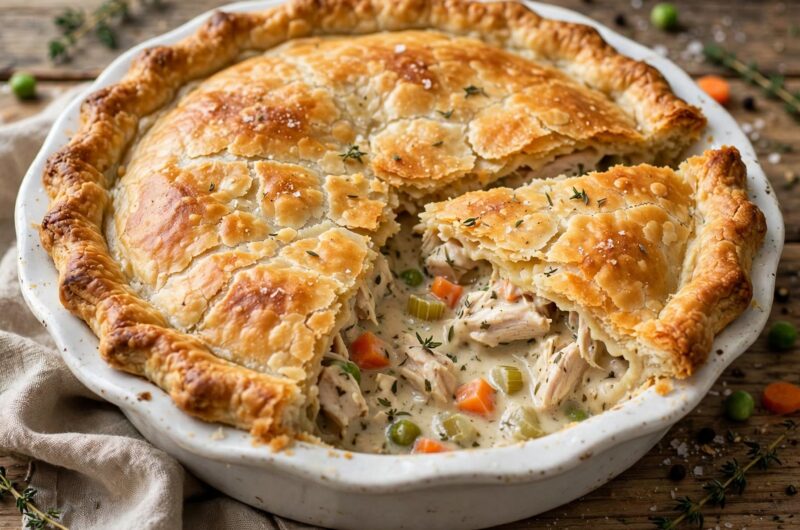
Classic Chicken Pot Pie
Creamy chicken and vegetable filling under a golden, flaky double crust. Easy from-scratch chicken pot pie with a crisp bottom and a filling that never runs.
6
servings30
minutes40
minutes1
hour10
minutesIngredients
2½ cups (300g) all-purpose flour (crust)
1 teaspoon salt (crust)
1 cup (226g) cold unsalted butter, cubed (crust)
6–8 tablespoons ice water (crust)
⅓ cup (75g) unsalted butter
1 medium onion, diced
2 medium carrots, diced
2 celery stalks, diced
3 garlic cloves, minced
⅓ cup (40g) all-purpose flour
1½ cups (360ml) low-sodium chicken broth
1 cup (240ml) whole milk
½ teaspoon salt, plus more to taste
¼ teaspoon black pepper
½ teaspoon dried thyme
3 cups (450g) cooked chicken, shredded or diced
1 cup (140g) frozen peas
2 tablespoons chopped fresh parsley (optional)
1 large egg, beaten (egg wash)
Directions
- Make the crust (if from scratch): Pulse flour and salt, cut in cold butter until pea-sized, add ice water a tablespoon at a time until the dough holds. Divide in two, wrap, and chill 30 minutes.
- Preheat: Place a rimmed baking sheet in the oven and heat to 400°F (200°C).
- Cook aromatics: Melt ⅓ cup butter over medium heat. Cook onion, carrot, and celery 6–8 minutes. Add garlic; cook 30 seconds.
- Make the roux: Stir in ⅓ cup flour; cook 1–2 minutes.
- Thicken: Whisk in broth, then milk. Simmer 3–5 minutes until it coats a spoon. Season with salt, pepper, and thyme.
- Finish filling: Off heat, stir in chicken, peas, and parsley. Cool 15 minutes.
- Assemble: Line dish with bottom crust, add cooled filling, top with second crust, trim, crimp, cut vents, and brush with egg.
- Bake: On the hot baking sheet, 35–40 minutes until deep golden and bubbling.
- Rest: 10–15 minutes before slicing.
Notes
- Cool the filling before assembling for a crisp bottom crust.nRotisserie chicken makes this a 20-minute active recipe.nFreezes well baked or unbaked, up to 3 months.