Million Dollar Spaghetti — The Best Easy, Creamy Baked Version
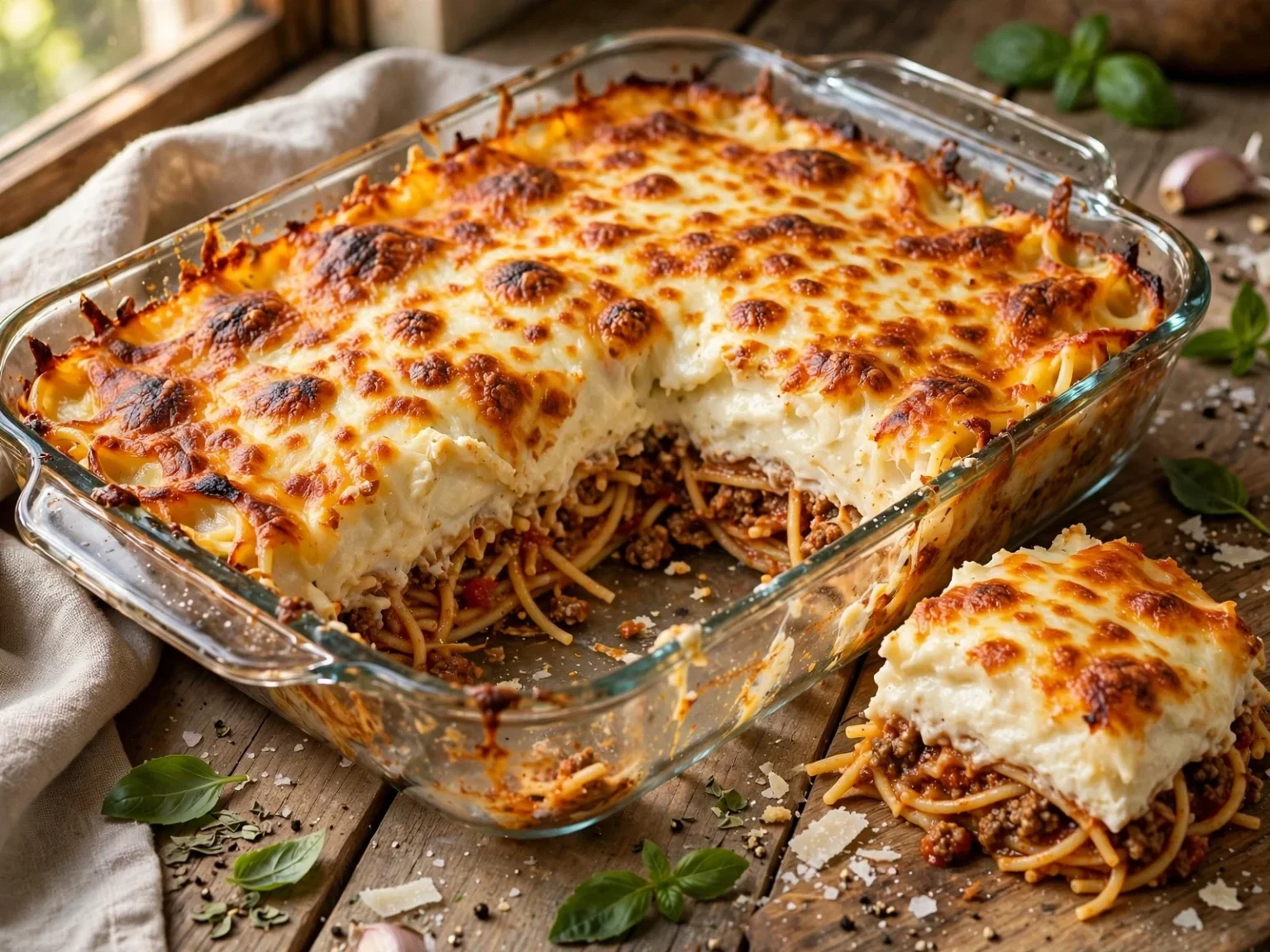
Million dollar spaghetti is a baked spaghetti casserole layered like lasagna but built in a fraction of the time: buttery noodles, a rich ground beef marinara, and a creamy cheese layer of cream cheese, sour cream, and cottage cheese hidden through the middle, all under a blanket of melted mozzarella. It cuts into neat squares, feeds a crowd, and uses ingredients you probably already have. This version tells you exactly how to keep the layers clean and the middle creamy instead of watery — the two things most recipes gloss over.
| Prep time | 25 minutes |
| Cook time | 40 minutes |
| Rest time | 15 minutes |
| Total time | ~1 hour 20 minutes |
| Servings | 10–12 |
| Difficulty | Easy |
| Cuisine | American / Italian-American |
| Method | Baked casserole (9×13 pan) |
If you can brown beef, boil pasta, and stir three soft cheeses together, you can make this. It’s a one-pan bake with make-ahead and freezer options built in.
In This Post
Why You’ll Love This Spaghetti
- Tastes like lasagna, eats like spaghetti. You get the same rich, layered comfort without rolling out or layering noodles.
- Feeds a crowd cheaply. One 9×13 pan gives 10–12 hearty servings from pantry-staple ingredients.
- Make-ahead friendly. Assemble it a day early or freeze it unbaked for a future weeknight.
- Genuinely creamy middle. The cream-cheese-and-cottage-cheese layer melts into the pasta instead of sitting on top.
- Kid-approved. Even picky eaters go back for the cheesy layer.
- Reheats beautifully. Leftovers stay good for days and taste just as rich the next day.
What Makes This Spaghetti Different
The difference is the cheese layer and where it goes. Cheaper versions dump ricotta on top or skip the creamy layer entirely; this one hides a blend of softened cream cheese, sour cream, and cottage cheese between two layers of buttered spaghetti, so every forkful pulls up sauce, pasta, and that tangy cream in one bite. That buried layer is what earns the “million dollar” name — it makes an everyday spaghetti bake taste far more expensive than it is.
Ingredients You’ll Need
For the meat sauce:
- 1 lb (450 g) ground beef (85/15)
- 1 tablespoon olive oil
- 1 medium yellow onion, finely diced
- 3 cloves garlic, minced
- 1 jar (24 oz / 680 g) marinara or pasta sauce
- 1 teaspoon Italian seasoning
- ½ teaspoon salt
- ¼ teaspoon black pepper
For the pasta:
- 1 lb (450 g) spaghetti
- 2 tablespoons butter
For the cheese layer:
- 8 oz (225 g) cream cheese, softened to room temperature
- 1 cup (240 g) full-fat sour cream
- 1 cup (225 g) full-fat cottage cheese
For the top:
- 2 cups (200 g) shredded low-moisture mozzarella
- ¼ cup grated Parmesan (optional)
- Fresh parsley, chopped, to garnish
Ingredient Notes
- Ground beef — 85/15 gives flavor without swimming in grease; drain it well so the finished bake isn’t oily.
- Marinara — use a jar you’d happily eat straight; it carries most of the sauce flavor. A thicker, low-sugar sauce sets better than a thin, watery one.
- Cream cheese — must be softened, or it stays lumpy and won’t fold smoothly into the other cheeses. Leave it out for an hour, or microwave 15–20 seconds.
- Cottage cheese — full-fat, small-curd blends smoothest. If it looks watery in the tub, drain it in a sieve for 10 minutes so the layer sets instead of running.
- Sour cream — full-fat only; light sour cream thins out and can make the layer runny.
- Mozzarella — shred your own from a block if you can; pre-shredded is coated in anti-caking starch that melts a little grainy.
Substitutions & Swaps
- No cottage cheese? Swap in an equal amount of whole-milk ricotta for a smoother, more lasagna-style layer.
- No sour cream? Full-fat plain Greek yogurt works in the same quantity.
- Want it meatier? Replace ½ lb of the beef with mild or hot Italian sausage.
- Lighter version? Use ground turkey, low-fat cream cheese and sour cream, and reduce mozzarella to 1½ cups (the layer will be slightly softer).
- Gluten-free? Use gluten-free spaghetti and a certified gluten-free marinara; cook the pasta a minute shy of the box so it doesn’t turn to mush when baked.
Equipment You’ll Need
- Large pot for boiling pasta
- Large skillet or Dutch oven for the sauce
- Medium mixing bowl for the cheese layer
- 9×13-inch baking dish
- Rubber spatula and a colander
How to Make Million Dollar Spaghetti
Step 1 — Cook the Pasta Al Dente
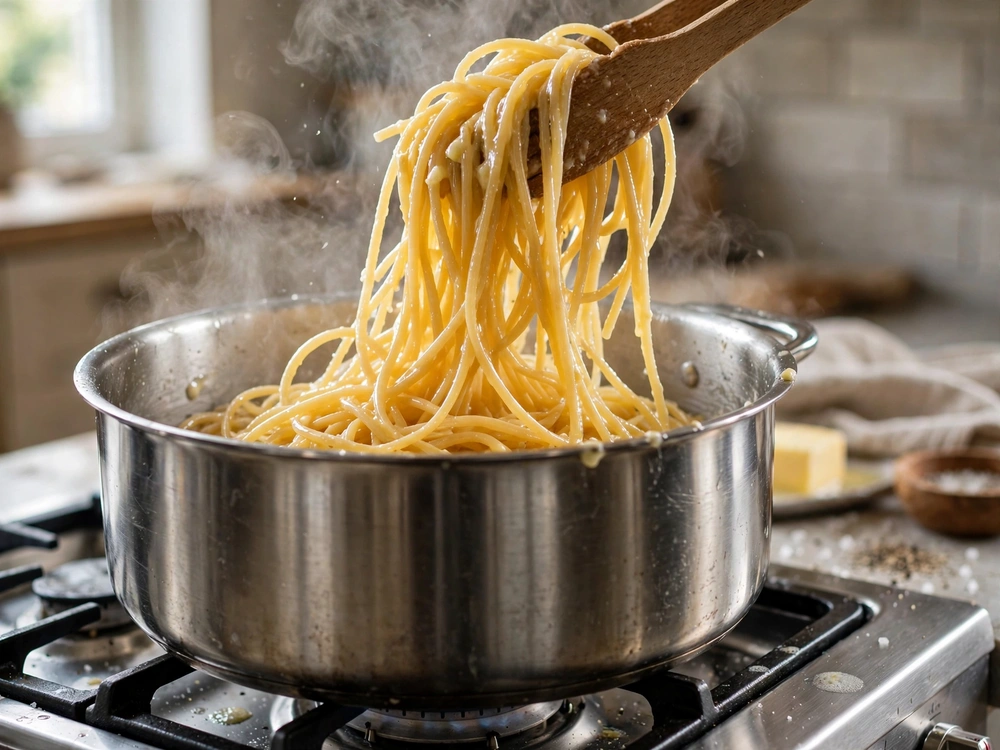
Boil the spaghetti in well-salted water for 1 minute less than the box says. It finishes cooking in the oven, so slightly firm now means perfect later — fully cooked now means mushy after baking. Drain, return to the pot, and toss with the 2 tablespoons butter so the strands stay glossy and separate.
Step 2 — Build the Meat Sauce
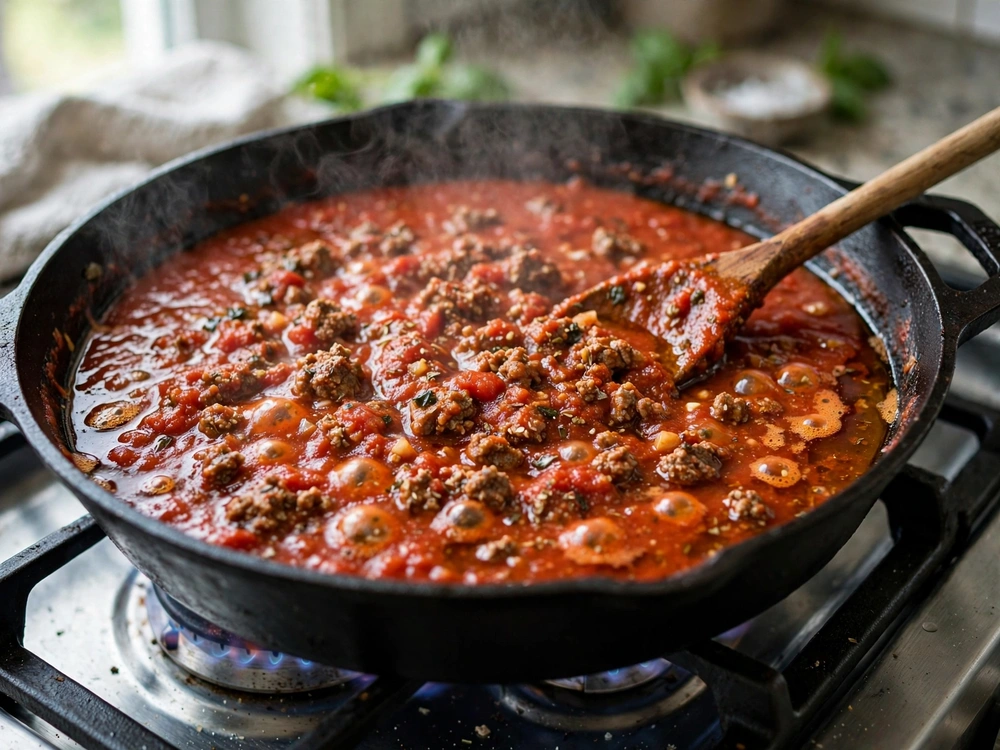
Heat the olive oil in a large skillet over medium-high. Brown the ground beef, breaking it up, then add the onion and cook until softened, about 4 minutes. Stir in the garlic for 30 seconds until fragrant. Drain off the grease — this is the single biggest reason a bake turns out oily. Add the marinara, Italian seasoning, salt, and pepper, and simmer 5 minutes until it thickens slightly.
Step 3 — Mix the Cheese Layer
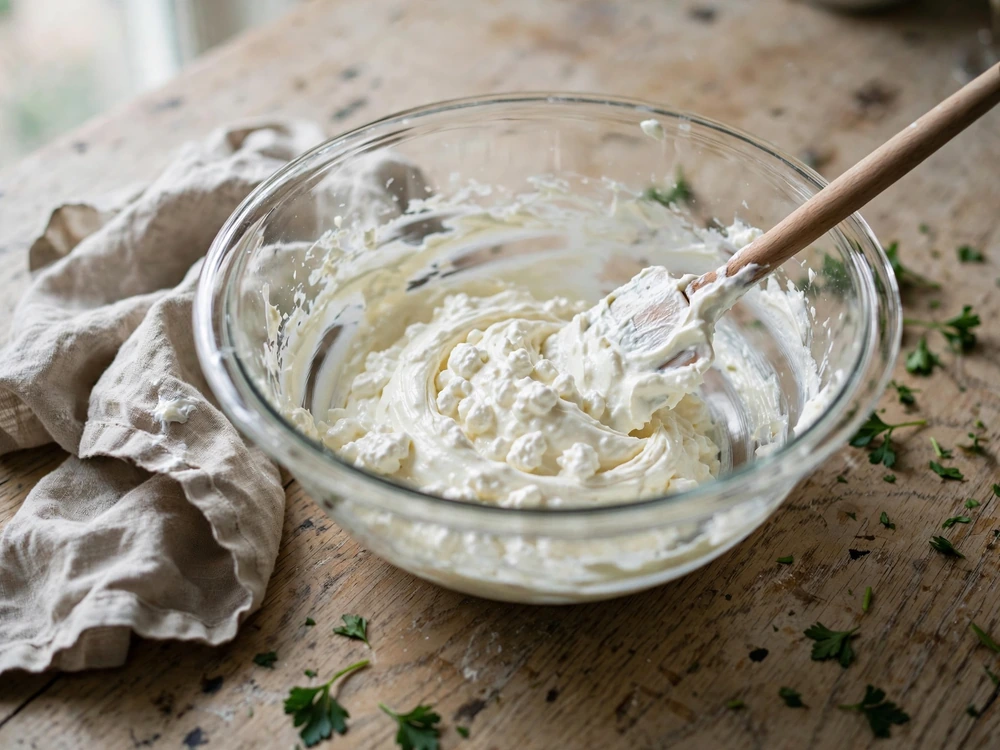
In a bowl, stir the softened cream cheese, sour cream, and cottage cheese together until mostly smooth and spreadable. A few small curds are fine and even nice — but there should be no hard lumps of cream cheese. If it feels stiff, that means your cream cheese wasn’t soft enough; warm the bowl briefly and keep mixing.
Step 4 — Assemble the Layers
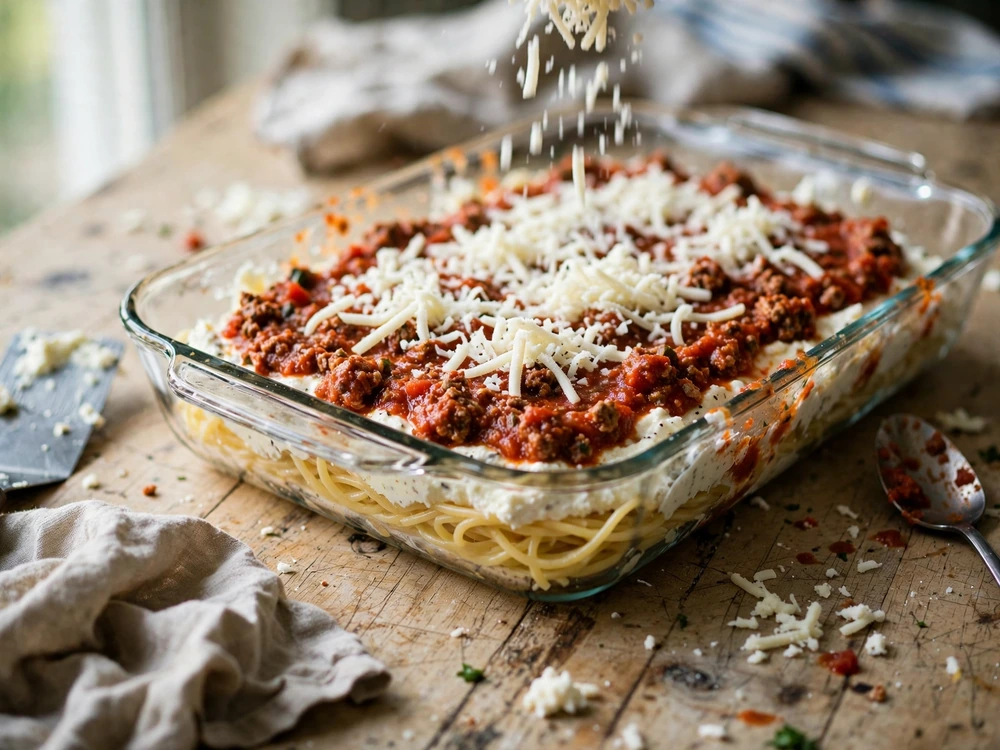
Lightly grease the 9×13 dish. Spread half the buttered spaghetti in an even layer. Spread the entire cheese mixture over it — dollop it in spots, then smooth it with a spatula so it doesn’t drag the noodles. Top with the remaining spaghetti, then pour the meat sauce evenly over the top and spread to the edges.
Step 5 — Top and Bake
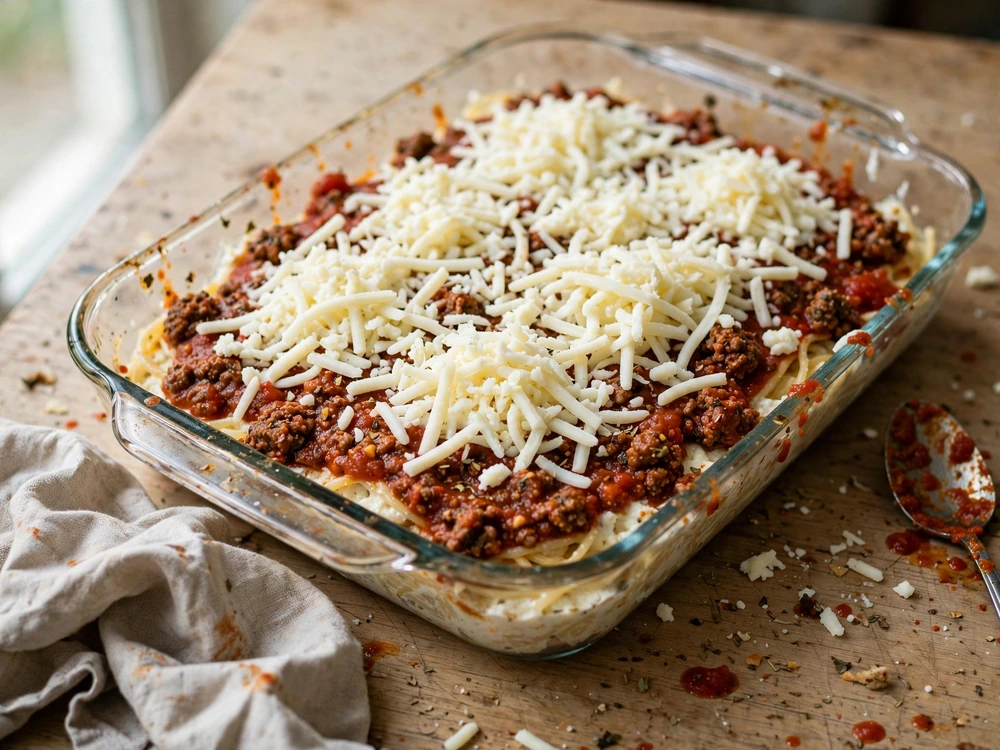
Sprinkle the mozzarella and Parmesan over the sauce. Bake at 350°F (175°C) for 30–40 minutes, until the edges bubble and the cheese is melted and golden. For a crisper cheese top, add the mozzarella from the start; for gooey and stretchy, add it in the last 20 minutes.
Step 6 — Rest, Then Serve
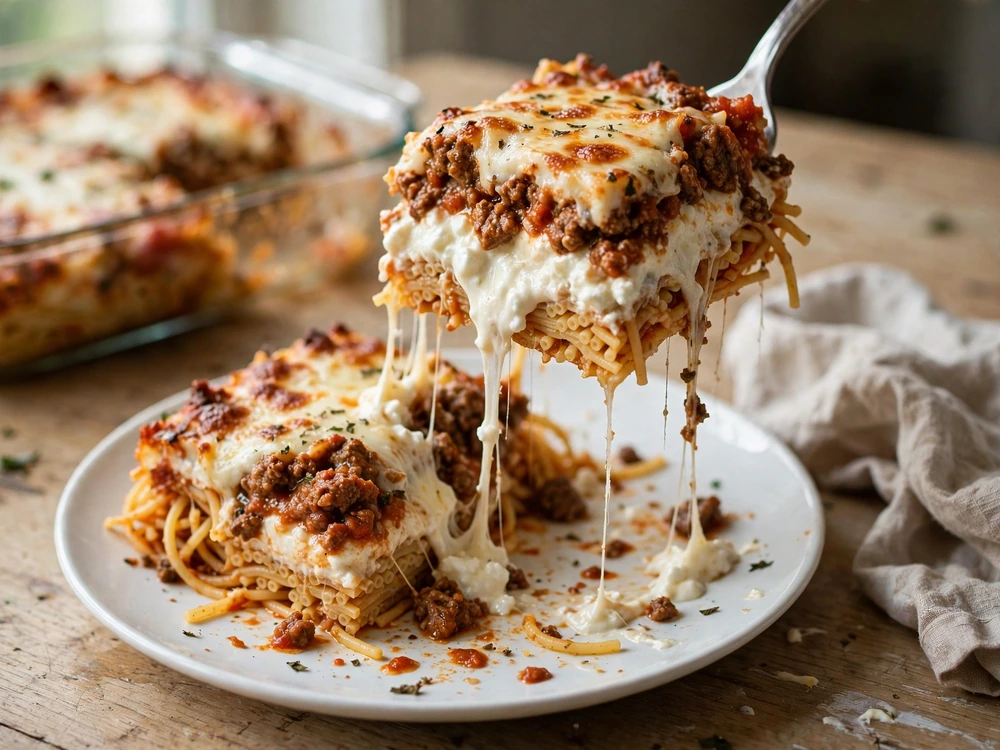
Let the pan rest 15 minutes before cutting. This isn’t optional — it’s what lets the layers set so you get clean squares instead of a slide of sauce and pasta. Garnish with fresh parsley and serve.
How Do You Get Million Dollar Spaghetti to Set into Clean Layers?
The secret to clean layers is al dente pasta, a well-drained sauce, and a 15-minute rest. Everything that makes this dish slide apart traces back to excess liquid: overcooked noodles release starch and water, ungreased meat leaves oil, and watery cottage cheese thins the middle. Fix all three — undercook the pasta by a minute, drain the beef, and drain loose cottage cheese — and the casserole holds its shape. The rest at the end is just as important: cutting straight out of the oven guarantees a runny plate, while ten to fifteen minutes lets the cheese layer firm up enough to slice into squares.
Expert Tips for the Best Spaghetti
- Toss the hot pasta with butter immediately so it doesn’t clump into a solid brick before you layer it.
- Taste the meat sauce before assembling and adjust salt then — you can’t season it once it’s baked.
- Warm your cream cheese fully. A cold block never smooths out and leaves chalky lumps in the middle layer.
- Bake on a rimmed sheet pan to catch any bubble-over and save your oven floor.
- Don’t skip the rest. Fifteen minutes is the difference between neat portions and a puddle.
- Add a pinch of red pepper flakes to the sauce if your crowd likes a little heat — it cuts the richness of the cheese layer.
💡 Tip: Warm the cream cheese fully before mixing the cheese layer. A cold block never smooths out and is the single biggest cause of a grainy, lumpy middle.
The Secret to That Creamy Cheese Layer
The creamy middle comes down to balancing tang, fat, and moisture. Cream cheese brings the silky, spreadable body; cottage cheese adds a light, milky tang and keeps the layer from tasting like straight cream cheese; sour cream loosens it just enough to spread without going runny. The reason it works is that all three are stable, high-fat dairy that hold their shape in a hot oven instead of separating the way a thin dairy would. Keep everything full-fat and get the cream cheese truly soft before mixing — the whole layer lives or dies on that one step.
Delicious Variations & Add-Ins
Ricotta Version
Swap the cottage cheese for an equal amount of whole-milk ricotta and stir in one beaten egg. You’ll get a firmer, smoother, more lasagna-like layer that slices especially cleanly.
Extra-Meaty Sausage Version
Replace half the ground beef with mild or hot Italian sausage. The fennel and seasoning in the sausage deepen the sauce and make it taste closer to a restaurant baked pasta.
Lighter Version
Use ground turkey, reduced-fat cream cheese and sour cream, and low-fat cottage cheese, and drop the mozzarella to 1½ cups. The layer will be a touch softer but the flavor holds up.
Vegetarian Version
Skip the meat and build the sauce on 8 oz sautéed mushrooms plus a diced zucchini or bell pepper. Cook the vegetables until they release and then re-absorb their liquid so the sauce doesn’t turn watery.
Different Pasta or Format
Ziti, penne, or rigatoni all work and are easier to scoop for kids. For portioned servings, assemble the layers in a muffin tin lined with foil and bake 20–25 minutes for individual “spaghetti cups.”
What to Serve With Spaghetti
- Garlic bread — the obvious, non-negotiable partner for scooping up sauce.
- Crisp green or Caesar salad — the acidity and crunch cut the richness of the cheese layer.
- Roasted broccoli or green beans — an easy, hands-off vegetable that roasts while the pasta bakes.
- Sparkling grape juice or iced tea — a refreshing, food-friendly pairing for the rich tomato and cheese.
- Antipasto plate — olives, pepperoncini, and marinated vegetables make it feel like a spread for company.
How to Store Spaghetti
In the Refrigerator
Cover the dish tightly or move leftovers to an airtight container and refrigerate for up to 4 days. Reheat covered at 350°F, or in the microwave with a splash of water or extra sauce to keep it from drying out.
Freezing & Thawing
Freeze it unbaked for the best texture — baked cheese layers can turn grainy after freezing. Assemble in a foil pan (hold the mozzarella until baking), wrap tightly in plastic and then foil, and freeze up to 3 months. Thaw overnight in the fridge, then bake as directed, adding 10–15 minutes and topping with cheese for the last 20. You can also bake straight from frozen, covered, at 350°F for 60–75 minutes, then uncover, add the cheese, and bake 20 more.
Make-Ahead Instructions
Assemble the entire casserole up to 24 hours ahead, cover tightly, and refrigerate. Take it out while the oven preheats so it isn’t ice-cold going in, and add 10–15 minutes to the bake time. To split the work further, make the meat sauce and cheese layer up to 3 days ahead and store them separately, then boil the pasta and assemble just before baking.
Troubleshooting Common Problems
Why Is My Million Dollar Spaghetti Watery?
Watery spaghetti comes from too much liquid going into the pan: undrained beef, a thin marinara, watery cottage cheese, or slicing before it rests. Drain the meat, use a thick sauce, drain loose cottage cheese for 10 minutes, and always rest the bake 15 minutes before cutting.
Why Is My Million Dollar Spaghetti Dry?
Dry results almost always mean it baked too long or was short on sauce. Pull it as soon as the edges bubble and the cheese is golden, use the full jar of marinara, and add a splash of sauce or water when reheating leftovers.
Why Did My Cheese Layer Turn Out Grainy?
A grainy middle layer means the cream cheese wasn’t soft enough or you used pre-shredded, starch-coated cheese. Bring the cream cheese fully to room temperature before mixing, and shred mozzarella from a block for a smoother melt.
Why Are My Noodles Mushy?
Mushy noodles were fully cooked before baking. Because the pasta keeps cooking in the oven, boil it a minute short of al dente and toss it with butter so it holds its bite through the bake.
Nutrition Information
Per serving (based on 10 servings), this is an approximate estimate — values vary with your exact brands and portions:
- Calories: ~530
- Protein: ~30 g
- Carbohydrates: ~40 g
- Fat: ~28 g
- Saturated fat: ~14 g
- Sodium: ~700 mg
Cut a 9×13 pan into 12 for a lighter portion, or use the lighter-version swaps above to bring calories and fat down.
Frequently Asked Questions
Why is it called million dollar spaghetti?
The name comes from the rich, hidden cheese layer — cream cheese, sour cream, and cottage cheese baked into the middle — that makes an everyday spaghetti bake taste far more expensive than it is.
What is TikTok spaghetti?
TikTok spaghetti is just another name for million dollar spaghetti; the dish went viral on TikTok, so many people know it by that name.
Can I use cottage cheese instead of ricotta (or the reverse)?
Yes. They’re interchangeable in equal amounts. Cottage cheese gives a lighter, tangier layer; ricotta gives a smoother, firmer, more lasagna-like one.
Can you make million dollar spaghetti ahead of time?
Yes. Assemble it fully up to 24 hours ahead, refrigerate covered, and add 10–15 minutes to the bake time when you cook it from cold.
Can you freeze million dollar spaghetti?
Yes, and it’s best frozen unbaked. Assemble it (without the mozzarella), wrap tightly, and freeze up to 3 months; thaw overnight before baking.
Do you cover million dollar spaghetti while baking?
Bake it uncovered so the cheese browns and the sauce reduces. Only tent it with foil if the top is browning before the center is hot.
Can I use a different pasta?
Yes. Ziti, penne, and rigatoni all work well and are easier to scoop; keep them al dente so they don’t overcook in the oven.
How long does it keep in the fridge?
Up to 4 days in an airtight container. Reheat with a splash of sauce or water to keep it moist.
Can I make it without the creamy layer?
Yes — layer pasta, meat sauce, and mozzarella only. You’ll lose the signature u0022million dollaru0022 middle, but it’s still a solid baked spaghetti.
Is one pound of pasta enough for a 9×13 pan?
Yes. One pound of spaghetti, split into two layers, fills a standard 9×13 dish and serves 10–12 with the sauce and cheese.
Related Recipes
Recipe Card
Million Dollar Spaghetti
Course: Main CourseCuisine: AmericanDifficulty: Easy10
servings25
minutes40
minutes1
hour5
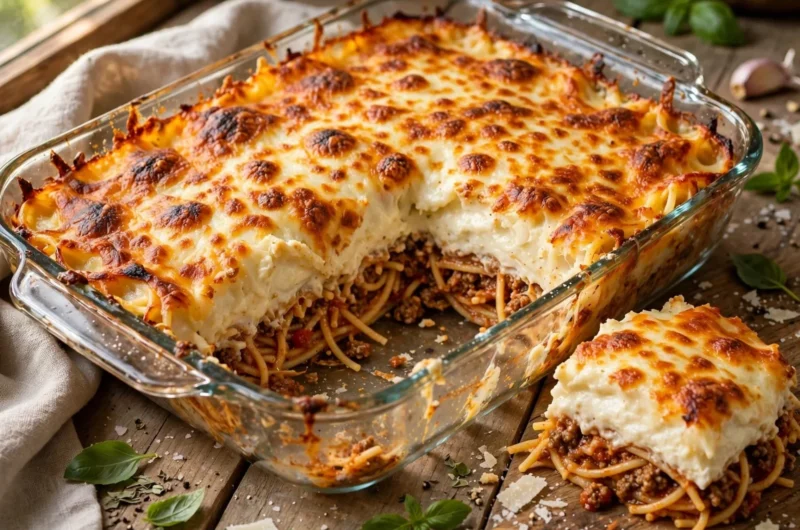
minutesAn easy baked spaghetti casserole with buttery noodles, a rich ground beef marinara, and a creamy layer of cream cheese, sour cream, and cottage cheese, topped with melted mozzarella.
Ingredients
1 lb (450 g) ground beef (85/15)
1 tablespoon olive oil
1 medium yellow onion, finely diced
3 cloves garlic, minced
1 jar (24 oz / 680 g) marinara or pasta sauce
1 teaspoon Italian seasoning
½ teaspoon salt
¼ teaspoon black pepper
1 lb (450 g) spaghetti
2 tablespoons butter
8 oz (225 g) cream cheese, softened
1 cup (240 g) full-fat sour cream
1 cup (225 g) full-fat cottage cheese
2 cups (200 g) shredded low-moisture mozzarella
¼ cup grated Parmesan (optional)
Fresh parsley, chopped
Directions
- Boil spaghetti in salted water 1 minute short of al dente. Drain and toss with butter.
- Brown beef in olive oil; add onion and cook 4 minutes, then garlic 30 seconds. Drain grease. Stir in marinara, Italian seasoning, salt, and pepper; simmer 5 minutes.
- Mix cream cheese, sour cream, and cottage cheese until smooth and spreadable.
- Grease a 9×13 dish. Layer half the pasta, all the cheese mixture, then the remaining pasta. Spread the meat sauce over the top.
- Top with mozzarella and Parmesan. Bake at 350°F (175°C) for 30–40 minutes, until bubbling and golden.
- Rest 15 minutes, garnish with parsley, and serve.
Notes
- Drain the beef well and use full-fat dairy to keep the bake from turning watery.nSoften the cream cheese fully before mixing to avoid a grainy layer.nMake ahead up to 24 hours (add 10–15 min bake from cold); freeze unbaked up to 3 months.nSwap cottage cheese for ricotta + 1 egg for a firmer, lasagna-style layer.