Beef Stew — Rich, Hearty, and Fall-Apart Tender
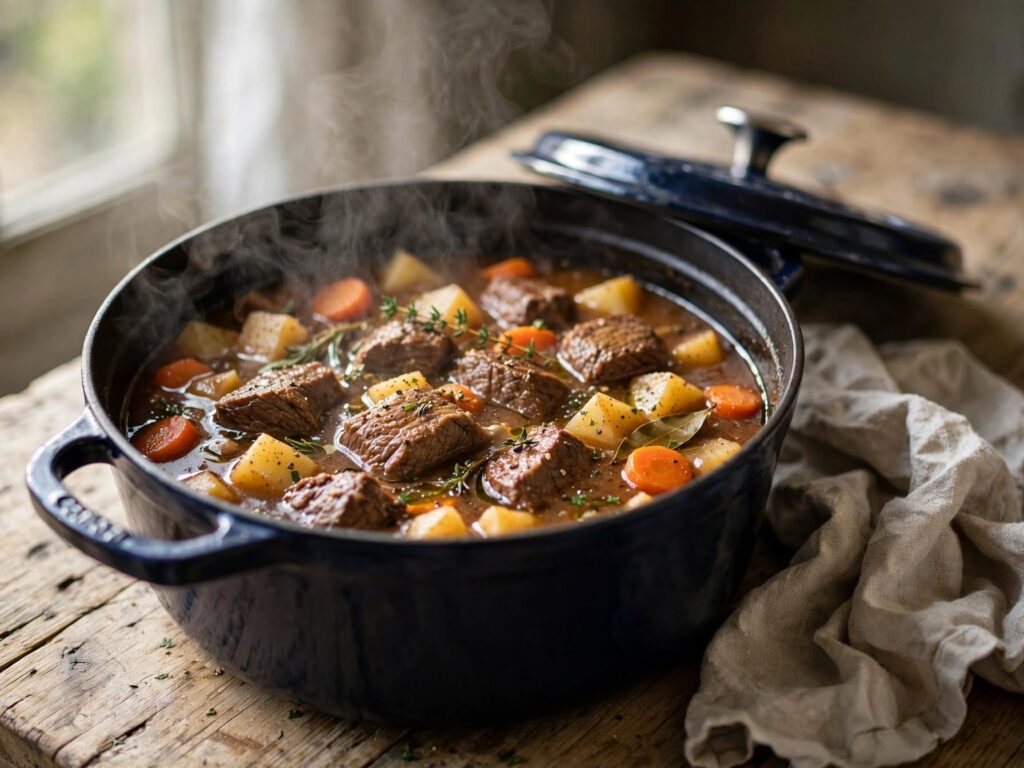
This beef stew is deeply savory, rich, and packed with fork-tender chunks of beef, potatoes, and carrots in a thick, glossy gravy. You sear the beef for flavor, build a hearty broth, and let it braise low and slow until the meat is meltingly tender. It’s the ultimate cold-weather comfort food — a one-pot dinner that tastes like it simmered all day, and it’s even better the next day.
Recipe At a Glance
| Prep time | 25 minutes |
| Cook time | 2 hours 15 minutes |
| Total time | About 2 hours 40 minutes |
| Servings | 6 |
| Difficulty | Easy (mostly hands-off) |
| Cuisine | American |
| Key method | Seared beef braised low and slow in a rich broth |
Sear the beef for a deep, browned flavor, build the broth, then simmer everything gently until the meat is fork-tender and the gravy is thick and rich.
In This Post
Why You’ll Love This Beef Stew
- Fall-apart tender beef from a slow, gentle braise.
- Rich, thick gravy built from seared beef and a proper base.
- One pot for the whole meal and easy cleanup.
- Budget-friendly — tough, cheap cuts turn silky and tender.
- Even better reheated, as the flavor deepens overnight.
- Freezer-friendly for cozy meals on demand.
What Makes This Beef Stew Different
The difference is searing the beef and braising it low and slow. A hard sear builds the browned fond that gives the whole stew its deep, savory backbone, and a long, gentle simmer breaks down the tough connective tissue in the beef until it’s meltingly tender. Rushing either step — skipping the sear or boiling the beef hard — leaves you with a thin, flat stew and chewy meat. This method gives you rich gravy and spoon-tender beef every time.
Ingredients You’ll Need
Ingredient Notes
- Beef chuck (2 lbs, cubed): The best cut for stew. Chuck has enough fat and connective tissue to turn silky and tender through braising, where lean cuts stay dry and tough. Use halal-certified beef if that matters for your kitchen.
- Flour: Coats the beef for a better sear and thickens the gravy as it cooks.
- Onion, carrots, celery: The aromatic base that gives the stew its savory depth. Cut them evenly so they cook at the same rate.
- Garlic: Adds depth to the broth.
- Tomato paste: A spoonful adds richness, color, and savory umami to the gravy.
- Beef broth: The body of the stew. Low-sodium lets you control the salt.
- Potatoes (Yukon Gold): Hold their shape while turning creamy, and thicken the stew as they soften.
- Thyme and bay leaf: Earthy, savory herbs that define a good beef stew.
- Worcestershire sauce: Deepens the savory flavor — check the label for a halal-friendly brand if needed.
Substitutions & Swaps
- Other cuts: Beef brisket or short rib also braise well; avoid lean cuts like sirloin, which dry out.
- Gluten-free: Skip the flour coating and thicken with a cornstarch slurry at the end.
- Red wine–free richness: This recipe skips wine; a splash of extra broth and Worcestershire gives the same depth.
- Different potatoes: Red potatoes hold their shape; russets break down more and thicken the stew.
- More vegetables: Mushrooms, parsnips, or peas all work — add firm ones early, tender ones late.
- Slow cooker or Instant Pot: Both work beautifully (see Variations).
Equipment You’ll Need
- Large Dutch oven or heavy pot with a lid
- Tongs
- Wooden spoon
- Sharp knife and cutting board
How to Make Beef Stew
Step 1 — Sear the Beef
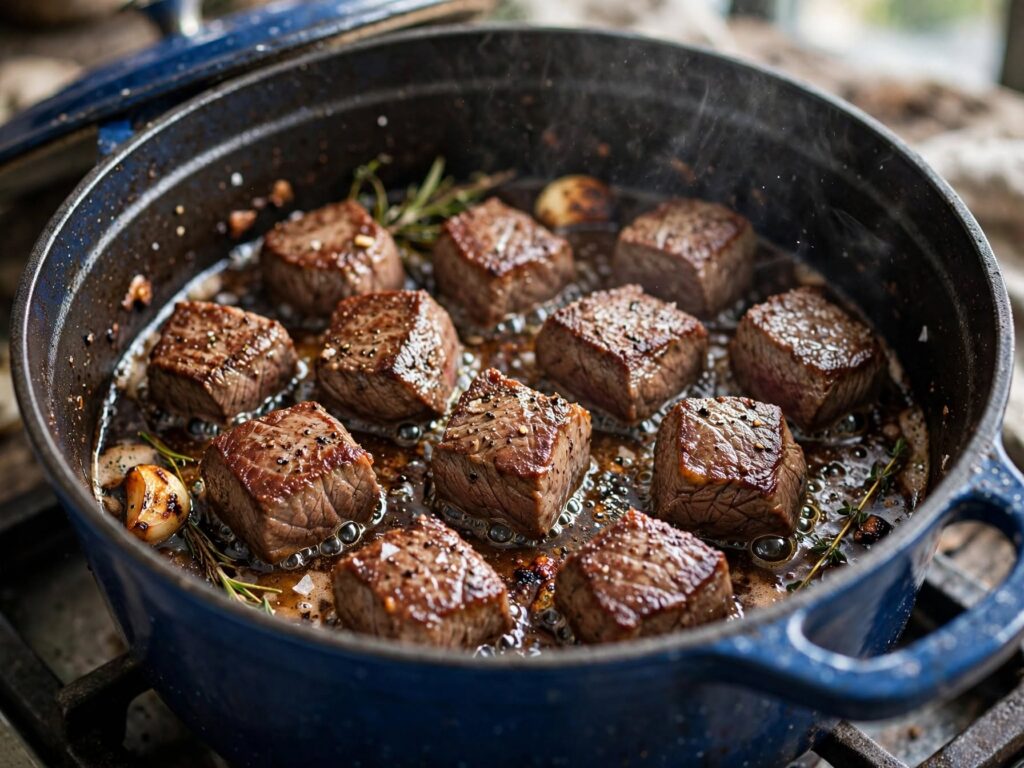
Pat the beef dry, season it, and toss it in flour. Sear it in batches in a little oil over medium-high heat until deeply browned on all sides. Don’t crowd the pot — browning, not steaming, is what builds flavor. Remove and set aside.
Step 2 — Cook the Aromatics
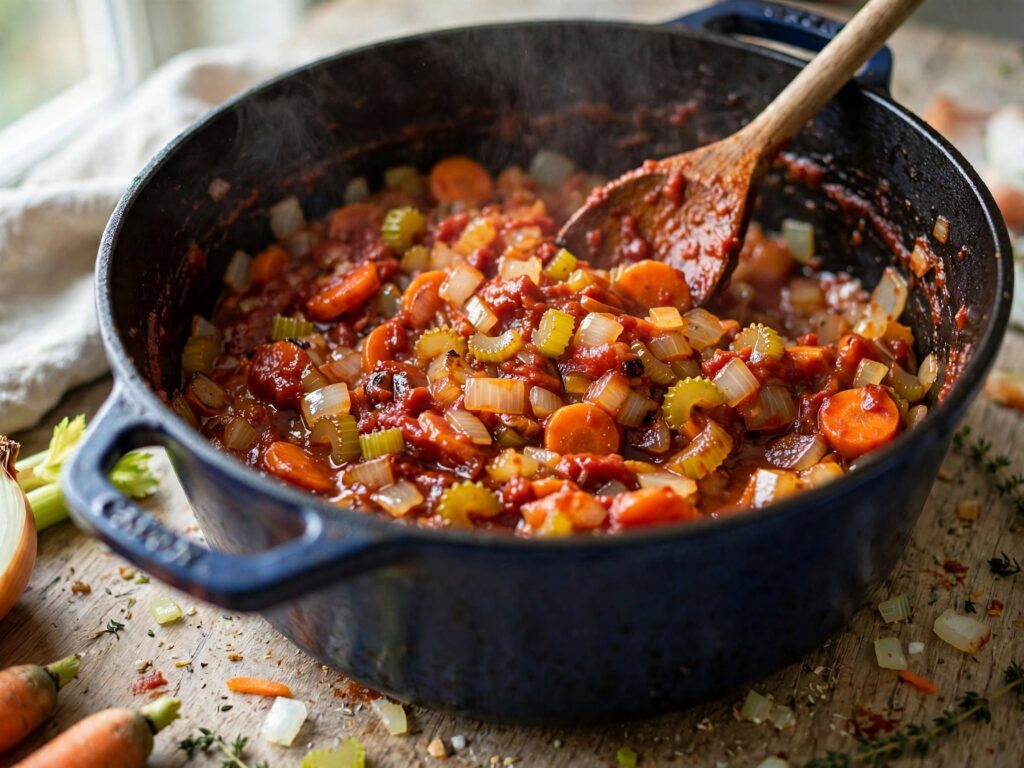
Add the onion, carrots, and celery to the pot and cook 6–8 minutes, scraping up the browned bits, until softened. Add the garlic and tomato paste and cook 1 minute more, until the paste darkens slightly.
Step 3 — Build the Broth
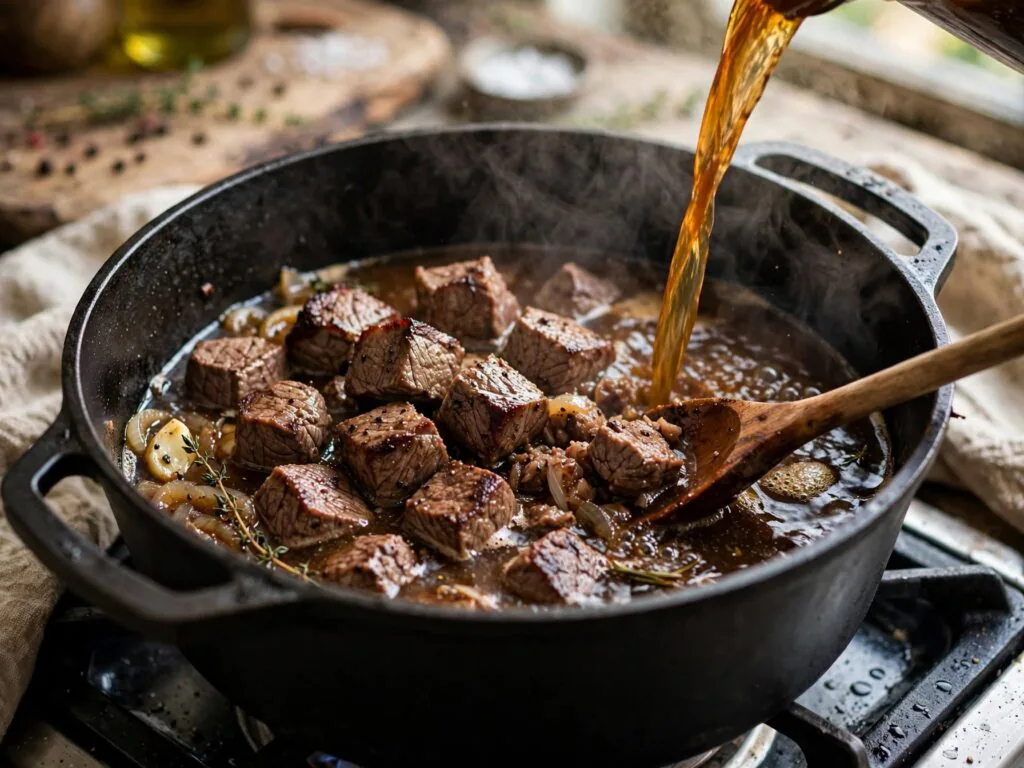
Pour in the beef broth and Worcestershire, scraping the bottom of the pot to release all the fond. Return the beef and add the thyme and bay leaf. Bring to a gentle simmer.
Step 4 — Braise Low and Slow
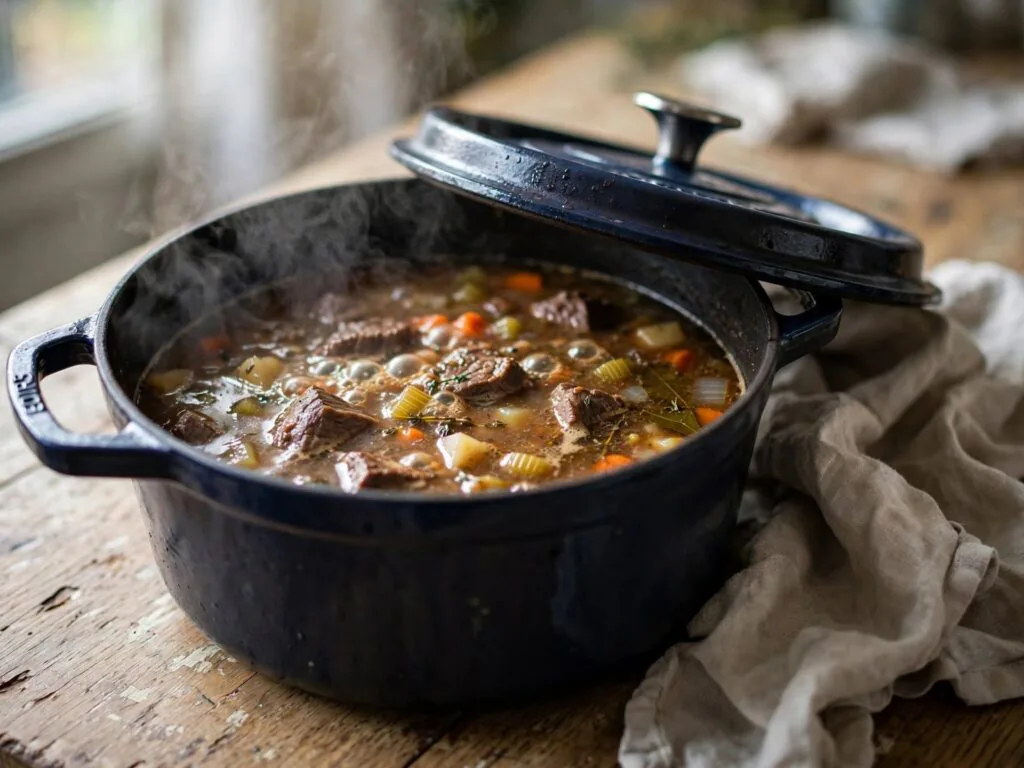
Cover and simmer gently on low heat (or in a 325°F oven) for about 1.5 hours, until the beef is starting to turn tender. Keep it at a bare simmer, not a boil, which toughens the meat.
Step 5 — Add the Potatoes
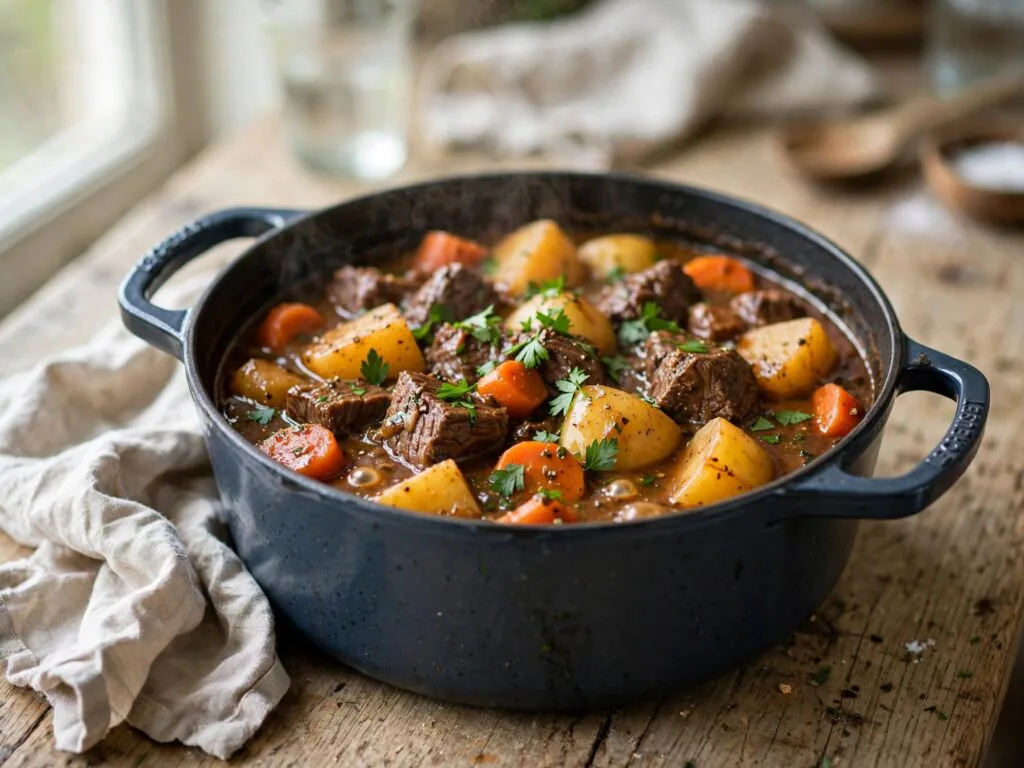
Add the potatoes and continue to simmer, covered, for 30–45 minutes, until they’re tender and the beef is fall-apart soft. The stew will thicken as everything cooks.
Step 6 — Finish
Remove the bay leaf, taste and adjust the seasoning, and thicken further with a cornstarch slurry if you like. Stir in fresh parsley and serve hot.
How Do You Make Beef Stew Meat Tender?
You make beef stew meat tender by using a well-marbled cut like chuck and braising it low and slow. Tough cuts are full of collagen, which only breaks down into silky, tender gelatin with long, gentle cooking — so the beef actually gets more tender the longer it simmers, up to a point. Lean cuts, or beef cooked too fast at a hard boil, stay dry and chewy no matter what.
Three keys to tender stew beef:
- Use chuck. Its fat and connective tissue are what turn tender; lean cuts dry out.
- Simmer gently, not hard. A bare simmer breaks down collagen; a rolling boil toughens the meat.
- Give it time. The beef needs 1.5 to 2 hours of low braising to reach fall-apart tender.
Expert Tips for the Best Beef Stew
- Sear the beef in batches. Crowding steams the meat instead of browning it, and the browning is the flavor.
- Don’t skip the tomato paste. Cooking it briefly deepens the gravy’s richness and color.
- Keep it at a bare simmer. Gentle heat is what makes the beef tender — a hard boil does the opposite.
- Add potatoes later. Adding them partway through keeps them from turning to mush.
- Taste and thicken at the end. Season after braising, and use a cornstarch slurry if you want a thicker gravy.
- Make it a day ahead. The flavor deepens noticeably overnight.
The Secret to Rich, Deeply Flavored Beef Stew
The secret is layering flavor from the very first step and letting time do the rest. Searing the floured beef creates a deeply browned crust and a fond on the pot bottom, which dissolves into the broth for a rich, savory base — this browning reaction is where most of the stew’s depth comes from. The tomato paste, aromatics, and Worcestershire build on that foundation.
The long braise then transforms both the meat and the gravy. As the beef simmers, its collagen melts into the broth, thickening it and giving it body and a silky mouthfeel, while the flour and potato starch thicken it further. Sear hard, build the base, and braise low and slow — that’s the difference between a thin, watery stew and a rich, restaurant-quality one.
Delicious Variations & Add-Ins
Slow Cooker Beef Stew
Sear the beef and cook the aromatics first, then transfer everything to a slow cooker and cook on low for 7–8 hours. The searing is worth the extra step for flavor.
Instant Pot Beef Stew
Use the sauté function to sear and build the base, then pressure cook on high for 35 minutes with a natural release. Tender beef in a fraction of the time.
Lighter Beef Stew
Use a leaner trimmed chuck, minimal oil, and load in extra vegetables like mushrooms and parsnips to bulk it up with fewer calories.
Gluten-Free Beef Stew
Skip the flour coating and thicken the stew with a cornstarch slurry at the end. The method stays the same.
Beef and Guinness–Style Stew (Alcohol-Free)
For a deep, malty flavor without alcohol, add a splash of dark, non-alcoholic malt beverage or extra beef broth with a pinch of brown sugar for richness.
Classic, Crockpot, and Slow Cooker Beef Stew: Which Version Is for You?
Beef stew is one of those recipes people make three or four different ways, depending on the day. This one recipe covers all of them, so here’s how to pick the version that fits your kitchen and your schedule.
The Best Beef Stew Recipe – Grandma’s Classic
The stovetop method above is the old-fashioned, grandma-style classic: floured chuck seared in batches, a slow and gentle braise, and tender potatoes and carrots in a thick, glossy gravy. There are no shortcuts and no fancy ingredients, just good technique. Choose this version when you want the deepest browned flavor and the richest gravy, and you have a lazy afternoon to let the pot do its work.
Easy Crockpot Beef Stew Without Wine
This beef stew is made without wine, so nothing needs to be swapped out or left out. The tomato paste, Worcestershire, and a good low-sodium beef broth build all the depth you need. To make it in a crockpot, sear the beef and soften the aromatics first, then transfer everything to the slow cooker with the broth, herbs, and vegetables. Cook on low for 7–8 hours. The lid traps steam, so the gravy can turn out a little thinner than the stovetop version; stir in a cornstarch slurry near the end to thicken it.
Classic Slow Cooker Beef Stew with Carrots
Carrots are part of the flavor base here, and their natural sweetness balances the savory, beefy gravy. In the slow cooker, cut them into thick slices (about 1 inch) so they soften completely without falling apart over the long cook. Set it on low for 7–8 hours and you’ll come home to fork-tender beef and carrots in a rich, cozy stew. Searing the beef first is the one step worth keeping, because it’s where most of the flavor comes from.
What to Serve With Beef Stew
- Crusty bread or a baguette — for soaking up every bit of the rich gravy.
- Buttermilk biscuits — a cozy, classic pairing. See more breakfast & brunch recipes.
- Mashed potatoes — if you want to serve the stew over something creamy. See more dinner recipes.
- Buttered egg noodles — a hearty base that catches the sauce.
- A simple green salad — a fresh, light contrast to the rich stew.
How to Store Beef Stew
Room Temperature
Don’t leave the stew out longer than 2 hours. Cool and refrigerate leftovers promptly, since it contains meat.
Fridge
Store in an airtight container for up to 4 days. The flavor deepens overnight, and the stew thickens as it chills. Reheat gently on the stove, loosening with a splash of broth if needed.
Freezer
Beef stew freezes well for up to 3 months. Cool completely and freeze in airtight containers. Thaw overnight in the fridge and reheat gently. Potatoes can soften slightly on freezing; waxy potatoes hold up best.
Make-Ahead Instructions
Beef stew is a fantastic make-ahead meal — it genuinely tastes better the next day. Cook it fully, cool, and refrigerate or freeze, then reheat gently on the stove with a little added broth to loosen it. You can also brown the beef and chop the vegetables a day ahead to shorten the cooking on the day you serve it.
Troubleshooting Common Problems
Why Is My Beef Stew Meat Tough?
It wasn’t cooked long enough or you used a lean cut. Tough beef needs a long, gentle braise to become tender — keep simmering, since chuck turns tender with time. If it’s still tough, it likely just needs more low-and-slow cooking, not more heat.
Why Is My Beef Stew Thin or Watery?
Not enough thickening or reduction. Coat the beef in flour before searing, let the stew simmer uncovered for the last stretch to reduce, or stir in a cornstarch slurry. Mashing a few of the potatoes into the broth also thickens it.
Why Is My Beef Stew Bland?
Under-seasoning or skipping the sear. Brown the beef well for a savory base, don’t skip the tomato paste and Worcestershire, and adjust the salt at the end. A splash of acid or Worcestershire can lift a flat stew.
Nutrition Information
Per serving (based on 6 servings — estimate):
- Calories: ~420
- Fat: ~18 g
- Carbohydrates: ~28 g
- Protein: ~34 g
- Fiber: ~4 g
- Sodium: ~680 mg
Values are an estimate and will vary with your exact cut, ingredients, and brands.
Frequently Asked Questions
What cut of beef is best for stew?
Beef chuck is best — its fat and connective tissue turn silky and tender through braising. Avoid lean cuts like sirloin, which dry out.
How do you make beef stew meat tender?
Use chuck and braise it low and slow. A gentle simmer for 1.5 to 2 hours breaks down the collagen into tender, fall-apart meat.
How do you thicken beef stew?
Coat the beef in flour before searing, reduce the stew uncovered, or stir in a cornstarch slurry at the end. Mashing some potatoes helps too.
Can I make beef stew in a slow cooker?
Yes. Sear the beef and build the base first, then cook on low for 7–8 hours for the best flavor and tenderness.
Can you freeze beef stew?
Yes, for up to 3 months. Cool completely and freeze; thaw overnight and reheat gently. Waxy potatoes hold up best.
Why is my beef stew meat tough?
It needs more time. Tough beef becomes tender with a longer, gentle braise — keep simmering low rather than raising the heat.
Can I make beef stew without wine?
Yes. This recipe skips wine entirely; beef broth and Worcestershire provide plenty of depth.
What potatoes are best for beef stew?
Yukon Gold hold their shape while turning creamy. Russets break down and thicken the stew; red potatoes stay firm.
How long does beef stew last?
Up to 4 days refrigerated in an airtight container, or 3 months frozen.
Can I make it gluten-free?
Yes. Skip the flour coating and thicken the stew with a cornstarch slurry instead.
More Recipes You’ll Love
- More Soups & Chilli Recipes
- More Beef Recipes
- More Breakfast & Brunch Recipes
- More Dinner Recipes
- More Beef Recipes
Beef Stew — Recipe Card
Beef Stew
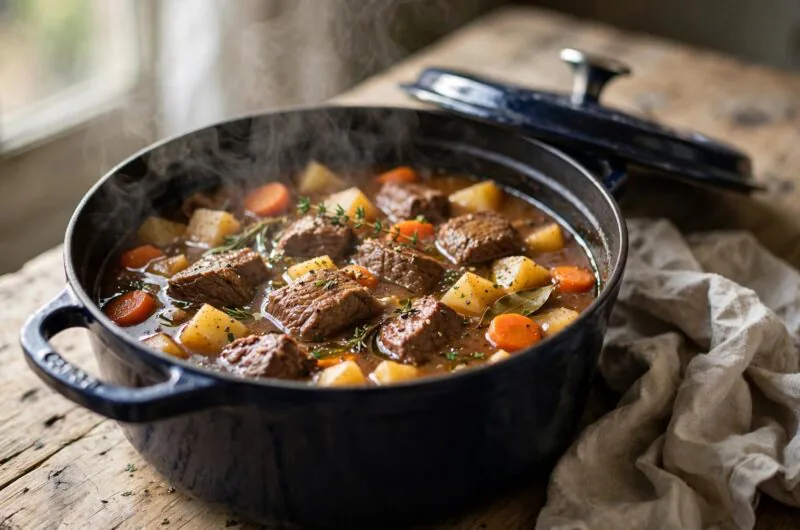
The best beef stew — seared beef chuck braised low and slow into fall-apart tender chunks in a rich, thick gravy with potatoes and carrots.
6
servings25
minutes2
hours15
minutes2
hours40
minutesIngredients
2 lbs beef chuck, cut into 1½-inch cubes
¼ cup all-purpose flour
1 tsp salt (plus more to taste)
½ tsp black pepper
3 tbsp oil, for searing
1 large onion, diced
3 carrots, sliced
2 celery stalks, sliced
3 garlic cloves, minced
2 tbsp tomato paste
5 cups low-sodium beef broth
1 tbsp Worcestershire sauce
1 lb Yukon Gold potatoes, cubed
1 tsp dried thyme
1 bay leaf
2 tbsp fresh parsley, chopped
Directions
- Pat the beef dry, season with salt and pepper, and toss in the flour. Sear in oil in batches until deeply browned; remove.
- Cook the onion, carrots, and celery 6–8 minutes, scraping up the browned bits. Add garlic and tomato paste and cook 1 minute.
- Pour in the broth and Worcestershire, scraping the pot. Return the beef and add thyme and bay leaf. Bring to a gentle simmer.
- Cover and simmer low (or bake at 325°F) about 1.5 hours, until the beef starts to turn tender.
- Add the potatoes and simmer, covered, 30–45 minutes more, until tender and the beef is fall-apart soft.
- Remove the bay leaf, adjust seasoning, thicken with a cornstarch slurry if desired, stir in parsley, and serve.
Notes
- Chuck is the best cut; simmer gently for tender beef.
- Add potatoes later so they don’t overcook.
- Tastes even better the next day.