Baked Chicken Breast — The Juiciest, Easiest Oven Recipe
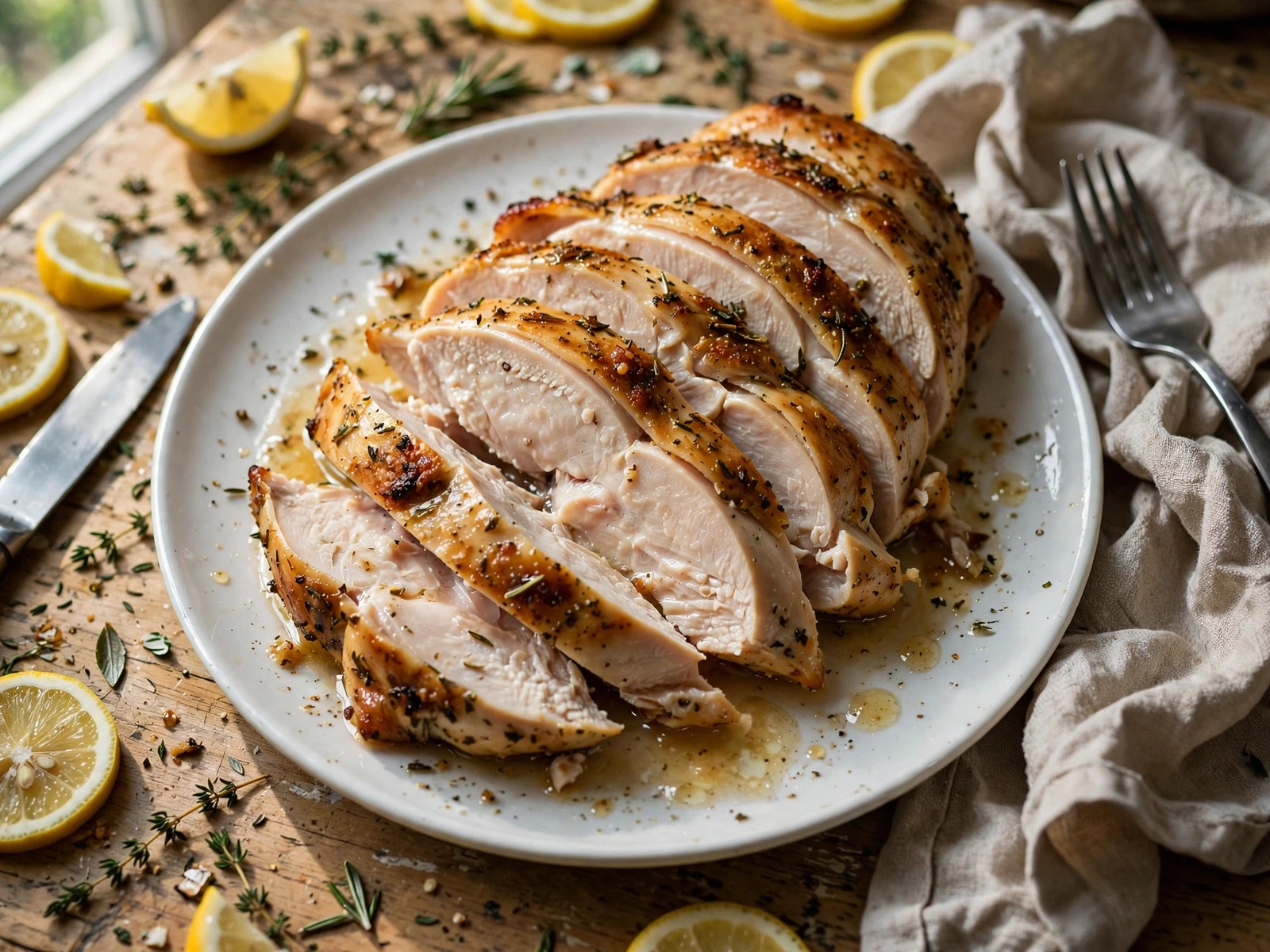
This baked chicken breast comes out juicy every time because it’s built on two things that matter more than any fancy marinade: even thickness and a thermometer. You get a fast, high-heat method (30 minutes start to finish) that gives you tender, well-seasoned chicken with a lightly golden crust — no dry, chalky centers. Below you’ll find the exact temperature, timing, seasoning, and the fixes for every way chicken usually goes wrong.
| Prep time | 10 minutes (plus optional 15–30 minute brine) |
| Cook time | 18–22 minutes |
| Total time | ~30 minutes |
| Servings | 4 |
| Difficulty | Easy |
| Cuisine | American |
| Method | Oven-baked at 425°F (220°C), pulled at 165°F (74°C) internal |
| Best for | weeknight dinners, meal prep, salads, sandwiches, bowls |
In This Post
Why You’ll Love This Baked Chicken Breast
- Juicy, not dry — high heat for a short time locks in moisture instead of slowly baking it out.
- One bowl of seasoning — a simple dry rub with pantry spices, no marinating time required.
- Fast — on the table in about 30 minutes, most of it hands-off.
- Reliable — the doneness target (165°F) removes the guesswork completely.
- Meal-prep friendly — slices clean, keeps 4 days, freezes well.
- Endlessly adaptable — swap the rub and it fits almost any cuisine.
What Makes This Baked Chicken Breast Different
The difference is heat and thickness, not ingredients. Most dry chicken comes from baking a thick, uneven breast low and slow until the thin end is overcooked before the thick end is safe. Here you flatten the breast to an even thickness and bake hot and fast, so the whole piece finishes at the same moment. That single change does more for juiciness than any sauce.
Ingredients You’ll Need
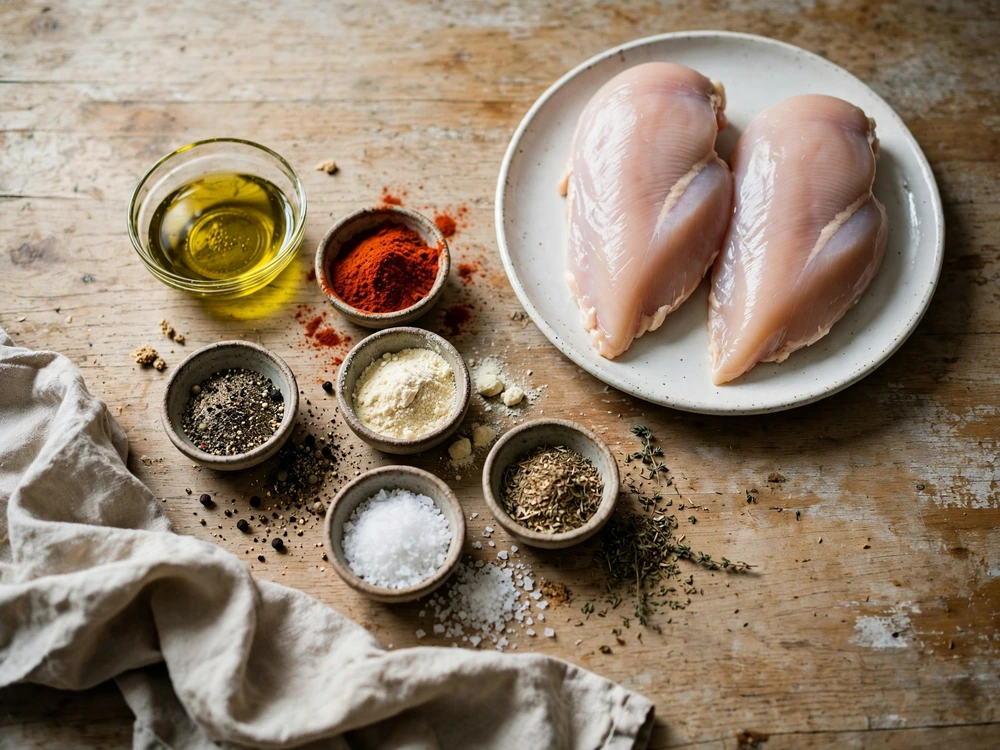
- 4 boneless, skinless chicken breasts (6–8 oz / 170–225 g each)
- 2 tablespoons olive oil
- 1 teaspoon kosher salt
- ½ teaspoon black pepper
- 1 teaspoon garlic powder
- 1 teaspoon paprika (sweet or smoked)
- ½ teaspoon onion powder
- ½ teaspoon dried Italian seasoning (or oregano)
- 1 teaspoon brown sugar (optional — helps the crust brown)
- Optional quick brine: 4 cups warm water + 3 tablespoons salt
Ingredient Notes
- Chicken breasts — aim for similar-sized pieces so they cook at the same rate. Trim any thin, floppy tenderloin flap so it doesn’t overcook.
- Olive oil — carries the spices and helps them stick; it’s also what gives you a golden surface. Melted butter works too for richer flavor.
- Kosher salt — the single most important seasoning. It penetrates and seasons the meat itself, not just the surface. If you brine, cut the rub salt in half.
- Paprika — mostly for color and a subtle warmth; smoked paprika adds a grilled note without a grill.
- Brown sugar — a small amount speeds up browning through caramelization. Leave it out for a savory-only rub.
Substitutions & Swaps
- No brown sugar: skip it — the chicken still browns, just a shade lighter.
- Dairy-free / Whole30: already compliant as written; use avocado or olive oil.
- Low-sodium: halve the salt and skip the brine.
- Chicken thighs instead of breasts: boneless thighs work; bake to 175°F (79°C) for the best texture.
- Fresh garlic instead of powder: grate 2 cloves into the oil, but expect faster browning — watch the edges.
Equipment You’ll Need
- Sheet pan or baking dish
- Meat thermometer — the one tool that guarantees juicy chicken
- Small bowl for the rub
- Plastic wrap or a zip-top bag (for pounding)
- Tongs
How to Make Baked Chicken Breast
Step 1 — Brine (Optional but Worth It)
Dissolve 3 tablespoons salt in 4 cups warm water, submerge the chicken for 15–30 minutes, then drain, rinse, and pat very dry. This is your insurance against dryness. Skip it if you’re short on time — the rest of the method still delivers.
Step 2 — Preheat and Prep the Pan
Heat the oven to 425°F (220°C). Line a sheet pan with foil or parchment and brush it lightly with oil so the chicken releases cleanly.
Step 3 — Pound to Even Thickness
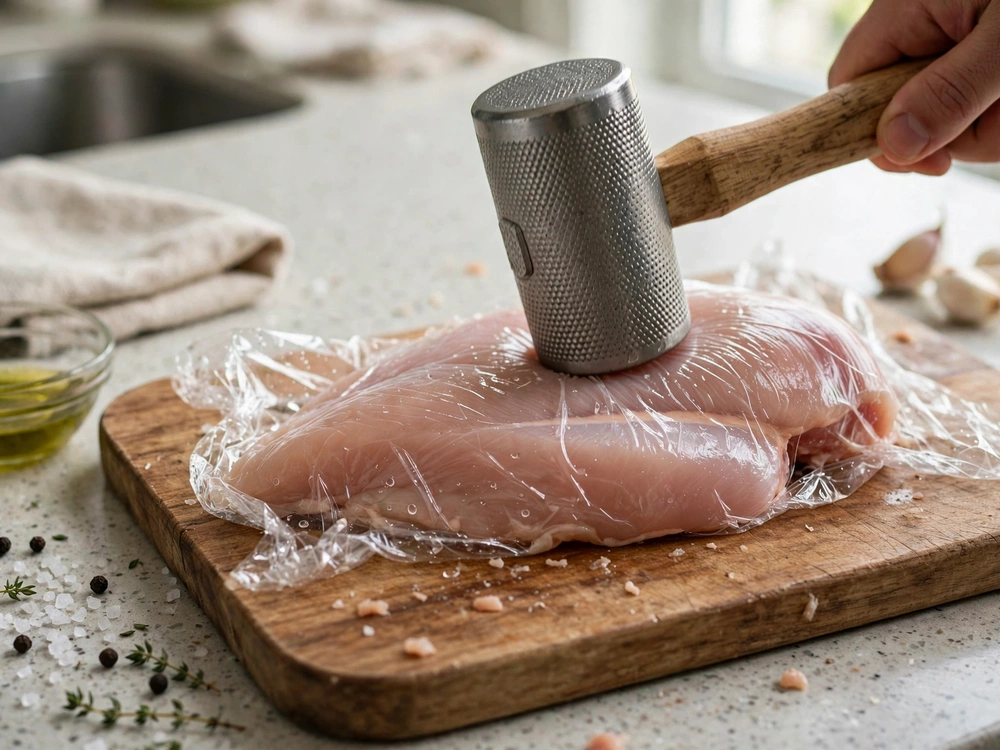
Cover each breast and gently pound the thick end until the whole piece is about ¾-inch thick. Even thickness is the number-one fix for chicken that’s dry on one end and pink in the middle.
Step 4 — Oil and Season
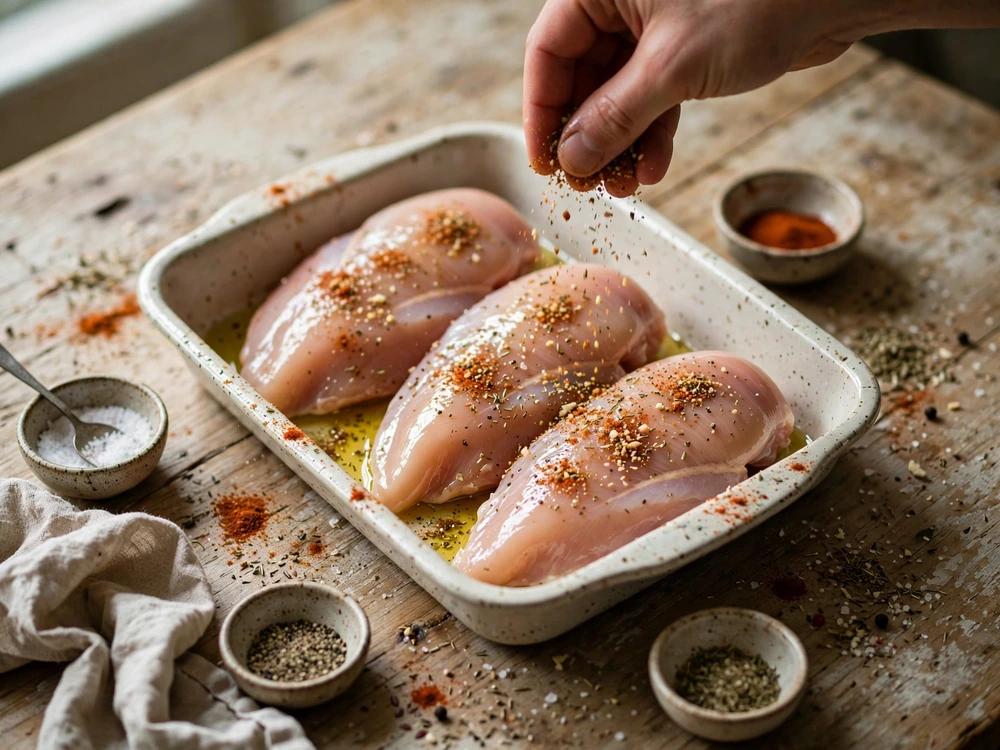
Pat the chicken completely dry, then rub each piece with olive oil. Mix the salt, pepper, garlic powder, paprika, onion powder, Italian seasoning, and brown sugar, and coat both sides evenly. Dry surface plus oil equals a better crust.
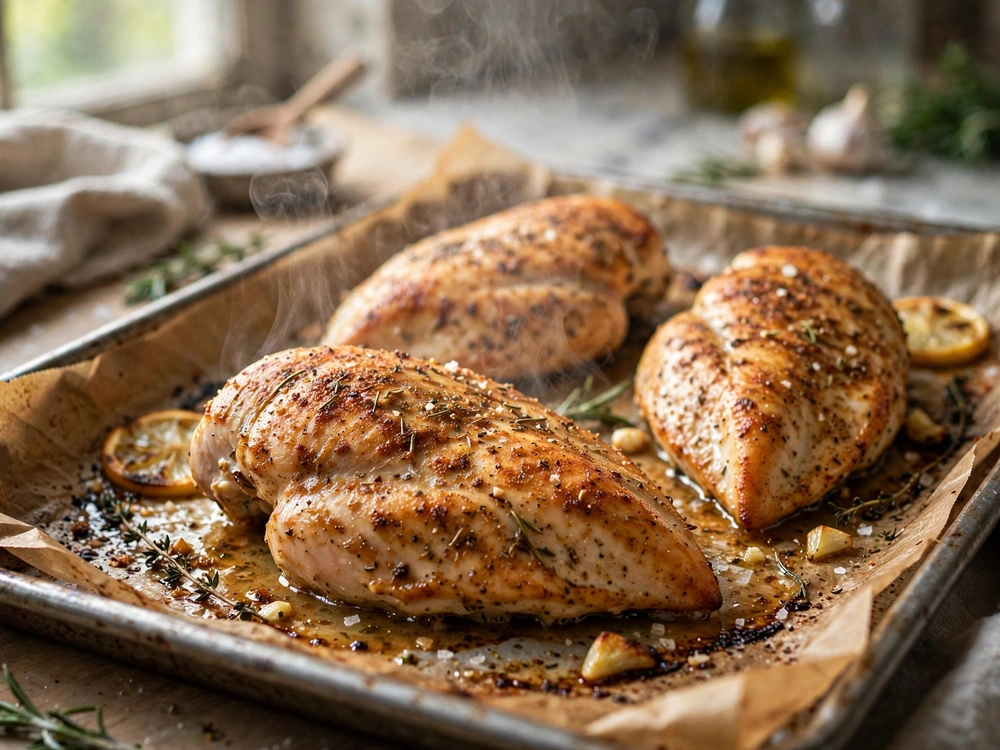
Step 5 — Bake Hot and Fast
Bake 18–22 minutes, until a thermometer reads 165°F (74°C) at the thickest part. Don’t open the oven repeatedly — you’ll drop the temperature and stretch the cook time.
Step 6 — Rest Before Slicing
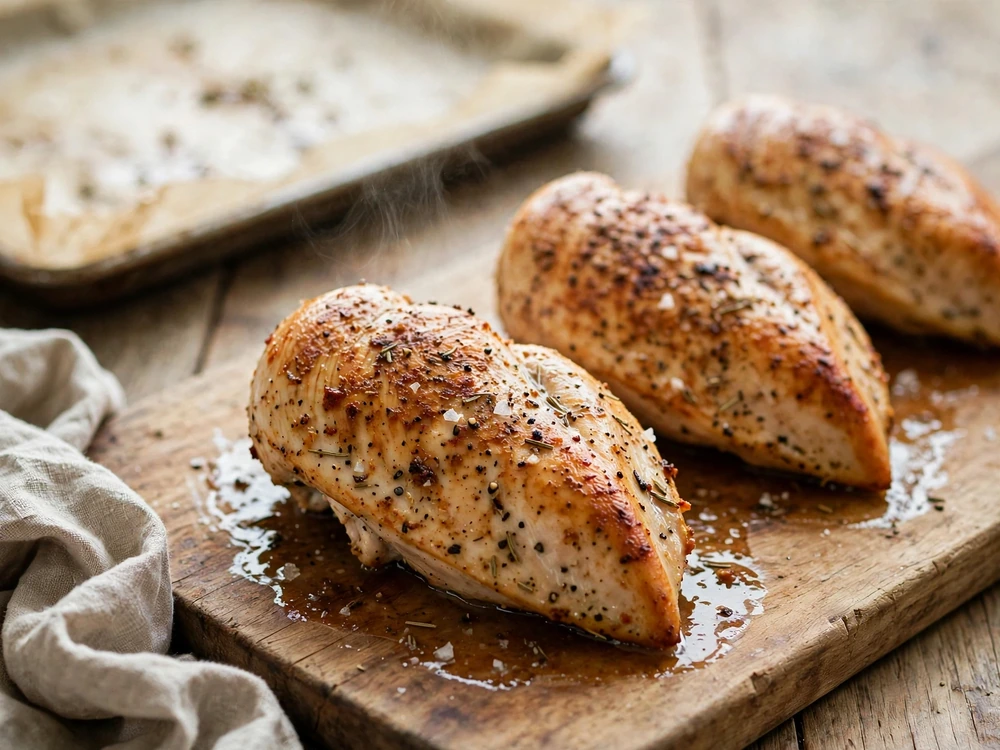
Let the chicken rest 5–10 minutes before cutting. Resting lets the juices redistribute; slice immediately and they run out onto the board instead of staying in the meat.
What Temperature and How Long to Bake Chicken Breast
Bake chicken breast at 425°F (220°C) for 18–22 minutes, until the internal temperature hits 165°F (74°C). That’s the USDA-safe temperature for poultry and the point where the meat is fully cooked but not yet dried out.
Two details make this foolproof. First, size drives time: a 6-oz breast is closer to 18 minutes, an 8-oz breast closer to 22. Second, use carryover cooking — pull the chicken at 160°F and let it rest; the temperature climbs the last 5 degrees on its own, so the center never overshoots. A thermometer inserted into the thickest part is the only reliable doneness test; color and firmness lie.
Expert Tips for the Best Baked Chicken Breast
- Buy a thermometer. It’s the difference between guessing and knowing. Every “dry chicken” problem traces back to cooking without one.
- Pound, don’t just trust the pan. Even thickness matters more than exact timing.
- Salt early. A brine or even 15 minutes of dry salting seasons the interior, not just the crust.
- Bake on the middle rack. Too low browns the bottom before the top; too high scorches the surface.
- Rest, always. Cutting straight out of the oven is the fastest way to lose the juice you worked to keep.
- Don’t crowd the pan. Leave space between pieces so heat circulates and the surface browns instead of steams.
💡 Tip: Pull the chicken at 160°F instead of waiting for 165°F on the dial. Carryover heat during the rest climbs the last few degrees on its own, so the center never overshoots into dry territory.
The Secret to Juicy Baked Chicken Breast
The secret to juicy baked chicken breast is stopping the cook at exactly 165°F — and getting there fast. Chicken breast is very lean, so its window between “done” and “dry” is narrow. Above roughly 165°F the muscle fibers contract hard and squeeze out moisture, which is why low-and-slow baking so often disappoints: the meat spends far longer in the danger zone above that temperature.
High heat shortens the total time the chicken spends cooking, an optional brine adds water and salt that the fibers hold onto, and resting gives that moisture time to settle back into the meat. Together they’re why this method stays juicy while a 350°F bake dries out.
Delicious Variations & Add-Ins
Garlic Herb Butter
Swap the oil for melted butter, add 2 grated garlic cloves and 1 tablespoon chopped parsley to the rub. Finish with a squeeze of lemon.
Lemon Pepper
Replace the paprika and Italian seasoning with 2 teaspoons lemon pepper seasoning and the zest of one lemon. Bright and clean.
Healthier / Lighter Version
Skip the oil and brown sugar; mist the chicken with cooking spray and lean on the spices. You’ll drop the fat with almost no loss in flavor.
Dairy-Free / Whole30 Option
The base recipe already qualifies — keep the olive oil, drop the brown sugar, and confirm your spice blends have no additives.
Meal-Prep Sliced Chicken
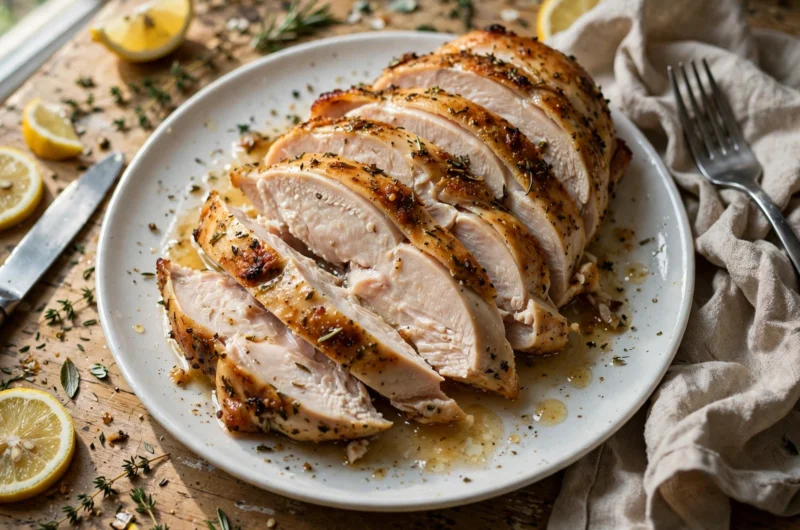
Bake as written, cool fully, then slice against the grain. Portion into containers for bowls, wraps, and salads all week.
What to Serve With Baked Chicken Breast
- Roasted vegetables — broccoli, carrots, or green beans roast at the same 425°F, so they share the oven.
- Garlic mashed potatoes — the classic comfort pairing for a savory rub.
- Rice or quinoa — soaks up any pan juices; ideal for meal-prep bowls.
- A crisp green salad — lightens the plate and adds crunch.
- Pasta with olive oil and parmesan — turns sliced chicken into a full dinner in minutes.
How to Store Baked Chicken Breast
In the Refrigerator
Cool the chicken, then store it airtight for 3–4 days. Don’t leave cooked chicken at room temperature longer than 2 hours (1 hour if it’s hot out).
Freezing & Thawing
Freeze cooled chicken — whole or sliced — in an airtight container or freezer bag for up to 3 months. Thaw overnight in the fridge before reheating for the best texture.
How to Reheat Without Drying It Out
Add a splash of broth or water, cover, and warm gently — 1–2 minutes in the microwave at 70% power, or 10 minutes in a 325°F oven. The added moisture and lower heat keep it from turning rubbery on the second go.
Make-Ahead Instructions
Season the chicken up to 24 hours ahead and keep it covered in the fridge — the extended salt time actually improves flavor and juiciness. You can also fully bake, cool, and refrigerate it for grab-and-go meals. For the freshest result, bring seasoned raw chicken to room temperature for 15 minutes before baking so it cooks evenly.
Troubleshooting Common Problems
Why Is My Baked Chicken Breast Dry?
Almost always overcooking. Chicken dries out fast past 165°F, so pull it right at temperature (or at 160°F with carryover) and always rest it. A thermometer solves this permanently.
Why Is My Chicken Rubbery?
Rubbery texture comes from cooking too long or slicing without resting. Uneven thickness makes it worse — the thin end overcooks while you wait on the thick end. Pound to even thickness and don’t skip the rest.
Why Is My Chicken Bland?
Bland chicken is under-salted, and salting only the surface won’t fix it. Brine or salt ahead so the seasoning reaches the interior, and season both sides of every piece.
Why Is the Middle Still Pink?
Usually uneven thickness or an oven that runs cool. Pound the breasts even, check the true temperature with an oven thermometer, and confirm the center reaches 165°F before serving.
Nutrition Information
Per serving (1 seasoned baked chicken breast), approximate:
- Calories: ~290
- Protein: ~40 g
- Fat: ~13 g
- Carbohydrates: ~2 g
- Sodium: ~430 mg (varies with brining and salt)
Values are estimates and will change with breast size and add-ins.
Frequently Asked Questions
How long do you bake chicken breast at 425°F?
18–22 minutes for a 6–8 oz breast, until the internal temperature reaches 165°F (74°C).
What temperature should baked chicken breast be?
165°F (74°C) at the thickest part. You can pull it at 160°F and let carryover cooking finish it during the rest.
Do you cover chicken breast when baking?
No — bake it uncovered so the surface browns. Only tent it loosely with foil if the top is browning before the center is done.
Is it better to bake chicken breast at 350°F or 425°F?
425°F. The higher heat cooks it faster and keeps it juicier; 350°F takes longer and dries out lean breast meat.
How do you keep baked chicken breast from drying out?
Pound to even thickness, optionally brine, bake hot and fast, pull at 165°F with a thermometer, and rest before slicing.
Do you need to flip chicken breast when baking?
No, flipping isn’t necessary. You can flip once halfway for slightly more even color, but it won’t affect doneness.
Can you bake frozen chicken breast?
Yes, but it takes about 50% longer and won’t hold seasoning or brown as well. Thawing first gives a much better result.
How do you know baked chicken is done without a thermometer?
The juices run clear, there’s no pink at the center, and the meat feels firm — but these signs are unreliable. A thermometer is the only sure test.
How long is baked chicken breast good in the fridge?
3–4 days in an airtight container.
Can I use this rub on chicken thighs?
Yes. Use the same seasoning, but bake boneless thighs to 175°F (79°C) for the best texture.
Related Recipes
Recipe Card
Baked Chicken Breast
Course: MainCuisine: AmericanDifficulty: Easy4
servings10
minutes20
minutes30
minutesJuicy, tender oven-baked chicken breast with a simple dry rub, baked at 425°F and pulled at 165°F for perfect doneness every time.
Ingredients
4 boneless, skinless chicken breasts (6–8 oz / 170–225 g each)
2 tablespoons olive oil
1 teaspoon kosher salt
½ teaspoon black pepper
1 teaspoon garlic powder
1 teaspoon paprika (sweet or smoked)
½ teaspoon onion powder
½ teaspoon dried Italian seasoning (or oregano)
1 teaspoon brown sugar (optional)
Optional brine: 4 cups warm water + 3 tablespoons salt
Directions
- (Optional) Dissolve 3 tablespoons salt in 4 cups warm water. Brine chicken 15–30 minutes, then drain, rinse, and pat very dry.
- Preheat oven to 425°F (220°C). Line a sheet pan with foil or parchment and lightly oil it.
- Pound each breast to an even ¾-inch thickness and pat dry.
- Rub chicken with olive oil.
- Combine salt, pepper, garlic powder, paprika, onion powder, Italian seasoning, and brown sugar. Coat both sides.
- Bake 18–22 minutes, until the internal temperature reaches 165°F (74°C) at the thickest part.
- Rest 5–10 minutes before slicing.
Notes
- If you brined, reduce the rub salt by half.nA meat thermometer is the reliable doneness test — pull at 160°F for carryover, or 165°F straight.nStore airtight in the fridge up to 4 days, or freeze up to 3 months.